
About Nikola Stoyanov
Lived 1874 – 1967 (aged 93). Nikola Stoyanov was a Macedonian, Bulgarian and Turkish astronomer, economist and banker.
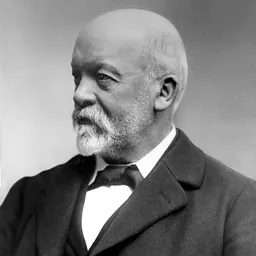
Nikola Stoyanov Mitov (; February 3, 1874 – June 12, 1967) was a Bulgarian scientist, economist and financier. He was in charge of the Bulgarian Government Debt Directorate for much of the interwar period and as such, he led the prolonged negotiations over the country's foreign debt. The agreements helped stabilise the country's national currency and contributed to the economic growth Bulgaria experienced prior to World War II. Between 1929 and 1944, Stoyanov was editor-in-chief of the authoritative journal of the Bulgarian Economic Society. He was also a prominent member of various organisations of Macedonian immigrants to Bulgaria and one of the founders of the Macedonian Scientific Institute, as well as its chairman between 1938 and 1945. Stoyanov was the first Bulgarian author whose scientific work on astronomy was published abroad.
Early years Nikola Stoyanov was born on February 3, 1874, in the town of Dojran (today in North Macedonia). His father was a prominent citizen and for a certain period mayor of the town. Following the end of the Russo-Turkish war of 1877–78 and the subsequent Treaty of Berlin, Dojran remained outside the newly established Principality of Bulgaria. This prompted Stoyanov's family to emigrate and settle down in the new Bulgarian capital Sofia in 1880.
In 1892, Nikola Stoyanov graduated from the First Sofia Men's Gymnasium. Although his initial desire was to study engineering abroad, Stoyanov received a state scholarship for the “Higher School” (today St. Clement of Ohrid University of Sofia), where he entered the physics and mathematics department. He graduated in 1895 and started work as a teacher, initially in Vidin and later on in the First Sofia Men's Gymnasium.
Scientific career
Stoyanov remained fascinated with astronomy during his years as student and teacher. In 1898, he became one of the co-founders of the Bulgarian Physics and Mathematics Society. A year later, he went to study at the University of Toulouse. This move was financed with his own savings and a loan for BGN 1,500 from the Bulgarian National Bank. In 1903, Stoyanov graduated and returned to Sofia University as a teaching assistant. He went on to specialise in mathematical physics at the University of Göttingen between 1904 and 1906. Subsequently, he once again returned to Sofia University, this time as an “extraordinary” professor in astronomy. However, he only spent a short time in this position, since following student anti-government protests in 1907, the university was closed for six months and all professors were fired.
In 1911, Stoyanov went on a journey to Germany in order to make himself familiar with agriculture insurance. Following his return to Bulgaria, he prepared a report that became the basis for the Act on the Insurance of Agriculture Crops against Hail and of Cattle against Death and Accidents. Subsequently, he joined the Bulgarian Central Cooperative Bank's first managing council. Stoyanov published numerous works on insurance during the following years. As he had already gained considerable professional prestige, in 1919 was considered for the position of director of the bank. Eventually he was not awarded the position, though a while later he headed the State Debt Department with the Ministry of Finance.
Once the peace treaty was officially signed, Nikola Stoyanov was also appointed as assistant commissioner on reparations. Although Interior Minister Rayko Daskalov was officially the leading figure in these negotiations, it was Stoyanov himself – given his financial expertise – who led the process . Quite quickly he managed to earn himself the disapproval of the Military Inter-Allied Commission of Control. The French representative in the Commission described Stoyanov as a “national extremist expressing xenophobic views, at times even with ill intent.”
In 1923, Nikola Stoyanov became interim commissioner on reparations, following Rayko Daskalov's dismissal under pressure from the Commission. Even with this change, French representatives still insisted upon further changes to the list of Bulgarian negotiators. At about the same time, Stoyanov published an article under the title "The financial state of Bulgaria and the Bulgarian reparation debt". His pessimistic assessment of the country's solvency went against the policy of the Bulgarian government. Prime Minister Aleksandar Stamboliyski was at the time preparing a compromise solution on reparations. During talks, Mr. Stoyanov led an active correspondence and had to often meet with representatives of foreign financial circles. He gained a significant reputation among said circles in the process.
For the best part of the 1919–1939 period, during which Stoyanov headed the State Debt Directorate, Bulgaria was finding it hard to service its debts and was in constant negotiations for their restructuring and reduction. The largest part of the country’s pre-war debts was to French investors linked to Paribas Bank. Relations of another creditor, German Disconto-Gesellschaft were complicated by the peace treaties forced upon Bulgaria and Germany. British Schroders acted as the main intermediary in the issuance of League of Nations-guaranteed Refugee loan in 1926. Following a period of brief stabilisation in mid-1920s, the country was forced to establish a moratorium on foreign debt payments in 1932. This marked the beginning of another round of negotiations with creditors.
Other state and public posts
While serving as State Debt Directorate Head, Stoyanov took other state posts for various terms. He was the state representative in the Sofia Stock Exchange, member of the committee regulating insurance, as well as part of the boards of various institutions, like the State Public Depot, the Liquidating Fund, the State Lottery, and the Committee for the Construction of the Rila Water Pipe.
In the meantime, Stoyanov was among the active figures of the Bulgarian Economics Society (BES) and the Statistical Institute for Economic Research. and went on to chair the institute, following Lyubomir Miletich’s death in 1938. A year later, as Chairman of the Doyran Brotherhood, he signed the Appeal for Vardar Macedonia’s incorporation into Bulgaria.
Stoyanov participated in yet more public organisations, like the Yunak Gymnastic Society, the Periodicals’ Union, and the local Rotary Club, among others.
Later years
Nikola Stoyanov retired on June 1, 1939, at the age of 65.
In the months before the totalitarian regime took a firm grip on Bulgaria, Nikola Stoyanov contributed to the journal of the newly established Institute for Economic Rationalisation. In 1947, he finished a detailed comparison of conditions laid out in the Neuilly-sur-Seine Treaty from 1919 and the draft of the Paris Peace Treaties, which was being negotiated at the time. Stoyanov sent out sharp criticism over what he deemed a “punitive and unjust reparation debt.” The study was published by the Bulgarian Economic Society's journal. Stoyanov later wrote another work on the same subject for the leading opposition newspaper, People's Agrarian Flag. This time he also criticised the way the government led negotiations and called for a revision of the treaty.
Stoyanov died in 1967 in Sofia.
Selected works
The financial state of Bulgaria and the Bulgarian reparation debt. Sofia (1923). Reparations and inter-allied debts. Sofia (1933).
References and notes
Don’t just read it —
keep it.
Full-length biographies made to live with: read them, listen on the way to work, watch them tonight.
- E-book
- Audio
- Video
Instant download · yours to keep · every purchase keeps this site free
Important facts
People in Nikola Stoyanov's life
Named in this biography and alive at the same time
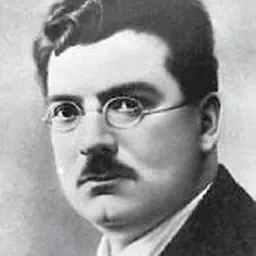
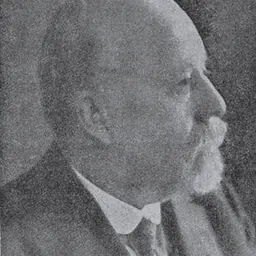

Related people
Same field, nearest in time
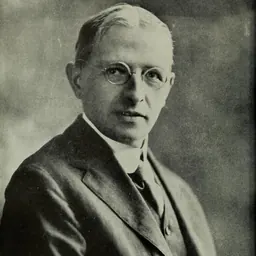


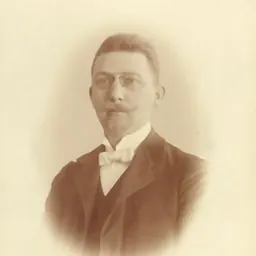
Contemporaries
People whose lives overlapped Nikola Stoyanov's

Frequently asked questions
Who was Nikola Stoyanov?
Bulgarian scientist and economist
When was Nikola Stoyanov born?
Nikola Stoyanov was born on 3 February 1874 in Dojran.
When did Nikola Stoyanov die?
Nikola Stoyanov died on 12 June 1967 in Sofia.
What was Nikola Stoyanov's occupation?
Nikola Stoyanov was an astronomer, economist and banker.
What nationality was Nikola Stoyanov?
Nikola Stoyanov was Macedonian, Bulgarian and Turkish.
Sources & further reading
Cite this page
APA: Biography.guide. (2026). Nikola Stoyanov. https://biography.guide/nikola-stoyanov/
MLA: "Nikola Stoyanov." Biography.guide, https://biography.guide/nikola-stoyanov/.
Chicago: "Nikola Stoyanov." Biography.guide. https://biography.guide/nikola-stoyanov/.
Data last updated: 2026-09-20 · Spot an error? Report a correction.
Page generated 2026-09-27 05:18 UTC