
Nicolae Colan
Romanian politician, theologian and bishop
About Nicolae Colan
Lived 1893 – 1967 (aged 73). Nicolae Colan was a Romanian newspaper editor, bishop and theologian.
Nicolae Colan (; 28 November 1893 – 15 April 1967) was an Austro-Hungarian-born Romanian cleric, a metropolitan bishop of the Romanian Orthodox Church. From a peasant background, Colan completed high school in Brașov, followed by a period of wandering during World War I that saw him in Sibiu, Bucharest, Moldavia, Ukraine and ultimately Bessarabia, where he advocated union with Romania. After the war, he completed university and taught New Testament theology at Sibiu from 1924 to 1936. Entering the clergy in 1934, he soon became bishop at Cluj, remaining there when Northern Transylvania temporarily became Hungarian territory during World War II. In 1957, he advanced to Metropolitan of Transylvania, an office he held for the final decade of his life.
Biography
Beginnings Born in Araci, Covasna County, his parents were the peasants Nicolae and Ana (née Nema). He attended primary school in his native village before enrolling at Sfântu Gheorghe's Hungarian-language Sékely Mikó College, where he completed one year (1906–1907). He finished high school at the Romanian-language Andrei Șaguna High School in Brașov, which he attended from 1907 to 1914. Subsequently, he attended the Sibiu theological institute, from 1914 to 1916.
His first published work came in Gazeta Transilvaniei in 1915, followed the next year by articles in Revista Teologică. Following the Romanian Old Kingdom's August 1916 entry into World War I, he and several other young Transylvanian intellectuals, among them Oțetea, crossed the border into Romania. Colan subsequently enrolled in the Literature faculty of the University of Bucharest. When the capital Bucharest was evacuated during the Battle of Bucharest, he left for Roman in Moldavia, where he tutored high schoolers. Next, he ended up in a Ukrainian village, near Yelisavetgrad, where, together with other refugee Transylvanians who included Ion Agârbiceanu, he organized a church choir that delivered responses in Romanian to the priests' Slavonic.
Interwar period
At the war's conclusion and following the creation of Greater Romania, he returned to Bucharest, where he earned his degree in 1921. Encouraged by Nicolae Bălan, Metropolitan of Transylvania, he attended postgraduate courses in Protestant theology at the University of Berlin from 1921 to 1922. He taught there until 1936, and was named rector in 1928.
Ordained a deacon and then a priest in October 1934, he became an archpriest the following spring. At Cluj, he continued to write in Viaţa Ilustrată, as well as in the diocesan newsletter Renaşterea. In 1937, he established a school for church singers at Nușeni.
World War II and later life
In late summer 1940, the Second Vienna Award forced Romania to cede Northern Transylvania to Hungary. At a meeting in Cluj between Colan, Bălan and the leading figure of the Romanian Greek-Catholic Church, Iuliu Hossu, it was decided that Colan and Hossu would stay behind. Thus, Colan was the only Orthodox bishop to remain in the occupied region. Colan and Hossu were close collaborators under Hungarian rule, which aided the local Romanians. Colan openly condemned the Hungarian antisemitic legislation and encouraged his followers to shelter and protect the Jews.
In addition to publishing several prayer books in the early 1940s, he later assembled the speeches and sermons he delivered during this period into a volume. From 1940 to 1945, he coordinated the activity of the Cluj theological academy, as well as teaching New Testament courses. Also at Cluj, he founded an Orthodox high school that opened for the 1944–1945 academic year and subsequently split into separate boys' and girls' schools; as well as a choir school that evolved into a theological seminary.
Elected an honorary member of the Romanian Academy in 1938, he advanced to titular member in 1942, Also in 1948, he formed part of his church's delegation to a Pan-Orthodox Conference held in Moscow. The appointed priest was persecuted by the Communist authorities, and Colan himself was harassed, which ultimately forced him to enter the church.
Elected and enthroned as Archbishop of Sibiu and Metropolitan of Transylvania in May 1957, he guided the activities of the clergy, the theological institute and the church's publications. He was also involved in the repainting of the cathedral. He died in Sibiu in 1967. His distinctions included the Order of the Crown of Romania (grand officer, 1936; grand cross, 1938), Order of the Star of the Romanian People's Republic (second class, 1957) and the Order of Polonia Restituta (grand cross, 1938).
Don’t just read it —
keep it.
Full-length biographies made to live with: read them, listen on the way to work, watch them tonight.
- E-book
- Audio
- Video
Instant download · yours to keep · every purchase keeps this site free
Important facts
People in Nicolae Colan's life
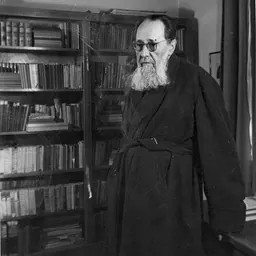
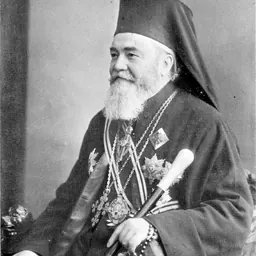
Named in this biography and alive at the same time

Related people
Same field, nearest in time




Contemporaries
People whose lives overlapped Nicolae Colan's


Frequently asked questions
Who was Nicolae Colan?
Romanian politician, theologian and bishop (1893-1967)
When was Nicolae Colan born?
Nicolae Colan was born on 28 November 1893 in Vâlcele.
When did Nicolae Colan die?
Nicolae Colan died on 15 April 1967 in Sibiu.
What was Nicolae Colan's occupation?
Nicolae Colan was a newspaper editor, bishop and theologian.
What nationality was Nicolae Colan?
Nicolae Colan was Romanian.
Sources & further reading
Cite this page
APA: Biography.guide. (2026). Nicolae Colan. https://biography.guide/nicolae-colan/
MLA: "Nicolae Colan." Biography.guide, https://biography.guide/nicolae-colan/.
Chicago: "Nicolae Colan." Biography.guide. https://biography.guide/nicolae-colan/.
Data last updated: 2026-09-20 · Spot an error? Report a correction.
Page generated 2026-09-27 05:25 UTC