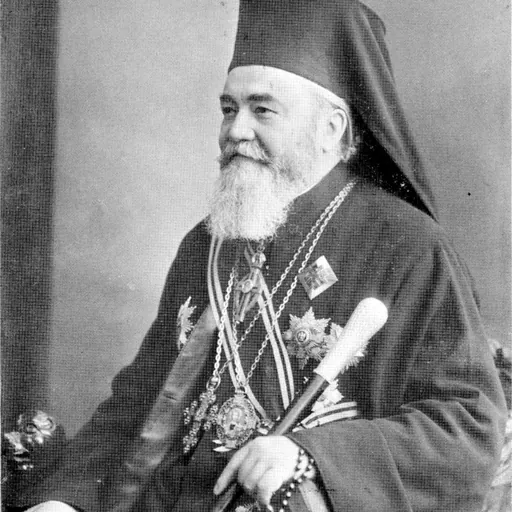
Nicolae Bălan
Metropolitan bishop of the Romanian Orthodox Church
About Nicolae Bălan
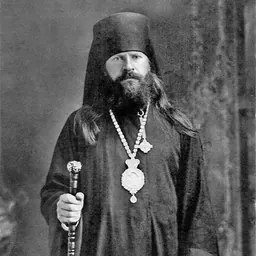
Lived 1882 – 1955 (aged 73). Nicolae Bălan was an Austrian eastern Orthodox priest, politician, metropolitan and theologian.
Nicolae Bălan (; April 27, 1882 – August 6, 1955) was an Austro-Hungarian-born Romanian cleric, a metropolitan bishop of the Romanian Orthodox Church. The son of a priest, he graduated from Czernowitz University and taught theology at Sibiu from 1905 to 1920. That year, he became Metropolitan of Transylvania, an office he would hold for the rest of his life. In the 1930s, he was an open supporter of the Iron Guard. In 1942, during the Holocaust, he intervened in Bucharest against the planned deportation of Romanian Jews from the Regat, Southern Transylvania and the Banat to the Nazi extermination camps. In 1948, after a communist regime was established, he publicly assisted the new authorities in their effort to disband the Romanian Greek-Catholic Church.
Biography Early life Born in Blăjenii de Sus, Bistrița-Năsăud County, he was the first of eight children born to the priest Vasile Bălan and his wife Maria. He graduated from the Năsăud gymnasium in 1900 and attended the Theology faculty of Czernowitz University from 1900 to 1904, obtaining his doctorate there the following year.
A member of the Sibiu Archdiocese's synod and of the Metropolis of Transylvania's national church council, he founded and edited Revista Teologică between 1907 and 1916. In 1918, together with two other professors, he edited Gazeta Poporului. In November 1918, as World War I neared its end, the Romanian National Council of Transylvania sent him on a mission to Iași, the temporary capital of the Romanian Old Kingdom, where he discussed the pending union of Transylvania with Romania. In 1921, he elevated the theological institute to the rank of academy; this institution gained the right to emit tertiary diplomas in 1943 and achieved university rank in 1948. He coordinated the activities of the secondary schools under the jurisdiction of the metropolis until these were nationalized by the new communist regime in 1948. He founded three schools in Sibiu: a normal school for girls, a school for church singers and a boarding school. He also supervised the metropolis' three publications, one of which was founded under his tenure, in 1922. Over 150 churches and a similar number of parish houses were built in the archdiocese, with new parishes and districts being founded. An ecumenist, he attended the 1925 Stockholm Conference and the 1926 Berne Conference. In 1925, he led a pilgrimage to the Holy Land.
During the Crown Council session of August 29–30, 1940, he protested against the Second Vienna Award and its cession of Northern Transylvania to Hungary, advocating the reversal of this decision during World War II. Letter written by Bălan in response to Law 711 banning the conversion of Jews passed by the Romanian Government in 1941. While protesting against what he perceives as an unacceptable interference of the State in matters of faith, Bălan also displays his own antisemitic views. In the second part of the letter he advises the State to ban all mixed marriages including those involving converts from Judaism.
Under communism: Greek-Catholicism, collaboration The communist regime did not persecute Bălan for his Iron Guard past because he proved a useful instrument in the suppression of the Romanian Greek-Catholic Church. The church was formally dissolved on December 1.
Don’t just read it —
keep it.
Full-length biographies made to live with: read them, listen on the way to work, watch them tonight.
- E-book
- Audio
- Video
Instant download · yours to keep · every purchase keeps this site free
Important facts
Related people
Same field, nearest in time


Contemporaries
People whose lives overlapped Nicolae Bălan's





Frequently asked questions
Who was Nicolae Bălan?
Metropolitan bishop of the Romanian Orthodox Church
When was Nicolae Bălan born?
Nicolae Bălan was born on 27 April 1882 in Blăjenii de Sus.
When did Nicolae Bălan die?
Nicolae Bălan died on 6 August 1955 in Sibiu.
What was Nicolae Bălan's occupation?
Nicolae Bălan was an eastern Orthodox priest, politician, metropolitan and theologian.
What nationality was Nicolae Bălan?
Nicolae Bălan was Austrian.
Sources & further reading
Cite this page
APA: Biography.guide. (2026). Nicolae Bălan. https://biography.guide/nicolae-balan/
MLA: "Nicolae Bălan." Biography.guide, https://biography.guide/nicolae-balan/.
Chicago: "Nicolae Bălan." Biography.guide. https://biography.guide/nicolae-balan/.
Data last updated: 2026-09-21 · Spot an error? Report a correction.
Portrait: Wikimedia Commons · author & licence
Page generated 2026-09-27 04:59 UTC