
About Nicola Vaccaro
Lived 1640 – 1709 (aged 69). Nicola Vaccaro was an Italian painter.
Nicola Vaccaro (Naples, 13 March 1640 – Naples, 25 May 1709) was an Italian painter, theatre director and opera librettist in Naples. He was known for his religious and allegorical paintings who created easel paintings as frescos. He was a specialist figure painter who regularly collaborated with specialist still life painters on decorative Baroque still lifes and garland paintings. Vaccaro attempted to adapt the stylistic features of 17th-century Neapolitan tradition to the new Classicist and Baroque trends towards increasing Arcadian tendencies. He proposed his own specific form of Academism, aimed at revitalizing the figurative culture in Naples.
Life He was born in Naples as the son of Andrea Vaccaro and Anna Criscuolo and baptised with the name Tomaso Domenico Nicola. His father was a prominent history painter in 17th century Naples. He first studied drawing with his father. According to the Italian biographer Filippo Boni, Vaccaro liked the palette of Salvator Rosa's landscape paintings and was so successful in mimicking Rosa's style that some of his works were sold as works by Rosa.
He went for some time to Rome where he joined the studio of Nicolas Poussin. Nicola Vaccaro married Anna Maria Manecchia, daughter of the painter Gian Giacomo Manecchia, on 10 October 1657. His wife was also active as a painter. Through this marriage, he forged strong ties with well-known artists of the time such as Andrea Malinconico, Giovanni Do and Giacinto de Popoli, for whom he appears often as a witness at weddings or as a godfather at the baptism of their children. The couple's second son Andrea became also an artist and inherited his father's precious collection of drawings.
He later fell in love with Giulietta Zuffi, a singer of the theater with whom he had a scandalous relationship. To please her he took up the position of manager at the Teatro di San Bartolomeo, an opera house in Napels, active mainly in the 17th and 18th centuries. He was the administrator, librettist and set designer of the theatre from 1683 to 1689. His mistress Zuffi was during this period the protagonist of the theater seasons.
Vaccaro's first wife died around 1690 and he married a second time.
Work
Nicola Vaccaro was a versatile painter, who covered a wide range of subjects including religious, historical and mythological themes. He was also able to integrate still lifes and landscapes in his paintings in collaboration with specialist painters such as Abraham Brueghel, Francesco Della Quosta, Aniello Ascione and Andrea Belvedere. He painted on various carriers including wood panels, copper, brass and crystal, and also practised fresco painting.
Like his father, his work is characterised by its eclecticism. Among the Neapolitan artists, he can be regarded as an alternative to the trends represented respectively by Luca Giordano and Francesco Solimena. Vaccaro attempted to adapt the stylistic features of the 17th-century Neapolitan tradition to the new Classicist and Baroque trends with their emphasis on Arcadian landscapes.
His work can be regarded as an expression of a new academism in art. With Francesco Di Maria, Giacomo Farelli and Andrea Malinconico, he regarded the starting points of their working method as the practice of drawing, the knowledge of human anatomy and the study of the great masters of the past. In addition they relied on their thorough knowledge of the classics, to achieve an original interpretation of their subjects. His style gradually lost its initial formal rigidity and academic composure of the beginnings in favor of a language based on the grace of gestures, the serenity of the mood, on the studied compositional proportions.
His clientele was of two kinds: the religious institutions of his region and private clients.
Don’t just read it —
keep it.
Full-length biographies made to live with: read them, listen on the way to work, watch them tonight.
- E-book
- Audio
- Video
Instant download · yours to keep · every purchase keeps this site free
Important facts
more
Nicolò Baccaro, Niccola Vaccaro, Nicolo Baccaro, Nicolo` Baccaro, Nicolo` Vaccaro, Niccolo` Vaccaro, Nicolao VaccaroPeople in Nicola Vaccaro's life
Named in this biography and alive at the same time
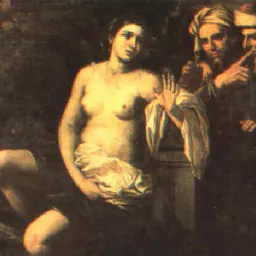
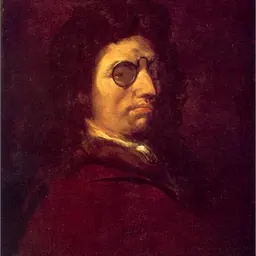
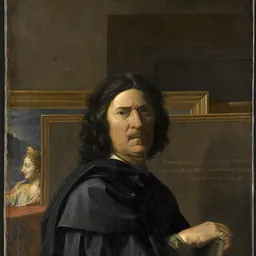
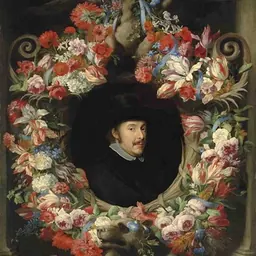


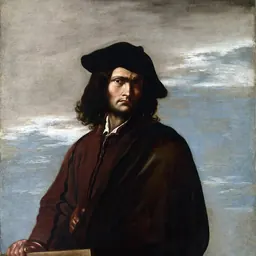
Related people
Same field, nearest in time


Contemporaries
People whose lives overlapped Nicola Vaccaro's




Frequently asked questions
Who was Nicola Vaccaro?
Italian painter (1640-1709)
When was Nicola Vaccaro born?
Nicola Vaccaro was born on 13 March 1640 in Naples.
When did Nicola Vaccaro die?
Nicola Vaccaro died on 23 May 1709 in Naples.
What was Nicola Vaccaro's occupation?
Nicola Vaccaro was a painter.
What nationality was Nicola Vaccaro?
Nicola Vaccaro was Italian.
Sources & further reading
Cite this page
APA: Biography.guide. (2026). Nicola Vaccaro. https://biography.guide/nicola-vaccaro/
MLA: "Nicola Vaccaro." Biography.guide, https://biography.guide/nicola-vaccaro/.
Chicago: "Nicola Vaccaro." Biography.guide. https://biography.guide/nicola-vaccaro/.
Data last updated: 2026-09-20 · Spot an error? Report a correction.
Page generated 2026-09-27 05:09 UTC