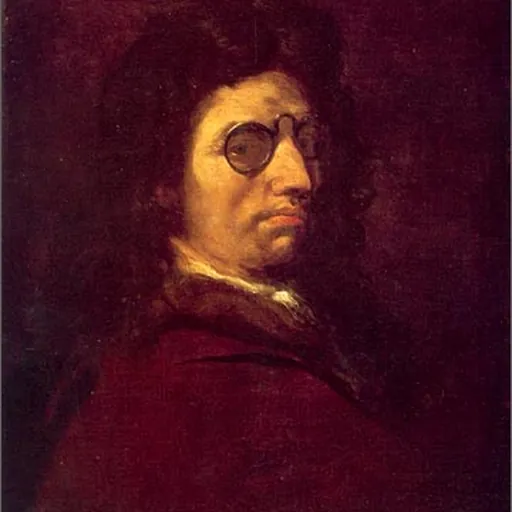
About Luca Giordano
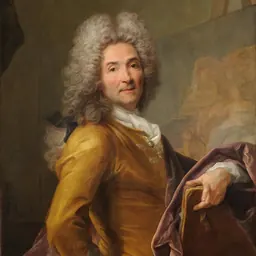
Lived 1634 – 1705 (aged 70). Luca Giordano was an Italian painter and printmaker.
Luca Giordano (18 October 1634 – 3 January 1705) was an Italian late-Baroque painter and printmaker in etching. Giordano was one of the most celebrated artists of the Neapolitan Baroque, whose vast output included altarpieces, mythological paintings and many decorative fresco cycles in both palaces and churches. He moved away from the dark manner of early 17th-century Neapolitan art as practised by Caravaggio and his followers and Jusepe de Ribera, and, drawing on the ideas of many other artists, above all the 16th-century Venetians and Pietro da Cortona, he introduced a new sense of light and glowing colour, of movement and dramatic action. He was internationally successful and travelled widely, working in Naples, Rome, Florence, and Venice, before spending a decade in Spain.
Early life and training Born in Naples, Giordano was the son of the painter Antonio Giordano. In around 1650 he was apprenticed to Ribera on the recommendation of the viceroy of Naples and his early work was heavily influenced by his teacher. Like Ribera, he painted many half-length figures of philosophers, either imaginary portraits of specific figures, or generic types. The St. Luke Painting the Virgin (Museo de Arte de Ponce), perhaps Giordano's first major work, in which the saint is a self-portrait, is reminiscent of Ribera's art from .
Giordano was also attracted by Ribera's half-length paintings of philosophers, and himself painted many images of philosophers; the Crates (1660; Rome, Palazzo Barberini) is an impressive example of these dramatic and powerfully naturalistic works. The careful study of physiognomy and expression suggests that Giordano may also have been aware of the treatise De humana physiognomonia (1586) by the Neapolitan scholar Giambattista della Porta.
Giordano acquired the nickname Luca fa presto, which translates into "Luca paints quickly." His speed, in design as well as handiwork, and his versatility, which enabled him to imitate other painters deceptively, earned for him two other epithets, "The Thunderbolt" (Fulmine) and "The Proteus" of painting.
Giordano also worked directly for the Medici while in Florence, painting for Cosimo III a Triumph of Bacchus and an Allegory of Peace between Florence and Fiesole (; Florence, Palazzo Pitti); the latter work reveals the developments in the organization of style and landscape elements made in the Medici Riccardi frescoes. Thus Giordano oscillated between two styles in Florence, a powerful Baroque in his religious art and a more elegant classicism in his secular decorations.
Back in Naples, 1686–1692 Giordano returned to Naples in 1686, and his religious works of the middle 1680s, such as the Destiny of the Virgin (1685; Rome, Santa Maria in Campitelli) and the Virgin of the Rosary (1686; Naples, Museo di Capodimonte), betray the influence of both Cortona and Bernini in their illusionism, theatrical lighting effects, figure types and drapery style.
Court painter in Spain, 1692–1702
In 1692 Giordano went to Spain at the invitation of Charles II. He stayed there for ten years, returning to Naples in 1702, following Charles' death. While in Spain, he painted major decorative schemes at the Buen Retiro Palace, El Escorial, the sacristry of Toledo Cathedral and the Royal Palace of Aranjuez.
His first Spanish work was the decoration (1692–4) of the vault of the imperial staircase at the Escorial with St. Lawrence in Glory, Adored by Charles V and Philip II. Deeply affected by the Roman Baroque of Gaulli and Bernini, Giordano created a sense of infinite space, flooded with golden light and filled with tumultuous figures. The scene is observed by the reigning royal family seen from behind a balustrade below; these acutely observed portraits suggest Giordano's response to Diego Velázquez. To set off his fresco from the austere 16th-century architecture, Giordano also painted a continuous frieze showing the Battle of St. Quentin, which served as a transitional zone between the vault and the wall frescoes by Luca Cambiaso.
In the same years Giordano frescoed the vaults of the side aisles and the main vault of the monastery church at the Escorial; a new sense of airy space is conveyed by the lightly sketched figures in the distance, while larger, more monumental figures are concentrated around the edges of the composition. In 1696 Giordano painted a series of scenes from the Life of the Virgin for the Monastery of Saint Mary of Guadalupe, which were rapidly executed and show Giordano drawing close to the lyrical art of Murillo.
The Allegory of the Golden Fleece, a fresco on the ceiling of the Casón del Buen Retiro is one of the possible reasons given for the building having survived when most of the other Buen Retiro palace complex buildings were demolished in the nineteenth century, now it's an annex of the Prado Museum Complex that holds a library for researchers. the decoration of the ceiling of the There followed the decoration of the ceiling of the sacristy of Toledo Cathedral (begun early 1698), in which Giordano darkened his palette and returned to the more three-dimensional style of the Roman Baroque, suggesting, in his use of feigned architecture, an awareness of Andrea Pozzo’s illusionistic decoration of Sant'Ignazio, Rome. Nonetheless, his increasingly refined decorative motifs continue to anticipate later developments. He also painted part of the frescoes at the Church of Saint Anthony of the Germans and many pictures for the court, private patrons and churches. His pupils, Aniello Rossi and Matteo Pacelli, assisted him in Spain.
Giordano was popular at the Spanish court, and the king granted him the title of "caballero". houses a large compilation of his works. Not far from there, the Real Academia de Bellas Artes de San Fernando owns several of his works and in the neighboring Thyssen-Bornemisza Museum there is a Judging of Salomon long-term loan, belonging to Baroness Carmen Thyssen Private Collection. After the death of Charles II in 1700, Giordano worked only for private patrons, although Philip V greatly admired his art. On 8 February 1702 he left Madrid and returned to Naples
Late work in Naples, 1702–1705
After his return to Naples, Giordano continued to paint prolifically. Executed in a lighter, less rhetorical style, these late works, prefiguring Rococo, proved influential throughout the eighteenth century, and were admired by Fragonard.
He spent large sums in acts of munificence, and was particularly liberal to poorer artists. One of his maxims was that the good painter is the one whom the public like, and that the public are attracted more by colour than by design.
Giordano had an astonishing facility, which often lead to an impression of superficiality of his works. He left many works in Rome, and far more in Naples. Of the latter, his Christ expelling the Traders from the Temple in the church of the Padri Girolamini, a colossal work, full of expressive "lazzaroni" or beggars from Naples; also the frescoes of the Triumph of Judith at San Martino, and those in the Tesoro della Certosa, including the subject of Moses and the Brazen Serpent. Other notable examples are the Judgment of Paris formerly in the Gemäldegalerie, Berlin, but destroyed in World War II, and Christ with the Doctors in the Temple, in the Palazzo Corsini, Rome. In later years, he painted influential frescoes for the Cappella Corsini, the Palazzo Medici Riccardi and other works.
Giordano's final works, left incomplete on his death, include the darkly shadowed, visionary pictures, the Marriage at Cana and the Multiplication of the Loaves and Fishes (Naples, Santa Maria Donnaregina Nuova), and the frescoes in the sacristy of the church of Santa Brigida, all of which were completed by Giordano's pupil Giuseppe Simonelli. The fresco in Santa Brigida had been planned prior to the Spanish period but begun only after Giordano's return to Naples. Giordano executed little himself, but nonetheless the fresco has an intensity and passion that look forward to Goya. Giordano died in Naples in 1705. Sources differ as to whether he died on 3 January or 12 January 1705. He was buried in the Church of Santa Brigida.
Working methods and technique The most striking aspect of Giordano's technique was his legendary speed of execution; in his many brilliantly coloured frescoes his touch is rapid and fluent. His speed and capacity to improvise reached a climax in his Spanish period; the Prior of the Escorial wrote to Charles II:
Christ holding a crown and the Virgin receiving St. Anne in Heaven, Rijksmuseum, Amsterdam To facilitate his gift for improvisation, Giordano is said to have brought half-nude models with him on to the scaffold. Giordano prepared his works in drawings and oil sketches and was a prolific draughtsman. His early compositional studies, such as the three drawings of St. Sebastian Succoured by the Holy Women (Florence, Uffizi; Vienna, Albertina), are influenced by Ribera's drawings, yet Ribera's compact forms are replaced by Giordano's more tremulous line.
In the early years Giordano also copied the works of other artists, using red chalk on red prepared paper, again in the style of Ribera; these drawings include the St. Mark (priv. col.) after Domenichino's pendentive in Sant'Andrea della Valle, Rome, and the Standing Man Seen from the Rear (London, British Museum), which is copied from a scene by Polidoro da Caravaggio. In the middle years Giordano's drawings became more dramatic and freely handled, enlivened by vigorous wash, while the more abundant late drawings are mainly in black chalk and grey wash and concentrate on simplified forms, as in the compositional study, A Miracle of St. Anthony of Padua (Ann Arbor, University of Michigan Museum of Art).
Giordano made numerous small oil sketches in connection with his fresco cycles. Four such sketches (New York, priv. col.; Dunkirk, Musée des Beaux-Arts; Rome, priv. col.; Strasbourg, Musée des Beaux-Arts) for the frescoes in San Gregorio Armeno demonstrate the various stages in his creative thought. One of the oil sketches (New York) corresponds closely to the finished work, while the others show Giordano working out the composition and colour. The oil sketch of the Three Fates (Manchester Art Gallery) for the central vault of the gallery of the Palazzo Medici Riccardi dates to 1682, while a dozen others associated with the decoration of the library and gallery are documented to 1685 (ten, London, Mahon priv. col.; one, London, Sir Emmanuel Kaye priv. col.; and another, Beverly Hills, Frederick W. Field priv. col.). It is not clear how Giordano used such sketches, and their status remains controversial; some scholars believe them to be ricordi, while others consider them modelli.
Influence Giordano was one of the most acclaimed Italian painters of the latter part of the 17th century. At the peak of his career, he controlled a large workshop; Bernardo de' Dominici stated that he had around 30 skilled assistants, all working in close association with him. His best pupils in painting were Giuseppe Simonelli, Nicola Malinconico and Paolo de Matteis. However, his influence, like his travels and career, were broad and prolific. For example, he is said to have influenced in Venice, Sebastiano Ricci, Giovan Battista Langetti, Giovanni Coli, and Filippo Gherardi. Other pupils included Juan Antonio Boujas, Nunzio Ferraiuoli (Nunzio degli Afflitti), Giovanni Battista Lama, Andrea Miglionico, Pedro de Calabria, Matteo Pacelli, Francisco Tramulles, Nicola Maria Rossi, and Aniello Rossi.
As a young man, Giordano engraved works with considerable skill, including some of his own paintings, such as the Slaughter of the Priests of Baal. He also painted much on the crystal borderings of looking-glasses, cabinets and others seen in many Italian palaces, and was, in this form of art, the master of Carlo Garofalo.
Critical reputation
Although Giordano's art was not universally understood and appreciated in his lifetime, his fame was nonetheless enormous. His first great supporter was the merchant and collector Gaspar Roomer, part of whose collection was inherited by Ferdinand van den Eynde (the remainder was sold by Giordano himself). Other patrons, besides Cosimo III de’ Medici and Charles II, the Schönborn family of Pommersfelden and the Johann Wilhelm, Elector Palatine. On Giordano's death, his son inherited the huge sum of 300,000 ducats.
Giordano's many pupils failed to rival his achievement, and during his lifetime his influence was initially more important in Venice than in Naples or Rome. The classical painter Francesco di Maria bitterly opposed his style, which he referred to as ‘heretical’, and in 1664 a letter from Giacomo di Castro to the collector Antonio Ruffo described Giordano as a virtuoso imitator of the styles of other artists. This view, which failed to appreciate his creativity, became a critical cliché. In the middle years of the 18th century it was resisted only by Francesco Solimena, who was more of a friend than a pupil and who absorbed from Giordano the concept of a rich and varied relationship with tradition.
In Rome, as is clear from the Relatione della vita di Luca Giordano pittore celebre (1681; Florence, National Central Library, Cod. II–II–110, cc. 88–9), which some consider to have been written by Giordano himself, his paintings were little appreciated, perhaps because of their fundamental difference from the Roman Baroque.
In the late years of the 17th century and the early years of the 18th, Giordano's Neapolitan reputation fluctuated. In the 1690s Paolo de Matteis was deeply influenced by him, although his style is more elegant and graceful. Even in the 18th century, when de Matteis had adopted a more classical style, his decorative works were still influenced by Giordano's frescoes (1704) in the Cappella del Tesoro of the Certosa di San Martino, Naples; Giordano's art also formed the starting-point for the graceful style of Corrado Giaquinto. In the early 18th century the dominant tone was set by Solimena's classicizing art, and Giordano was less appreciated; this transition can be pinpointed to the biography written by de' Dominici and published in the Vite of 1742–5, where the tone is much less enthusiastic than in the first biography he wrote, which was published with the second edition (1728) of Bellori’s Lives of the Artists.
It was in Venice, as recorded by Marco Boschini, that the fame of Giordano spread most rapidly. Venetian artists were attracted by the warmth and colour that Giordano absorbed from Rubens, by his Baroque sense of space and by the contrasts of light and dark inspired by Ribera. His art heralded the Rococo, and this aspect was developed by Sebastiano Ricci, who shared his passion for Paolo Veronese.
In the 18th century his reputation stood high, though it was foreigners who most appreciated his work. In 1756 Charles-Nicolas Cochin admired Giordano as the precursor of the Rococo, and Jean-Honoré Fragonard engraved some of his works as illustrations to the Voyage pittoresque (1781–86) of Jean-Claude Richard. However, with the advent of Neoclassicism, the fortunes of Giordano declined, to rise again in the early 20th century, against the background of renewed interest in the 17th and 18th centuries. The contributions of many scholars (Longhi; Bologna; Arslan) culminated in the impressive monograph by Oreste Ferrari and Giuseppe Scavizzi in 1966, of which a revised and expanded edition was published in 1992.
Michael Levey remarks of him "Giordano was the ideal rococo painter, speedy, prolific, dazzling in colour, assured in draughtsmanship, ever-talented and never touching the fringe of genius." He has been viewed as a proto-Tiepolo, reanimating that grand manner of Cortona in a style that would brighten with Tiepolo.
Gallery See also :Category:Paintings by Luca Giordano.
Don’t just read it —
keep it.
Full-length biographies made to live with: read them, listen on the way to work, watch them tonight.
- E-book
- Audio
- Video
Instant download · yours to keep · every purchase keeps this site free
Important facts
more
Luca Zordano, Luca Giordani, Luca Jardaeno, Luca Giordano il Giovane, Luca Jordan, Luca Jiardano, Luc Jordans, Luc Jordani, L. Giordano, Lucco Giordano, Luca Fapresto Giordano, Luca Fa Presto, Luco Jordano, Luca Giardano, Lucca Jordano, Lucas Jordán, Gordano, Luca Jiordano, Luca Giordanello, Luca Giordino, Luca Giordaniello, Luca Fapresto, Luca L'Giordano, Luco Giordano, Jordano Lucas, Luc Jourdans, Luc. JordanoPeople in Luca Giordano's life
Named in this biography and alive at the same time




Related people
Same field, nearest in time
Contemporaries
People whose lives overlapped Luca Giordano's





Frequently asked questions
Who was Luca Giordano?
Italian Baroque painter (1634–1705)
When was Luca Giordano born?
Luca Giordano was born on 18 October 1634 in Naples.
When did Luca Giordano die?
Luca Giordano died on 3 January 1705 in Naples.
What was Luca Giordano's occupation?
Luca Giordano was a painter and printmaker.
What nationality was Luca Giordano?
Luca Giordano was Italian.
Sources & further reading
Cite this page
APA: Biography.guide. (2026). Luca Giordano. https://biography.guide/luca-giordano/
MLA: "Luca Giordano." Biography.guide, https://biography.guide/luca-giordano/.
Chicago: "Luca Giordano." Biography.guide. https://biography.guide/luca-giordano/.
Data last updated: 2026-09-23 · Spot an error? Report a correction.
Portrait: Wikimedia Commons · author & licence
Page generated 2026-09-27 05:07 UTC