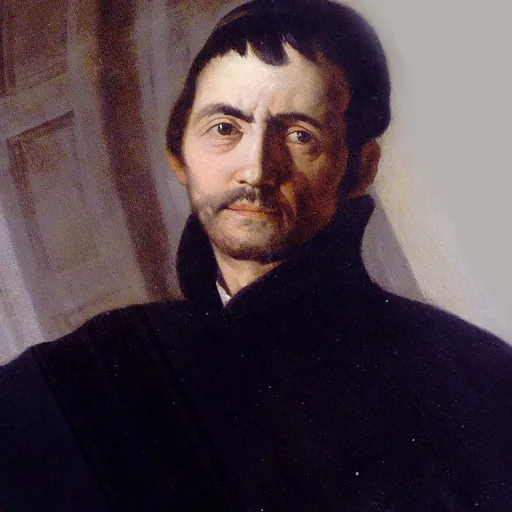
About Andrea Pozzo
Lived 1642 – 1709 (aged 66). Andrea Pozzo was a German painter, architect, religious and draftsperson.
Andrea Pozzo (; Latinized version: Andreas Puteus; 30 November 1642 – 31 August 1709) was an Italian Jesuit brother, Baroque painter, architect, decorator, stage designer, and art theoretician.
Pozzo was best known for his grandiose frescoes using the technique of quadratura to create an illusion of three-dimensional space on flat surfaces. His masterpiece is the nave ceiling of the Church of Sant'Ignazio in Rome. Through his techniques, he became one of the most noteworthy figures of the Baroque period. He is also noted for the architectural plans of Ljubljana Cathedral (1700), inspired by the designs of the Jesuit churches Il Gesù and S. Ignazio in Rome.
Biography Early years Born in Trento (then under Austrian rule), he studied Humanities at the local Jesuit High School. Showing artistic inclinations he was sent by his father to work with an artist; Pozzo was then 17 years old (in 1659). Judging by aspects of his early style this initial artistic training came probably from Palma il Giovane. After three years, he came under the guidance of another unidentified painter from the workshop of Andrea Sacchi, who appears to have taught him the techniques of Roman High Baroque. He would later travel to Como and Milan.
As a Jesuit On 25 December 1665, he entered the Jesuit Order as a lay brother. In 1668, he was assigned to the Casa Professa of San Fidele in Milan, where his festival decorations in honour of Francis Borgia recently canonised (1671) met general approval. He continued artistic training in Genoa and Venice. His early paintings attest the influence of the Lombard School: rich colour, and graphic chiaroscuro. When he painted in Genoa the Life of Jesus for the Congregazione de' Mercanti, he was undoubtedly inspired by Peter Paul Rubens.
Early church decoration Pozzo's artistic activity was related to the Jesuit Order's enormous artistic needs; many Jesuit churches had been built in recent decades and were devoid of painted decoration. He was frequently employed by the Jesuits to decorate churches and buildings such as their churches of Modena, Bologna and Arezzo. In 1676, he decorated the interior of San Francis Xavier church in Mondovì. In this church one can already see his later illusionistic techniques: fake gilding, bronze-coloured statues, marbled columns and a trompe-l'œil dome on a flat ceiling, peopled with foreshortened figures in architectural settings. This was his first large fresco.
In Turin (1678), Pozzo painted the ceiling of the Jesuit church of SS. Martiri. The frescoes gradually deteriorated through water infiltration. They were replaced in 1844 by new paintings by Luigi Vacca. Only fragments of the original frescoes survive.
Call to Rome In 1681, Pozzo was called to Rome by Giovanni Paolo Oliva, Superior General of the Jesuits. Among others, Pozzo worked for Livio Odescalchi, the powerful nephew of the pope, Innocent XI. Initially, he was used as a stage designer for biblical pageants, but his illusionistic paintings in perspective for these stages soon gave him a reputation as a virtuoso in wall and ceiling decorations.
The Gesù rooms His first Roman frescoes were in the corridor linking the Church of the Gesù to the rooms where St. Ignatius had lived. His trompe-l'œil architecture and paintings depicting the Saint's life for the Camere di San Ignazio (1681–1686), blended well with already existing paintings by Giacomo Borgognone.
The St Ignatius' Church
His masterpiece, the illusory perspectives in frescoes of the dome, the apse and the ceiling of Rome's Jesuit church of Sant'Ignazio were painted between 1685–1694 and are emblematic of the dramatic conceits of High Roman Baroque. Pozzo was an unrivalled master of perspective; he used light, colour, and an architectural background as means of creating illusion. For several generations, Sant'ignazio set the standard for the decoration of Late Baroque ceiling frescos throughout Catholic Europe. Compare this work to Gaulli's masterpiece in the other major Jesuit church in Rome, Il Gesù.
The church of Sant'Ignazio had remained unfinished with bare ceilings even after its consecration in 1642. Disputes with the original donors, the Ludovisi, had prevented the completion of the planned dome. Pozzo proposed to resolve this by creating the illusion of a dome, when viewed from inside, by painting on canvas. It was impressive to viewers, but controversial; some feared the canvas would soon darken.
On the flat ceiling he painted an allegory of the Apotheosis of S. Ignatius, in breathtaking perspective. The painting, 17 m in diameter, is devised to make an observer, looking from a spot marked by a metal plate set into the floor of the nave, seem to see a lofty vaulted roof decorated by statues, while in fact the ceiling is flat. The painting celebrates the apostolic goals of Jesuit missionaries, eager to expand the reach of Roman Catholicism in other continents. The Counter-Reformation also encouraged a militant Catholicism. For example, rather than placing the usual evangelists or scholarly pillars of doctrine in the pendentives, Pozzo depicted the victorious warriors of the old testament: Judith and Holofernes; David and Goliath; Jael and Sisera; and Samson and the Philistines.
By the skilful use of linear perspective, light, and shade, he made the great barrel-vault of the nave of the church into an idealized aula from which is seen the reception of St. Ignatius into the opened heavens.
In 1702, Pozzo painted a cupola on canvas for the Badia delle Sante Flora e Lucilla in Arezzo.
In Vienna In 1694, Andrea Pozzo had explained his illusory techniques in a letter to Anton Florian, Prince of Liechtenstein and ambassador of Emperor Leopold I to the Papal Court in Rome. Recommended by Prince Liechtenstein to the emperor, Andrea Pozzo, on the invitation of Leopold I, moved in 1702 (1703?) to Vienna. There he worked for the sovereign, the court, Prince Johann Adam von Liechtenstein, and various religious orders and churches, such as the frescoes and the trompe-l'œil dome in the Jesuit Church. Some of his tasks were of a decorative, occasional character (church and theatre scenery), and these were soon destroyed.
His most significant surviving work in Vienna is the monumental ceiling fresco of the Hercules Hall of the Liechtenstein garden palace (1707), an Admittance of Hercules to Olympus, which, according to the sources, was very admired by contemporaries. Through illusionistic effects, the architectural painting starts unfolding at the border of the ceiling, while the ceiling seems to open up into a heavenly realm filled with Olympian gods.
Some of his Viennese altarpieces have also survived (Vienna's Jesuit church). His compositions of altarpieces and illusory ceiling frescoes had a strong influence on the Baroque art in Vienna. He also had many followers in Hungary, Bohemia, Moravia, Slovakia and Poland. His canvases show him to be a far less compelling a painter at close inspection.
Death Pozzo died in Vienna in 1709,
Writing and architecture
Pozzo published his artistic ideas in a noted theoretical work, entitled Perspectiva pictorum et architectorum (2 volumes, 1693, 1698) illustrated with 118 engravings, dedicated to emperor Leopold I. In it he offered instruction in painting architectural perspectives and stage-sets. The work was one of the earliest manuals on perspective for artists and architects and went into many editions, even into the 19th century, and has been translated from the original Latin and Italian into numerous languages such as French, German, English and, Chinese thanks to Pozzo's Jesuit connection.
There are a few architectural designs in Pozzo's book Perspectiva pictorum et architectorum, indicating that he did not make any designs before 1690. These designs were not realized, but the design for the S. Apollinare church in Rome was used for the Jesuit church of San Francesco Saverio (1700–1702) in Trento. The interior of this church was equally designed by Pozzo.
Between 1701 and 1702, Pozzo designed the Jesuit churches of San Bernardo and Chiesa del Gesù in Montepulciano, but his plans for the last church were only partly realized. He also took part in the design of the Chiesa di San Francesco Saverio in Mondovì.
Don’t just read it —
keep it.
Full-length biographies made to live with: read them, listen on the way to work, watch them tonight.
- E-book
- Audio
- Video
Instant download · yours to keep · every purchase keeps this site free
Important facts
more
Pozzo Andrea dal, Andrea Puteus, Cavalieri Andrea Pozzi, André Pozzi, Padre Pozzi, P. Pozzi Gesuita, Le Pere del Pozzo, Padre Pozzo, Cavalieri Pozzi, andrea dal pozzo, A. Pozzi, Padre PoudzyPeople in Andrea Pozzo's life
Named in this biography and alive at the same time



Related people
Same field, nearest in time

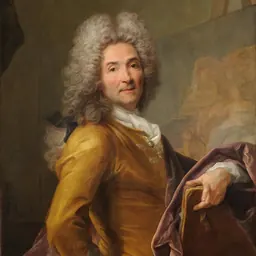
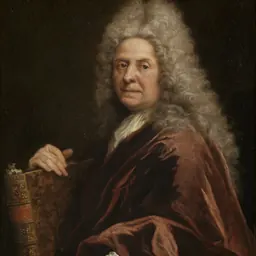
Contemporaries
People whose lives overlapped Andrea Pozzo's




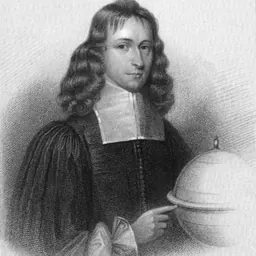
Frequently asked questions
Who was Andrea Pozzo?
painter of the Late Baroque (1642-1709)
When was Andrea Pozzo born?
Andrea Pozzo was born on 30 November 1642 in Trento.
When did Andrea Pozzo die?
Andrea Pozzo died on 31 August 1709 in Vienna.
What was Andrea Pozzo's occupation?
Andrea Pozzo was a painter, architect, religious and draftsperson.
What nationality was Andrea Pozzo?
Andrea Pozzo was German.
Sources & further reading
Cite this page
APA: Biography.guide. (2026). Andrea Pozzo. https://biography.guide/andrea-pozzo/
MLA: "Andrea Pozzo." Biography.guide, https://biography.guide/andrea-pozzo/.
Chicago: "Andrea Pozzo." Biography.guide. https://biography.guide/andrea-pozzo/.
Data last updated: 2026-09-21 · Spot an error? Report a correction.
Portrait: Wikimedia Commons · author & licence
Page generated 2026-09-27 05:01 UTC