
About Andrea Sacchi
Lived 1599 – 1661 (aged 61). Andrea Sacchi was an Italian painter, architect, draftsperson and fresco painter.
Andrea Sacchi (30 November 159921 June 1661) was an Italian painter of High Baroque Classicism, active in Rome. A generation of artists who shared his style of art include the painters Nicolas Poussin and Giovanni Battista Passeri, the sculptors Alessandro Algardi and François Duquesnoy, and the contemporary biographer Giovanni Bellori.
Early training Sacchi was, for a long time, believed to have been born in Nettuno, a coastal town close to Rome, although current scholarship regards this as incorrect, instead suggesting that he was born in Rome. His father, Benedetto, was an undistinguished painter. According to the biographer Giovanni Pietro Bellori (who was also a great friend of Sacchi's), Andrea initially entered the studio of Cavalier d'Arpino. These are Bellori's words:
Sacchi later entered Francesco Albani's workshop and spent most of his time in Rome where he eventually died. Much of his early career was helped by the regular patronage by Cardinal Antonio Barberini, who commissioned art for the Capuchin church in Rome and the Palazzo Barberini.
Mature style A contemporary rival of Pietro da Cortona, Sacchi studied the paintings of Raphael and the influence of Raphael is apparent in a number of his works, particularly with reference to the use of few figures and their expressions. He reputedly travelled to Venice and Parma and studied the works of Correggio.
Two of his major works on canvas are altarpieces now displayed in the Pinacoteca Vaticana, the painting gallery in the Vatican (see Main works below).
Controversy with Pietro da Cortona As a young man, Sacchi had worked under Cortona at the Villa Sacchetti at Castelfusano (1627–1629). But in a set of public debates at the Accademia di San Luca, the guild for artists in Rome, he strongly criticized Cortona's exuberance. The debate is significant because it indicates how two of the leading proponents of the prevailing styles in painting, now called 'Classical' and 'Baroque', discussed the differences between their work.
In particular, Sacchi advocated that since a unique, individual expression, gesture and movement needed to be assigned to each figure in a composition, so a painting should only have a few figures.
Sacchi died at Nettuno in 1661.
Main works
Allegory of Divine Wisdom at the Palazzo Barberini
This fresco by Sacchi in the Palazzo Barberini in Rome is considered his masterpiece. It depicts Divine Wisdom (1629–33). The work was inspired by Raphael's Parnasus in the Raphael's Rooms in the Vatican Palace.
St Gregory and the Miracle of the Corporal Also known as the Miracle of St Gregory the Great, this painting was executed in 1625-57. It is now in the Pinacoteca Vaticana.
The canvas portrays the legend that the Empress Constantia had begged Pope Gregory I to give her relics of the body of Saints Peter and Paul, but the pope, not daring to disturb the remains of these saints, sent her a fragment of the linen which had enveloped the remains of Saint John the Evangelist. Constantia rejected this gift from the pope as insufficient. Then Gregory, to prove the power of relics to work miracles (and justify their worth), placed the cloth on the altar, and, after praying, pierced it with a knife, and blood flowed from it as from a living body. In 1771, a mosaic copy of this painting was made for the Basilica of St Peter's. This painting echoes positions stated in the canons of the Council of Trent: wherein relics had an important role in miracles, the pope served as the final interpreter of sanctity, and finally it was a metaphor of the validity of the eucharist as the true body of Christ.
Vision of St. Romuald
Completed in 1631, this painting in the Pinacoteca Vaticana recalls an episode in the life of the early Benedictine monk, Saint Romuald, of the Camaldolese Order, who is said to have dreamt that members of his Order wearing white ascended into heaven (as seen in background). The serenity and gravity of the monks, arrayed as in philosophic discourse, is characteristic of Sacchi.
Other works
Other leading examples of Sacchi's work are The Death of St. Anne, in San Carlo ai Catinari, Rome; St. Andrew, in the Quirinal Palace; St. Joseph, at Caponile Case; and The Three Marys (1634), at Palazzo Barberini, Rome. The Birth of St. John the Baptist and a Portrait of Francesco Albani among other interesting works at the Prado Museum, Madrid. Other altarpieces by Sacchi are in Perugia, Foligno and Camerino.
Don’t just read it —
keep it.
Full-length biographies made to live with: read them, listen on the way to work, watch them tonight.
- E-book
- Audio
- Video
Instant download · yours to keep · every purchase keeps this site free
Important facts
more
Andrea Sacci, Andrea Sacco, And. Sacchi, Andrew Sacchi, Andres Saco, Andrea Sacchi called Ouche, Andrea, called Ouche Sacchi, Andre Sacchi, Sacchi, a. sacchi, A. Sachi, Adre Sacchi, And.a Sacco, A. Sauhi, André Sachi, A.a Sacchi, Sig.re Andrea, A. Sacci, André Zachi, Andrea Sachi, André Asachi, And. Sacche, Andrea Sach, Andr. Sachy, Andrea Sachii, And.a Sacchi, Andrea Succhi, Andrea Sachy, A. SacchaPeople in Andrea Sacchi's life
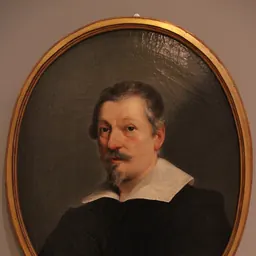
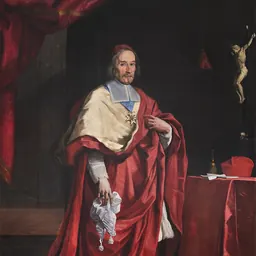
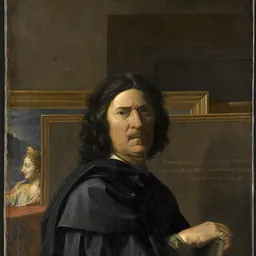
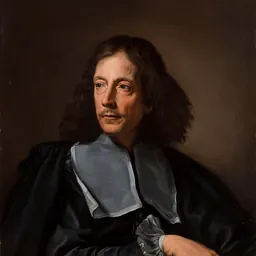
Named in this biography and alive at the same time




Related people
Same field, nearest in time
Contemporaries
People whose lives overlapped Andrea Sacchi's





Frequently asked questions
Who was Andrea Sacchi?
painter active in Rome (1599-1661)
When was Andrea Sacchi born?
Andrea Sacchi was born on 30 November 1599 in Nettuno, Rome.
When did Andrea Sacchi die?
Andrea Sacchi died on 21 June 1661 in Rome.
What was Andrea Sacchi's occupation?
Andrea Sacchi was a painter, architect, draftsperson and fresco painter.
What nationality was Andrea Sacchi?
Andrea Sacchi was Italian.
Sources & further reading
Cite this page
APA: Biography.guide. (2026). Andrea Sacchi. https://biography.guide/andrea-sacchi/
MLA: "Andrea Sacchi." Biography.guide, https://biography.guide/andrea-sacchi/.
Chicago: "Andrea Sacchi." Biography.guide. https://biography.guide/andrea-sacchi/.
Data last updated: 2026-09-20 · Spot an error? Report a correction.
Page generated 2026-09-27 05:26 UTC