
About Godfrey Kneller
Lived 1646 – 1723 (aged 77). Godfrey Kneller was a German and British painter, draftsperson, engraver and miniature painter, known for Portrait painter.
Sir Godfrey Kneller, 1st Baronet ( ; born Gottfried Kniller; 8 August 1646 – 19 October 1723) was a British painter of German origin. The leading portraitist in England during the late Stuart and early Georgian eras, he served as court painter to successive English and British monarchs, including Charles II of England and George I of Great Britain. Kneller also painted scientists such as Isaac Newton, foreign monarchs such as Louis XIV of France and visitors to England such as Michael Shen Fu-Tsung. A pioneer of the kit-cat portrait, he was also commissioned by William III of England to paint eight "Hampton Court Beauties" to match a similar series of paintings of Charles II's "Windsor Beauties" that had been painted by Kneller's predecessor as court painter, Peter Lely.
Early life
Sir John Vanbrugh in Kneller's Kit-cat portrait, considered one of Kneller's finest portraits. Kneller was born Gottfried Kniller in the Free City of Lübeck, the son of Zacharias Kniller, a portrait painter. Kneller initially studied mathematics at the University of Leiden, however, owing to his inclination for drawing, became a pupil of Ferdinand Bol and Rembrandt Harmenszoon van Rijn in Amsterdam by choice of his father. His earliest dated work, no doubt a technical product of this period, is of Johann Philipp von Schönborn, completed in 1666 and now hanging at the Kunsthistorisches Museum in Vienna.
He then travelled with his brother John Zacharias Kneller, who was an ornamental painter, to Rome and Venice in the early 1670s, painting historical subjects and portraits in the studio of Carlo Maratti, and later moved to Hamburg.
Career The brothers came to England in 1676, and won the patronage of the Duke of Monmouth. He was introduced to, and painted a portrait of, Charles II.
In England, Kneller concentrated almost entirely on portraiture. In the spirit of enterprise, he founded a studio which churned out portraits on an almost industrial scale, relying on a brief sketch of the face with details added to a formulaic model, aided by the fashion for gentlemen to wear full wigs. Under this system, Kneller was capable of receiving up to fourteen sitters in a single day. His portraits set a pattern that was followed until William Hogarth and Joshua Reynolds.
He eventually established himself as a leading portraitist in England. When Sir Peter Lely died in 1680, Kneller was jointly appointed Principal Painter in Ordinary with John Riley to the Crown by Charles II.
For about 20 years (–1702) he lived at No. 1617 The Great Piazza, Covent Garden. Kneller's studio manager was Edward Byng.
Between early 1690 and late 1691, Kneller painted the Hampton Court Beauties depicting the most glamorous ladies-in-waiting of the Royal Court by commission from Queen Mary II. In 1692, Kneller received his knighthood from William III, consequent to the success of the works. Kneller's Beauties emulated the Windsor Beauties by Sir Peter Lely, which were painted for Anne Hyde, duchess of York, Queen Mary II's mother. an honorary degree awarded by the University of Oxford now confined to the recognition of 'excellence in legal scholarship'. In 1700, he was also created a Knight of the Holy Roman Empire by Emperor Leopold I.
He produced a series of "Kit-cat" portraits - recognisable from their unique 28" x 36" dimension - of 48 leading politicians and men of letters who were members of the Kit-Cat Club. Richard Steele, and Alexander Pope.
On the landing in Horsham Museum in West Sussex hang works of art from the museum's extensive painting collection, featuring a large 18th-century portrait of Charles Eversfield and his wife, of Denne Park House.
Legal Career Passage from Alexander Pope's satire of The Second Epistle of the Second Book of Horace. In addition to Kneller's work as a painter, in the early 1700s he also served as a Justice of the Peace - or as it is more commonly termed today, a magistrate - for the county of Middlesex. He is said to have had a 'shrewd wit and sound judgment' and that he 'exercised a rough-and-ready sort of equity which commanded respect'.
Personal life
He married a widow, Susanna Grave, on 23 January 1704 at St Bride's Church, London.
Death Kneller died the night of 19 October 1723 at Great Queen Street having suffered a year and five months from fever. He had been a churchwarden at St Mary's when the 14th-century nave collapsed in 1713 and was active in the plans for the church's reconstruction by John James. His widow was buried at Twickenham on 11 December 1729.
Legacy
A memorial was erected in Westminster Abbey.
Kneller and his wife had no children together. and who took his grandfather's surname Kneller by private act of Parliament - (4 Geo. 2. c. 32 ) - as a condition of his inheritance.
The site of the house Kneller built in 1709 in Whitton, near Twickenham, became occupied by the mid-19th century Kneller Hall, home of the Royal Military School of Music.
Works In his hometown Lübeck there are works to be seen in the St. Annen Museum and in Saint Catherine Church. His former works at St. Mary's Church were destroyed by the Bombing of Lübeck 1942. A large oil portrait (84" x 55") of James VII of Scotland (King James II of England) hangs on the main staircase of private members' club, The Caledonian Club, in Belgravia, London.
A portrait of Queen Anne that belongs to Trinity Hospital in Retford, Nottinghamshire has been attributed to Kneller by the auctioneers Phillips – though it is unsigned. The hospital has a strong connection with Queen Anne, the founder being a first cousin of her grandmother. The portrait was restored and cleaned in 1999.
Gallery
Don’t just read it —
keep it.
Full-length biographies made to live with: read them, listen on the way to work, watch them tonight.
- E-book
- Audio
- Video
Instant download · yours to keep · every purchase keeps this site free
Important facts
more
Godfrey, Baronet Kneller, G. Kneller, Sir Kneller, Sir Godfrey, Sir Gottfried Kneller, Sir Godfrey Kniller, 1st Baronet, Gottfried Kneller (Sir), Bart. Kneller, Bt, Sr Godfrey Kneller, Sr Godfrey Neler, Knellor, godefrey kneller, Neller, S. G. Knellen, Sir G Kneller, kneller godfrey sir, Nellor, Sir God. Kneller, GodfrPeople in Godfrey Kneller's life
Named in this biography and alive at the same time
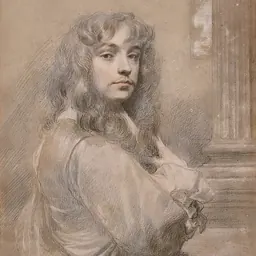
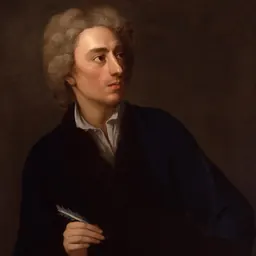
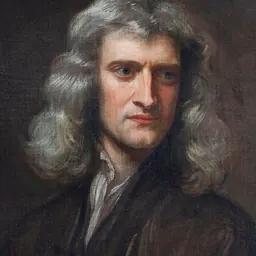
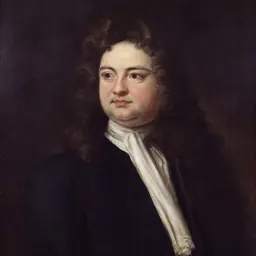
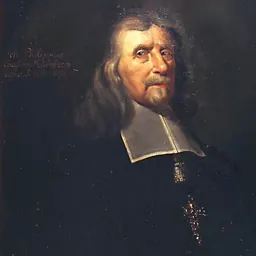

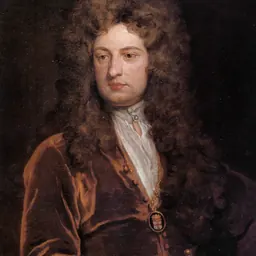

Related people
Same field, nearest in time
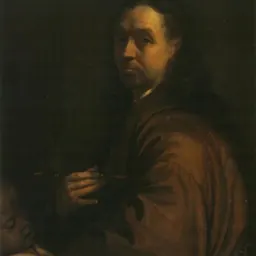
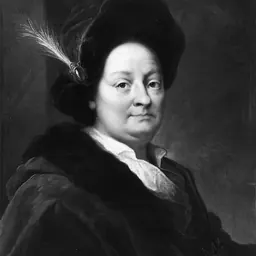
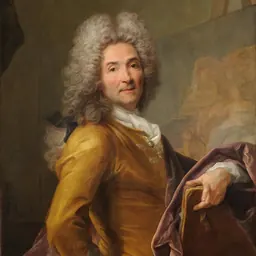
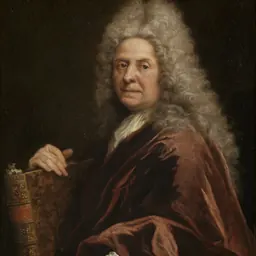

Contemporaries
People whose lives overlapped Godfrey Kneller's





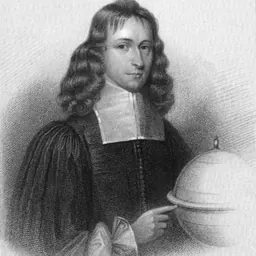
Frequently asked questions
Who was Godfrey Kneller?
German-born British painter (1646–1723)
When was Godfrey Kneller born?
Godfrey Kneller was born on 8 August 1646 in Lübeck.
When did Godfrey Kneller die?
Godfrey Kneller died on 19 October 1723 in London.
What was Godfrey Kneller's occupation?
Godfrey Kneller was a painter, draftsperson, engraver and miniature painter.
What was Godfrey Kneller known for?
Godfrey Kneller was known for Portrait painter.
What nationality was Godfrey Kneller?
Godfrey Kneller was German and British.
Sources & further reading
Cite this page
APA: Biography.guide. (2026). Godfrey Kneller. https://biography.guide/godfrey-kneller/
MLA: "Godfrey Kneller." Biography.guide, https://biography.guide/godfrey-kneller/.
Chicago: "Godfrey Kneller." Biography.guide. https://biography.guide/godfrey-kneller/.
Data last updated: 2026-09-22 · Spot an error? Report a correction.
Page generated 2026-09-27 05:17 UTC