
About Nancy Morejón
Born 1944. Nancy Morejón is a Cuban writer and poet.
Nancy Morejón (born August 7, 1944 in Havana) is a Cuban poet, critic, teacher, and essayist. She was a recipient of the Struga Poetry Evenings Golden Wreath Award and has been called "the best known and most widely translated woman poet of post-revolutionary Cuba".
Biography
Early life She was born and raised in a district of old Havana to working-class parents, Angélica Hernández Domínguez and Felipe Morejón Noyola. Her parents were both of African heritage. Though religious images could be found in her home, Morejón only went to church with her mother until she was six or seven years old. The Cuban Revolution ended that very same year, to which Morejón credits her opportunity to attend university despite her socioeconomic status. Before she got her high school degree in 1961, Morejón taught English, and she taught French before getting her college degree. In 1966, she graduated with honours from the University of Havana, the first Afro-Cuban to do so, having studied Caribbean and French literature. She is a well-regarded translator of French and English into Spanish, particularly Caribbean writers including Edouard Glissant, Jacques Roumain, Aimé Césaire and René Depestre. She has lectured at universities throughout the country and has taught at Wellesley College and the University of Missouri, which, in 1995, conducted a two-day symposium on her work and published the papers in a special issue of the Afro-Hispanic Review. Morejón, as of 2013, is director of Revista Union, the journal of the Unión de Escritores y Artistas de Cuba (the Union of Writers and Artists of Cuba; UNEAC); in 2008, she was elected president of the writer's section of UNEAC.
Writing and awards She has produced a number of journalistic, critical, and dramatic works. One of them is her book-length treatment of poet Nicolás Guillén. In 1982, she was awarded the Cuban "Premio de la Crítica" (Critic's Prize) for Piedra Pulida, and in 2001, she won Cuba's National Prize for Literature, awarded for the first time to a black woman. This national prize for literature was created in 1983; Nicolás Guillén was the first to receive it. She also won the Golden Wreath of the Struga Poetry Evenings for 2006. She has toured extensively in the United States and in other countries. Morejón's poetry has been translated into English, German, French, Portuguese, Galician, Russian, Macedonian, and other languages, and is included in the 1992 anthology Daughters of Africa, edited by Margaret Busby.
In 1999, Howard University Press in Washington, D.C., published in 1999, a collection of critical essays on her work: Singular Like a Bird: The Art of Nancy Morejon, compiled and prefaced by Miriam DeCosta-Willis, Ph.D. A collection of her poems entitled Richard trajo su flauta y otros argumentos (Richard brought his flute), edited by Mario Benedetti at Visor Books, was published in Madrid in the spring of 2005.
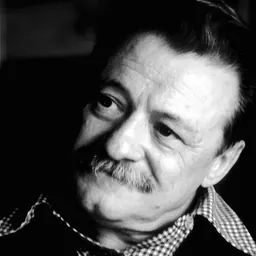
Relationship with Nicolás Guillén From the early 1970s until the early ‘80s, Nancy Morejón worked on Nación y mestizaje en Nicolás Guillén under the supervision of Mario Benedetti and Roberto Fernández Retamar, who requested that she her to analyze Guillén’s work. According to Abilio Estévez, a well- known Cuban, Nicolás Guillén greatly supported her. He included a tribute to her in one of his pieces called La rueda dentada.
Literary analysis Morejón's work explores a range of topics, such as the mythology of the Cuban nation and the relation of the Black people of Cuba within that nation. Her work treats political themes as well as intimate, familial topics. She often expresses an integrationist stance, in which Spanish and African cultures fuse to make a new Cuban identity. Much of her work—and the fact that she has been successful within the Cuban regime—locates her as a supporter of Cuban nationalism and the Cuban Revolution. Her work also treats slavery as an ancestral experience. Critics have noted her playful observations about her own people, her effective use of particularly Cuban forms of humor, and her regular "indulgence" in highly lyrical, intimate, spiritual, or erotic poetry. Through her poetry, Morejón brings forward less known history.She also integrates elements of Yoruba and other African spiritualities into her writing, reflecting Cuba’s religious landscape. Morejón was fourteen years old when the Cuban Revolution ended. Nevertheless, the imagery and references in some of her poems, such as the ones from Richard trajo su flauta y otros argumentos, demonstrate the influence of the revolution on her work. Mutismos. Habana: Ediciones El Puente, 1962 Nación y mestizaje en Nicolás Guillén. Habana: Ediciones Unión, 1982 Octubre imprescindible. Habana: Ediciones Unión, 1982 Paisaje célebre. Caracas: Fundarte, Alcaldía de Caracas, 1993 Parajes de una época. Habana: Editorial Letras Caubanas, 1979 Piedra pulida. Habana: Editorial Letras Cubanas, 1986 Poemas. Mexico City: Universidad Autónoma de México, 1980 Poetas del mundo Latino en Tlaxcala. Tlaxcala: Universidad Autónoma de Tlaxcala, 1988 Recopilación de textos sobre Nicolás Guillén, ed. Habana Casa de las Américas, 1974 Richard trajo su flauta y otros argumentos. Habana: Unión de Escritores y Artistas de Cuba, 1967 Where the Island Sleeps Like a Wing. Trans. Kathleen Weaver. San Francisco: The Black Scholar Press, 1985 Mirar Adentro/Looking Within: Selected Poems, 1954-2000 (bilingual edition, African American Life Series). Ed. Juanamaria Cordones-Cook. Wayne State University Press, 2002, With Eyes and Soul: Images of Cuba. Trans. Pamela Carmell and David Frye. White Pine Press, 2004,
Monographs "A un muchacho," "Niña que lee en Estelí", "Soldado y yo". Toulouse: Caravelle, 1982 Baladas para un sueño. Habana: Unión de Escritores y Artistas de Cuba, 1989 Le Chaînon Poétique (in French). Trans. Sandra Monet-Descombey. Champigny-sur-Marne, France: Edition L. C. J., 1994 Cuaderno de Granada. Habana: Casa de las Américas, 1984 Dos poemas de Nancy Morejón. Drawings and design by Rolando Estévez. Matanzas, Cuba: Ediciones Vigía, 1989 Lengua de pájaro. With Carmen Gonce. Habana: Instituto Cubano del Libro, 1971 Poemas de amor y de muerte. Toulouse: Caravelle, 1993 Ours the Earth. Trans. J. R. Pereira. Mona, Jamaica: Institute of Caribbean Studies, 1990 El río de Martín Pérez y otros poemas. Drawings and design by Rolando Estévez. Matanzas, Cuba: Ediciones Vigía, 1996
Don’t just read it —
keep it.
Full-length biographies made to live with: read them, listen on the way to work, watch them tonight.
- E-book
- Audio
- Video
Instant download · yours to keep · every purchase keeps this site free
Important facts
People in Nancy Morejón's life
Named in this biography and alive at the same time






Related people
Same field, nearest in time

Contemporaries
People whose lives overlapped Nancy Morejón's


Frequently asked questions
Who is Nancy Morejón?
Cuban writer
When was Nancy Morejón born?
Nancy Morejón was born on 7 August 1944 in Havana.
What is Nancy Morejón's occupation?
Nancy Morejón is a writer and poet.
What nationality is Nancy Morejón?
Nancy Morejón is Cuban.
Sources & further reading
Cite this page
APA: Biography.guide. (2026). Nancy Morejón. https://biography.guide/nancy-morejon/
MLA: "Nancy Morejón." Biography.guide, https://biography.guide/nancy-morejon/.
Chicago: "Nancy Morejón." Biography.guide. https://biography.guide/nancy-morejon/.
Data last updated: 2026-09-26 · Spot an error? Report a correction.
Page generated 2026-09-27 05:16 UTC