
Mykola Ovsianiko-Kulikovsky
Ukrainian patron of the purported to have written a symphony
About Mykola Ovsianiko-Kulikovsky
Lived 1768 – 1846 (aged 77–78). Mykola Ovsianiko-Kulikovsky was a composer.
Mykola Ovsianiko-Kulikovsky (Russian: Николай Овсянико-Куликовский, Nikolay Ovsyaniko-Kulikovskiy, 1768–1846) was the purported author of a famous musical hoax Symphony No. 21 (Ovsianiko-Kulikovsky), perpetrated by composer and violinist Mikhail Goldstein.
In 1948, Goldstein announced that he had discovered the manuscript of a symphony by Ovsianiko-Kulikovsky in the archives of the Odesa Conservatory where he worked. The G minor work, numbered 21, was said to have been written in 1809; it bore the inscription "for the dedication of the Odessa Theater". The discovery caused a great deal of excitement in Soviet musical circles, for it was seen as proof that Russia had been able to produce a symphonist of comparable stature to Joseph Haydn. Furthermore, the symphony contained Ukrainian folk songs and ended with a Cossack dance, showing that the composer had a nationalist awareness. This piece was subsequently proven to be a fake.
Description Adagio – Allegro (G minor) Romance. Adagio (G major) Minuet (G minor, with trio in G major) Finale. Kazachok (G major)
Purported composer Little is known about Ovsianiko-Kulikovsky's life besides his dates of birth (1768) and death (1846). A native of Kherson Oblast, he is known to have been a landowner and patron of the arts; in 1810 he presented his orchestra of serfs to the Odessa Theater. No evidence has yet come to light to suggest that he was active as a composer. He was the grandfather of the linguist .
Hoax discovery The piece was performed in Odessa and in Kyiv in 1949, and was published by the state music publishers in 1951. It was also quickly recorded for Melodiya by Yevgeny Mravinsky, and was soon the subject of treatises by two Soviet musicologists.
One of the musicologists to study the work was a composer and Kyiv conservatory professor named , who was asked to examine the manuscript of the symphony. Upon completing his examination, he concluded that neither Ovsianiko-Kulikovsky nor Mikhail Goldstein had written the symphony. Goldstein, however, stated that the symphony was in fact his own work. He had been stung when a communist party functionary savaged his use of Ukrainian themes in one of his own pieces, claiming that as a Jew he could not understand Ukrainian culture and had no right to use it in his music. When Goldstein replied that Beethoven also made use of Ukrainian themes in his "Razumovsky Quartets" the functionary said bluntly that "Beethoven was not a Jew." The symphony, then, was written as an act of revenge, to prove that he could, in fact, write "Ukrainian" music. Vsevolod Chаgovets, a philosemitic Ukrainian musician-friend of his, made the suggestion to ascribe the symphony to "Ovsianniko-Kulikovsky".
Goldstein was branded a liar and a traitor to Soviet culture for his actions; he emigrated from the USSR in 1964 and lived in West Germany from 1969. He spent his remaining years teaching and working as a musicologist in Hamburg.
The hoax was not acknowledged in some later publications. The work continues to be taught in courses on Ukrainian music at the major conservatories in Ukraine.
Publication Ovsianiko-Kulikovsky: Symphony No. 21. full score, 22.2 x 30 cm 79pp. Moscow, Muzgiz, 1951. 480 copies printed.
Recording The Melodiya recording of the symphony has recently been reissued.
MELODIYA - MEL 1000933 Evgeni Mravinsky Glazunov & Ovsianiko-Kulikovski Leningrad Philharmonic Orchestra Evgeni Mravinski, conductor Alexander Glazunov (1865–1936) Symphony No. 4 in E flat Major en, op. 48 Nikolai Ovsianiko-Kulikovski (Michael Goldstein) Symphony No. 21 in G minor 1 CD - ADD - TT: 55' 42 Recorded in 1948 (Glazunov) & 1954 (Ovsianiko-Kulikovski)
Don’t just read it —
keep it.
Full-length biographies made to live with: read them, listen on the way to work, watch them tonight.
- E-book
- Audio
- Video
Instant download · yours to keep · every purchase keeps this site free
Important facts
People in Mykola Ovsianiko-Kulikovsky's life
Named in this biography and alive at the same time
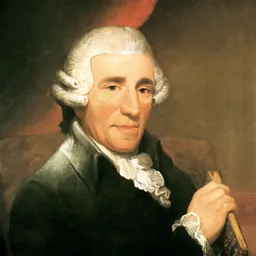
Related people
Same field, nearest in time



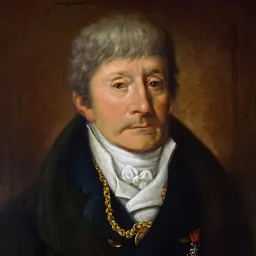

Contemporaries
People whose lives overlapped Mykola Ovsianiko-Kulikovsky's




Frequently asked questions
Who was Mykola Ovsianiko-Kulikovsky?
Ukrainian patron of the purported to have written a symphony
When was Mykola Ovsianiko-Kulikovsky born?
Mykola Ovsianiko-Kulikovsky was born in 1768.
When did Mykola Ovsianiko-Kulikovsky die?
Mykola Ovsianiko-Kulikovsky died in 1846.
What was Mykola Ovsianiko-Kulikovsky's occupation?
Mykola Ovsianiko-Kulikovsky was a composer.
Sources & further reading
· Wikipedia: Mykola Ovsianiko-Kulikovsky
· DBpedia: Mykola Ovsianiko-Kulikovsky
Cite this page
APA: Biography.guide. (2026). Mykola Ovsianiko-Kulikovsky. https://biography.guide/mykola-ovsianiko-kulikovsky/
MLA: "Mykola Ovsianiko-Kulikovsky." Biography.guide, https://biography.guide/mykola-ovsianiko-kulikovsky/.
Chicago: "Mykola Ovsianiko-Kulikovsky." Biography.guide. https://biography.guide/mykola-ovsianiko-kulikovsky/.
Data last updated: 2026-09-20 · Spot an error? Report a correction.
Page generated 2026-09-27 05:09 UTC