
About Mykhaylo Boychuk
Lived 1882 – 1937 (aged 54). Mykhaylo Boychuk was an Austrian and Ukrainian painter and artist.
Mykhailo Lvovych Boychuk (; 30 October 1882 – 13 July 1937) was a Ukrainian monumentalist and modernist painter. He is considered a representative of the generation of the Executed Renaissance.
Biography Boychuk was born in Romanivka, then in Austria-Hungary, and currently in Ternopil Oblast of Ukraine. He studied painting under Yulian Pankevych in Lviv, Between 1907 and 1910 he lived in Paris where, in 1909, he founded his own studio-school. In 1925, he co-founded the Association of Revolutionary Art of Ukraine. At the time, he already performed a number of high-profile monumental works, and formed a school of monumental painters which existed until his death. The school included renowned artists such as his brother Tymofiy Boychuk and Ivan Padalka.
Due to the Great Purge, the Association of Revolutionary Art of Ukraine was disestablished, and Boychuk was executed. His wife, Sofiia Nalepinska, also an artist, was executed several months after Boychuk.
Works Many of the works by Boychuk, which mainly involved frescoes and mosaics, were destroyed after he was executed. Even his paintings which were kept in museums of Lviv, were destroyed after World War II. The main projects carried out or coordinated by Boychuk and his school—which included his brother Tymofiy Boychuk, Ivan Padalka, Vasily Sedlyar, Sofiia Nalepinska, Mykola Kasperovych, Oksana Pavlenko, Antonina Ivanova, Mykola Rokytsky, Kateryna Borodina, Oleksandr Myzin, Kyrylo Hvozdyk, Pavlo Ivanchenko, Serhii Kolos, Okhrym Kravchenko, Hryhorii Dovzhenko, Onufrii Biziukov, Mariia Kotliarevska, Ivan Lypkivsky, Vira Bura-Matsapura, Yaroslava Muzyka, Oleksandr Ruban, Olena Sakhnovska, Manuil Shekhtman, Mariia Trubetska, Kostiantyn Yeleva, and Mariia Yunak — are an important contribution to Ukrainian and world art.
Right after the 1917 October Revolution, Boychuk and a group of students after his direction made frescoes for the Kyiv Theater of Opera and Ballet (1919), the Kharkiv Opera Theater (1921), the Ukrainian SSR's pavilion at the First All-Russian Cottage Industry and Agriculture Exhibition in Moscow, and the Kyiv Co-operative Institute (1923). Later, he switched to the socialist realism style, in which the main works of his group were the Peasant Sanatorium in Odessa (1927–28) and the Kharkiv Chervonozavodskyi Ukrainian Drama Theater (1933–35).
Some of Boychuk's art works are stored in the National Art Museum of Ukraine.
Selected paintings
Don’t just read it —
keep it.
Full-length biographies made to live with: read them, listen on the way to work, watch them tonight.
- E-book
- Audio
- Video
Instant download · yours to keep · every purchase keeps this site free
Important facts
People in Mykhaylo Boychuk's life
Named in this biography and alive at the same time
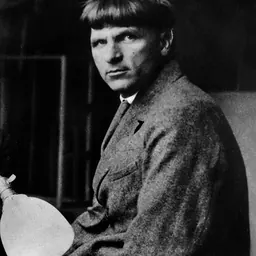
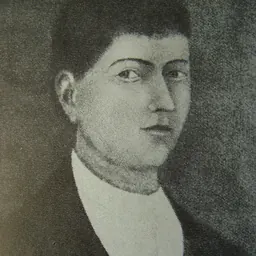
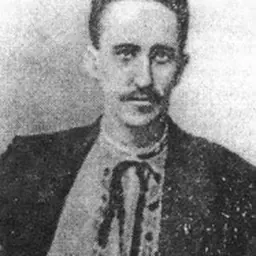
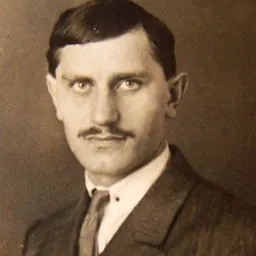



Related people
Same field, nearest in time

Contemporaries
People whose lives overlapped Mykhaylo Boychuk's



Frequently asked questions
Who was Mykhaylo Boychuk?
Ukrainian painter (1882-1937)
When was Mykhaylo Boychuk born?
Mykhaylo Boychuk was born on 30 October 1882 in Romanivka.
When did Mykhaylo Boychuk die?
Mykhaylo Boychuk died on 13 July 1937 in Kyiv.
What was Mykhaylo Boychuk's occupation?
Mykhaylo Boychuk was a painter and artist.
What nationality was Mykhaylo Boychuk?
Mykhaylo Boychuk was Austrian and Ukrainian.
Sources & further reading
Cite this page
APA: Biography.guide. (2026). Mykhaylo Boychuk. https://biography.guide/mykhaylo-boychuk/
MLA: "Mykhaylo Boychuk." Biography.guide, https://biography.guide/mykhaylo-boychuk/.
Chicago: "Mykhaylo Boychuk." Biography.guide. https://biography.guide/mykhaylo-boychuk/.
Data last updated: 2026-09-20 · Spot an error? Report a correction.
Page generated 2026-09-27 05:25 UTC