
About Mosey King
Lived 1884 – 1956 (aged 72). Mosey King was an American boxer.
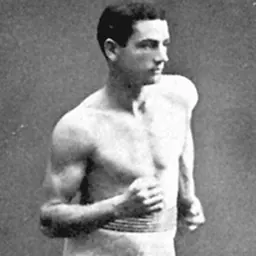
Mosey King (January 1, 1884 – December 10, 1956) was a New England lightweight boxing champion who became an assistant boxing coach at Yale in 1906 under Bill Dole and subsequently served as head coach for forty-six years. King was also Connecticut's first boxing commissioner, serving from 1921 to 1923. At Yale, he was a popular figure, and worked to familiarize members of the football team with boxing to improve their conditioning.
Early life King began boxing as early as fourteen. One of eight children with mostly biblical names, he was born in New York on January 1, 1884, to Jewish parents, but moved to New London, Connecticut at the age of five. He may have shared Tony Nelson as a boxing coach in his youth with fellow New London boxers Austin Rice, a contender for the World Featherweight Title, and Abe Hollandersky, a welterweight, and Panamanian Heavyweight champion. Nelson was at one time a cornerman for the undefeated Lightweight World Champion Jack McAuliffe.
Boxing career and lightweight championship of New England
One of King's earliest bouts, around the age of sixteen, was with Patsy Sweeney at the New London Opera House on January 11, 1899. Though King lost the six round bout by TKO, Sweeny was a talented boxer who would meet 1906 welterweight champion William "Honey" Mellody three times from 1903–4.
On May 1, 1902, at only eighteen, King won a fight billed as the Lightweight Championship of New England by defeating Shorty Gans in New Britain by knockout in sixteen rounds. Dick Howell, a reporter for Bridgeport's Sunday Herald was the referee. King's manager was Jack Gaffney, originally of New London, and one of King's early training partners. The Herald reporter noted that King's "ducking, blocking, timing, and ability to judge distance were of the first order."
On November 20, 1902, King fought Martin Canole in Fall River, Massachusetts to a six-round draw. Holding his own with a boxer of this caliber showed great promise for the determined eighteen-year-old. Canole was considered to have competed for Lightweight championships by the time of his fight with King.
King fought Willie Lewis, a future World Welterweight contender, losing in two twenty round bouts in 1902 in New Brittain, and New London, Connecticut. He met William "Honey" Melody, 1906 Welterweight Champion, on March 31, 1903 in Boston, losing by a points decision in eight rounds. On March 26, 1904 in Chicago, he lost in six rounds to Kid Goodman, an exceptional welterweight, who would fight champions Abe Attell, Harry Lewis, and Young Corbett II the following year.
King was more in his element fighting top regional lightweights, meeting Jeff Doherty in April 1906 and June 1907 in New Haven. King's close ten round bout with regional lightweight champion Jeff Doherty on June 21, 1907, sanctioned as a Connecticut Lightweight Title match, was a pre-arranged draw.
In 1921, King agreed to box Jack McAuliffe, former undefeated Lightweight World Champion 1886–93, in a benefit for Austin Rice. Rice had been a frequent New London boxing opponent and training partner before his untimely death. One of King's likely early coaches, Tony Nelson, had once been a corner man for McAuliffe.
A year later in December 1921, the Norwich Bulletin, in a tribute to King's popularity at Yale, wrote that "When he assumed charge of the Yale boxing class, "Mosey" had only twenty-five youngsters confronting him eager to learn the inside stuff of the Marquis of Queensbury sport. Yesterday, when his seventh call was answered, three hundred pupils put their names down as candidates for the Yale boxing team."
Upon assuming his duties with the Connecticut boxing commission in the fall of 1921, King was quoted as saying "There'll be no phony stuff as far as boxing is concerned in Connecticut. We mean business and the New York Promoters who have been using Connecticut as a place to exploit a lot of bouts not above board can take notice."
King was often depicted as a vibrant man concerned about the lives of youths. In 1927, he rescued a twenty-year-old Yale student whose rubber raft had floated far out into Long Island sound.
Later life King retired from Yale around 1953 but remained in New Haven and continued to help students in need. He stayed on as coach a few years after Yale had abandoned boxing as an intercollegiate sport.
Don’t just read it —
keep it.
Full-length biographies made to live with: read them, listen on the way to work, watch them tonight.
- E-book
- Audio
- Video
Instant download · yours to keep · every purchase keeps this site free
Important facts
People in Mosey King's life
Named in this biography and alive at the same time


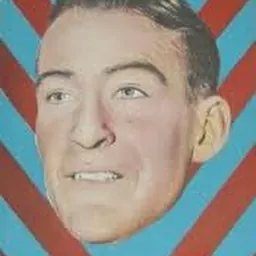

Related people
Same field, nearest in time
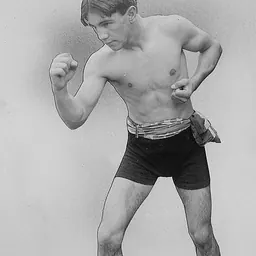
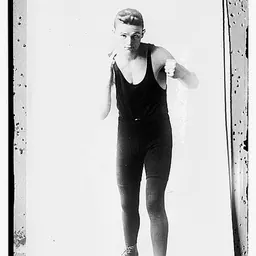
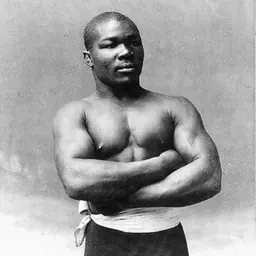
Contemporaries
People whose lives overlapped Mosey King's

Frequently asked questions
Who was Mosey King?
American boxer (1884-1956)
When was Mosey King born?
Mosey King was born on 1 January 1884 in New York City.
When did Mosey King die?
Mosey King died on 10 December 1956 in New Haven.
What was Mosey King's occupation?
Mosey King was a boxer.
What nationality was Mosey King?
Mosey King was American.
Sources & further reading
Cite this page
APA: Biography.guide. (2026). Mosey King. https://biography.guide/mosey-king/
MLA: "Mosey King." Biography.guide, https://biography.guide/mosey-king/.
Chicago: "Mosey King." Biography.guide. https://biography.guide/mosey-king/.
Data last updated: 2026-09-20 · Spot an error? Report a correction.
Page generated 2026-09-27 04:59 UTC