
Morton D. May
American philanthropist and art collector
About Morton D. May
Lived 1914 – 1983 (aged 69). Morton D. May was an American art collector, photographer and philanthropist, known for The May Department Stores Company.
Morton David May (25 March 1914 – 13 April 1983) (known as Buster to his friends and colleagues) was an American philanthropist and art collector. He was also at various times director, chairman of the board, and chief executive officer of the May Department Stores Company.
Biography May was born to a Jewish family, the son of Sarah (née Hirsch) and Morton J. May. He was the grandson of David May, who started the family in merchandising from a canvas-roofed makeshift shop, in the then-populous city of Leadville, Colorado, during a gold strike in 1877. He soon came to the conclusion that there was no future there, and moved his business to Denver, Colorado. The whole May family would move out to St. Louis, Missouri in 1905. He opened a store there and later bought out the William Barr Dry Goods Co., merging it with the Famous Shoe & Clothing Co. — and Famous-Barr was created. Morton J. May, David May's son, took over the family enterprise, and ran it successfully for many years during Morton D. May's childhood. Morton D. May attended St. Louis's Country Day school, and then Dartmouth College.
Career Despite his privileged position as heir to May Department Stores fortune, May started out his career with a summer position in the complaints department. After that he held nearly every position from janitor to chairman of the board. In 1951 he was elected president of the corporation, a position which he held until 1967. Then he was chairman of the board until 1972. He was also chief executive officer from 1957 to 1968. He retired from the corporation's board of directors in 1982 and was elected director emeritus.
Art collection May became interested in collecting art through his uncle by marriage Samuel Abraham Marx in the early 1940s but was interrupted by World War II. When the war was over he traveled to galleries in New York and began investigating the paintings of American artists and Cubists, but soon his interests drifted elsewhere.
In general May focused his collection in three areas, German Expressionism, Mesoamerica, and the indigenous arts of various cultures around the globe, including primarily art from Oceania, Africa, and other Pre-Columbian art that was not specifically from Mesoamerica. In these areas his goal was comprehensiveness. Because he bought so extensively, he sometimes made mistakes, which he famously laughed off, making no effort to conceal them. He even displayed them in his office in the Railway Exchange Building along with his fishing trophies and family photographs. He was introduced to art by his parents when he was in his early teens. They traveled to Europe and toured various museums, trips which he later characterized as 'forced marches'. He did not learn to appreciate art until he was at Dartmouth where he took a course in modern art and architecture. In the 1930s May visited the home in Chicago of the architect Samuel Marx, to whom his aunt was married, and from whom he would later commission a house. When interviewed in 1980, he spoke of the visit:
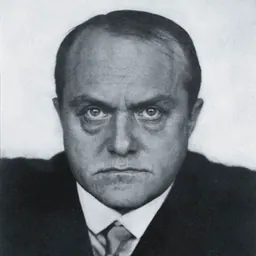
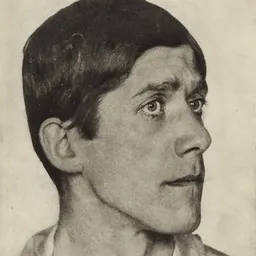
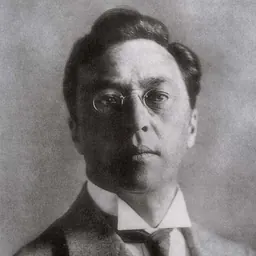
He bought some Pre-Columbian artwork immediately following the war, but mostly between 1945 and the mid-1950s he gave his attention to acquiring German Expressionist works, a movement which were virtually unknown in the United States at the time. In 1948 May asked his friend, the painter Maurice Freedman, if he knew of any artists who were doing good work but weren't very well known. Freedman mentioned Max Beckmann to May, and soon May bought his first Beckmann from dealer Curt Valentin in New York. (The other belonging to Dr. Stephan Lackner of Santa Barbara, California) Wassily Kandinsky, Franz Marc, Erich Heckel and Oskar Kokoschka. During that time period, there wasn't much of a market for Melanesian Art, so what he considered to be authentic ritual pieces (pieces from before European contact) were available at low prices.
Papers documenting the art collection of Morton D. May are housed in the archives of the Saint Louis Art Museum. One can view a description of the contents at this link. They are available to researchers by appointment.
Photography In 1934, during his studies at Dartmouth, he had a rare opportunity to travel to Russia with the free-lance photographer, Julien Bryan. The next year, he made a six-month trip through Russia, Manchuria, and Japan, as Bryan's assistant, Today eight of his photographs are in the Metropolitan Museum of Art in New York, In the early 1960s, May organized the Arts and Education Council in St. Louis because the United Way decided to stop funding cultural organizations to concentrate on health and welfare agencies.
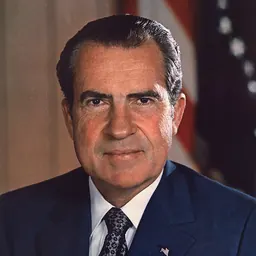
Awards and honors President Richard Nixon offered him the chairmanship of the National Council on the Arts, an advisory committee to the National Endowment for the Arts. He turned it down so that he could stay in St. Louis.
Don’t just read it —
keep it.
Full-length biographies made to live with: read them, listen on the way to work, watch them tonight.
- E-book
- Audio
- Video
Instant download · yours to keep · every purchase keeps this site free
Important facts
People in Morton D. May's life
Named in this biography and alive at the same time



Related people
Same field, nearest in time



Contemporaries
People whose lives overlapped Morton D. May's




Frequently asked questions
Who was Morton D. May?
American philanthropist and art collector (1914-1983)
When was Morton D. May born?
Morton D. May was born on 25 March 1914 in St. Louis.
When did Morton D. May die?
Morton D. May died on 13 April 1983 in St. Louis.
What was Morton D. May's occupation?
Morton D. May was an art collector, photographer and philanthropist.
What was Morton D. May known for?
Morton D. May was known for The May Department Stores Company.
What nationality was Morton D. May?
Morton D. May was American.
Sources & further reading
Cite this page
APA: Biography.guide. (2026). Morton D. May. https://biography.guide/morton-d-may/
MLA: "Morton D. May." Biography.guide, https://biography.guide/morton-d-may/.
Chicago: "Morton D. May." Biography.guide. https://biography.guide/morton-d-may/.
Data last updated: 2026-09-22 · Spot an error? Report a correction.
Page generated 2026-09-27 05:32 UTC