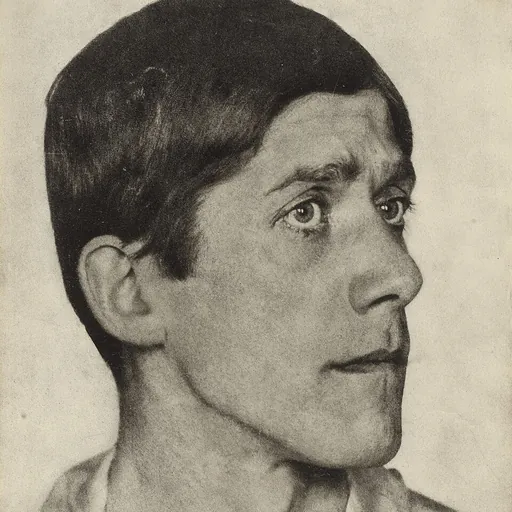
About Oskar Kokoschka
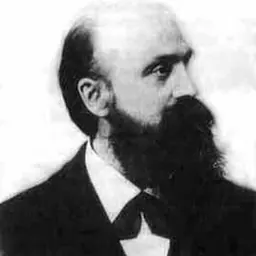
Lived 1886 – 1980 (aged 93). Oskar Kokoschka was an Austrian and Pakistani painter, playwright, poet, university teacher, designer and graphic artist.
Oskar Kokoschka (; 1 March 188622 February 1980) was an Austrian (though, at times during his life, he had also Czech and British citizenship) artist, poet, playwright and teacher, best known for his intense expressionistic portraits and landscapes, as well as his theories on vision that influenced the Viennese Expressionist movement.
Early life
The second child of Gustav Josef Kokoschka, a goldsmith, and Maria Romana Kokoschka (née Loidl), Oskar Kokoschka was born in Pöchlarn. He had a sister, Berta, born in 1889; a brother, Bohuslav, born in 1892; and an elder brother who died in infancy. Oskar had a strong belief in omens, spurred by a story of a fire breaking out in Pöchlarn shortly after his mother gave birth to him.
The family's life was not easy, largely due to a lack of financial stability of his father. They constantly moved into smaller flats, farther and farther from the thriving centre of the town. Concluding that his father was inadequate, Kokoschka drew closer to his mother; and seeing himself as the head of the household, he continued to support his family when he gained financial independence.
Kokoschka entered a Realschule in 1897, a type of secondary school, where emphasis was placed on the study of modern subjects such as the sciences and language. Despite his intent of continuing a formal education in chemistry, Kokoschka was not interested in such subjects, as he only excelled in art, and spent most of his time reading classic literature during his lessons. Like many of Kokoschka's French and German contemporaries, he was interested in the primitive and exotic art featured in the ethnographical exhibits around Europe.
Education
One of Kokoschka's teachers suggested he pursue a career in the fine arts after being impressed by some of his drawings. His early career was marked by portraits of Viennese celebrities, painted in a nervously animated style.
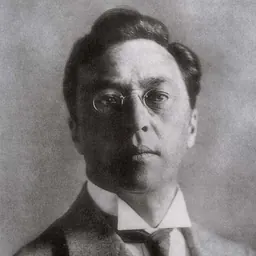
Following his own artistic training, Kokoschka dedicated years of his life thereafter teaching art and writing articles and speeches documenting his views and practices as an educator. 17th-century Czech humanist and education reformer, Jan Amos Comenius, was Kokoschka’s primary influence in terms of how to approach education. From Comenius’s theories, Kokoschka adopted the belief that students benefit most from using their five senses to facilitate reasoning. Kokoschka taught in Vienna from 1911 to 1913 and then again in Dresden from 1919 to 1923. While his efforts as a teacher were noted in various publications, they generally focused on his personality captured within his own art rather than his classroom practices. Kokoschka neglected the conventional structured methodologies and theories assumed by art educators, and instead taught through storytelling infused with mythological themes and dramatic emotion. In considering his own art, Kokoschka expressed that inspiration stemmed from daily observations that he collected optically while engaging with his contemporary surroundings. Kokoschka’s ability to acknowledge how these stimulations manifested within his inner imagination resulted in works that draw upon the subconscious rather than optical vision. Further, Kokoschka granted the viewer with the task of interpreting the image based upon how they experience the vision within their own realm of consciousness. This concept, in congruency with Wassily Kandinsky’s theory pertaining to spirituality in art, has become the basis for which art historians understand Viennese Expressionism.
Career
Vienna Avant-Garde
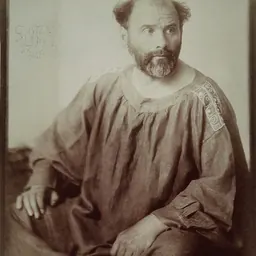
In 1908 Kokoschka was offered the opportunity of submitting works to the first Vienna Kunstschau. In his autobiography, Kokoschka explained the origins of the poem, which follow his personal experience as a young student who was in love with his Swedish classmate, Lilith. Die träumenden Knaben consists of introductory pages with two small black and white lithographs, in addition to eight larger color lithographs with a vertical column of text positioned beside each image. Influenced by the compositions found in medieval art, Kokoschka depicted various moments in time simultaneously within each individual image. Kokoschka also adopted the bold lines and expressive colors of traditional European folk art and juxtaposed them with the stylized ornamentation and two-dimensional bodies of Jugendstil. The final page, titled Das Mädchen Li und ich (the Girl Li and I), features the angular forms of the young boy (Kokoschka) and girl (Lilith), taking on the style of the Belgian sculptor George Minne. This work, which Kokoschka dedicated to his former teacher Gustav Klimt, demonstrates the transition from Jugendstil to Expressionism. But after two years together, Alma rejected him, explaining that she was afraid of being too overcome with passion. She married Walter Gropius in 1915 and lived with him until their divorce in 1920. Kokoschka continued to love Alma Mahler his entire life, and one of his most acclaimed works, The Bride of the Wind (The Tempest; 1913), is expressive of their relationship. The poet Georg Trakl visited the studio while Kokoschka was painting this masterpiece. Kokoschka's poem Allos Makar was inspired by this relationship.
World War I He volunteered for service as a cavalryman in the Austrian army in World War I, and in 1915 was seriously wounded. At the hospital, the doctors decided that he was mentally unstable. Nevertheless, he continued to develop his career as an artist, traveling across Europe and painting the landscape.
He commissioned a life-sized female doll from the dollmaker Hermine Moos in 1918. Although intended to simulate Alma and receive his affection, the 'Alma doll' did not satisfy Kokoschka and he destroyed it during a party.
In 1919, Kokoschka began teaching at the Kunstakademie Dresden. In an open letter addressed to the inhabitants of Dresden from 1920, Kokoschka argued that the civil war battles between the revolutionary parties should be moved outside of the city’s borders in order to protect the art which could not escape the crossfire. This letter was penned after an incident on 15 March 1920 when a bullet damaged Bathsheba at the Fountain, a painting by Peter Paul Rubens. As a result of his letter, Kokoschka received backlash from the Communist artists George Grosz and John Heartfield in what was referred to as the Kunstlump debate, or Art Scoundrel Debate. Many other artists, however, continued to support the work of Kokoschka.
In May 1922 he attended the International Congress of Progressive Artists and signed the "Founding Proclamation of the Union of Progressive International Artists".
Kokoschka returned to Vienna in the autumn of 1931, where he spent six months in the home he had purchased for his parents eleven years earlier. Located in Vienna’s 16th District known as Liebharstal, the house, now functioning as the artist’s studio, provided a view of Schloss Wilhelminenberg which had been converted into a Kinderheim, or orphanage, by the City Council. During this time, Kokoschka accepted a commission by the Social Democratic City Council, ‘Red Vienna,’ for a painting that would be hung inside the Rathaus, or City Hall. Kokoschka, along with other Austrian artists, was asked to create an artwork depicting Vienna in contribution to this project managed by the Historisches Museum der Stadt (Wien Museum). In honor of the humanitarian efforts of the City Counsel, Kokoschka decided to illustrate children playing outside of the palace in the foreground of the composition which otherwise consisted of a cityscape. He obtained Czechoslovak citizenship in 1935. In 1938, when the Czechs began to mobilize for the expected invasion by the Wehrmacht, he fled to the United Kingdom and remained there during the war. With the help of the British Committee for Refugees from Czechoslovakia (later the Czech Refugee Trust Fund), all members of the OKB were able to escape through Poland and Sweden.
During World War II, Kokoschka painted anti-Fascist works such as the allegory What We Are Fighting For (1943). Further, this painting demonstrates the instability he felt as a result of German occupation forcing him to seek refuge in other countries across Europe. This landscape painting, amongst others by Kokoschka, were brought with him to London unfinished where they were transformed into political allegories. Between 1941–1946 he and Olda spent several weeks each summer with the Czech Professor Emil Korner at his home The House of Elrig in Wigtownshire.
Later life
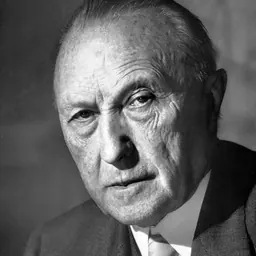
Kokoschka naturalised as a British subject on 21 February 1947 and would only regain Austrian citizenship in 1978. He travelled briefly to the United States in 1947 before settling in Villeneuve, Switzerland in 1953, where he lived the rest of his life. Kokoschka spent these years as an educator at the Internationale Sommer Akademie für Bildenden Künste, (Ricarda Jacobi being one of his pupils) while also working on stage designs and publishing a collection of his writings. A retrospective of Kokoschka's work was exhibited at the Tate Gallery in London in 1962. As a member of the Deutscher Künstlerbund, Oskar Kokoschka took part in its annual exhibitions from 1952 to 1955. He took part in documenta 1 (1955), documenta II (1959), and also documenta III in 1964 in Kassel. In 1966 he won the competition for the commissioned portrait of Konrad Adenauer for the German Bundestag against his competitor Eugen Denzel.
Kokoschka died on 22 February 1980 in Montreux, at the age of 93, eight days before his 94th birthday, of complications after contracting influenza. He was interred in the Montreux Central Cemetery.
Honours Kokoschka was appointed Commander of the Order of the British Empire in the 1959 New Year Honours. He also received the Erasmus Prize in 1960 together with Marc Chagall.
Artworks
Veronica's Veil. 1911, (120,6 cm x 80,7 cm), Museum of Fine Arts, Budapest
1909: Lotte Franzos 1909: Martha Hirsch I 1909: Hans and Erika Tietze 1909: St. Veronica with the Sudarium 1909: Les Dents du Midi 1909: Children Playing 1910: Still Life with Lamb and Hyacinth 1910: Rudolf Blümner 1911: Lady in Red 1911: Hermann Schwarzwald I 1911: Egon Wellesz 1911: Crucifixion 1912: Two Nudes 1913: Landscape in the Dolomites (with Cima Tre Croci) 1913: The Tempest 1913: Carl Moll 1913: Still Life with Putto and Rabbit 1914: The Bride of the Wind 1914: Portrait of Franz Hauser 1915: Knight Errant 1917: Portrait of the Artist's Mother 1917: Lovers with Cat 1917: Stockholm Harbour 1920: The Power of Music 1919: Dresden, Neustadt I 1921: Dresden, Neustadt II 1921: Two Girls 1922: Self-Portrait at the Easel 1923: Self-Portrait with Crossed Arms 1924: Venice, Boats on the Dogana 1925: Amsterdam, Kloveniersburgwal I 1925: Toledo 1926: Mandrill 1926: Deer 1926: London Large Thames View I 1929: Arab Women and Child 1929: Pyramids at Gizeh 1932: Girl with Flowers 1934: Prague, View from the Villa Kramář 1936: Portrait Ferdinand Bloch-Bauer 1937: Olda Palkovská 1938: Prague – Nostalgia 1940: The Crab 1941: Anschluss – Alice in Wonderland 1941: The Red Egg 1948: Self-Portrait (Fiesole) 1950: The Myth of Prometheus 1962: Storm Tide in Hamburg 1966: The Rejected Lover 1966: Portrait of Konrad Adenauer 1971: Time, Gentlemen, Please
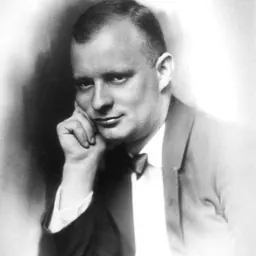
Writings Kokoschka's literary works are as peculiar and interesting as his art. His memoir, A Sea Ringed with Visions, details his theories of both corporeal and visceral vision and how they shape consciousness, art, and realities. His short play Murderer, the Hope of Women (1909, set ten years later by Paul Hindemith as Mörder, Hoffnung der Frauen) is often called the first Expressionist drama. His Orpheus und Eurydike (1918) became an opera by Ernst Krenek, who was first approached for incidental music.
Don’t just read it —
keep it.
Full-length biographies made to live with: read them, listen on the way to work, watch them tonight.
- E-book
- Audio
- Video
Instant download · yours to keep · every purchase keeps this site free
Important facts
People in Oskar Kokoschka's life
Named in this biography and alive at the same time


Related people
Same field, nearest in time


Contemporaries
People whose lives overlapped Oskar Kokoschka's


Frequently asked questions
Who was Oskar Kokoschka?
Austrian dramatic, painter and writer (1886–1980)
When was Oskar Kokoschka born?
Oskar Kokoschka was born on 1 March 1886 in Pöchlarn.
When did Oskar Kokoschka die?
Oskar Kokoschka died on 22 February 1980 in Montreux.
What was Oskar Kokoschka's occupation?
Oskar Kokoschka was a painter, playwright, poet, university teacher, designer and graphic artist.
What nationality was Oskar Kokoschka?
Oskar Kokoschka was Austrian and Pakistani.
Sources & further reading
Cite this page
APA: Biography.guide. (2026). Oskar Kokoschka. https://biography.guide/oskar-kokoschka/
MLA: "Oskar Kokoschka." Biography.guide, https://biography.guide/oskar-kokoschka/.
Chicago: "Oskar Kokoschka." Biography.guide. https://biography.guide/oskar-kokoschka/.
Data last updated: 2026-09-22 · Spot an error? Report a correction.
Portrait: Wikimedia Commons · author & licence
Page generated 2026-09-27 05:02 UTC