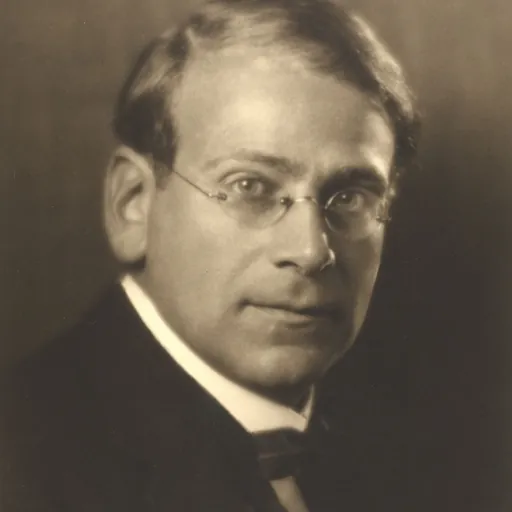
Egon Wellesz
Austrian, later British composer, teacher and musicologist
About Egon Wellesz
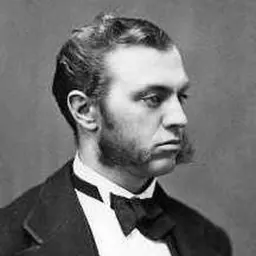
Lived 1885 – 1974 (aged 89). Egon Wellesz was an Austrian and British composer, musicologist, university teacher, byzantinist and music teacher.
Egon Joseph Wellesz, CBE, FBA (21 October 1885 – 9 November 1974) was an Austrian, later British composer, teacher and musicologist, notable particularly in the field of Byzantine music.
Early life and education in Vienna Egon Joseph Wellesz was born on 21 October 1885 in the district of Vienna to Samu Wellesz and Ilona Wellesz (née Lövényi). Although his parents met and married in Vienna, they both originated from Hungary and were Jewish. . As a boy he attended the on where he received a classical education in Greek and Latin.
Work as a scholar, lecturer, and composer in Vienna The main focus of Wellesz's early musicological research was Baroque opera; particularly those by composer Giuseppe Bonno who was the subject of his dissertation at the University of Vienna. He also edited Johann Joseph Fux's 1723 opera for publication in Adler's Denkmäler. Many years later Wellesz published a monograph on Fux in 1965. He graduated from the University of Vienna with a degree in musicology in 1908, and his dissertation on Bonno was published the following year. This interest initially arose from dialogues and debates with the Austrian art historian Josef Strzygowski who at this time was putting forward a new theory that many of the elements of Early Christian architecture, such as the rounded dome, originated not in the West but in the East; ideas published in his Orient oder Rom. Wellesz had plenty of opportunity to discuss these theories directly with Strzygowski as his wife Emmy was an art historian who specialized in the art of India and was a disciple and close friend of Strzygowski. Three further string quartets followed during the war years, establishing his preference for linear chromaticism, and some of them explicitly categorised as atonal. However, it was with dramatic music that Wellesz really made his mark, starting with the ballet Das Wunder der Diana in 1914. In the following 12 years he completed five operas and three ballets, many of the libretti and ballet scenarios written by the important literary figures Hugo von Hofmannsthal and Jakob Wassermann. Operas such as Alkestis (1924) and Die Bakchantinnen (1931) take their subject matter from ancient mythology and, in contrast to the Wagnerian tradition, use techniques such as dance pantomime and coloratura singing derived from Claudio Monteverdi and Christoph Willibald Gluck. This soon evolved into the International Society for Contemporary Music, founded in 1923 with its headquarters in London. The Cambridge academic Edward J. Dent, whom Wellesz had met on his first trip to London in 1906, was elected as its president.
In 1929 Wellesz was promoted from lecturer to professor at the University of Vienna; succeeding Adler in his position at the university. Once in England he worked for a time on Grove's Dictionary of Music, but in July 1940 he was interned as an enemy alien, ultimately in Hutchinson Camp in the Isle of Man. He gained his release later that year, on 13 October, thanks to intercessions by Ralph Vaughan Williams and H. C. Colles, the long-standing chief music critic of The Times. Following his internment in 1940 Wellesz found himself unable to compose, a creative block eventually broken by the composition of the String Quartet No. 5 (1943–44), the first important work of his English period.
Despite his composing, Wellesz remains best known as an academic and teacher, and for his extensive scholarly contributions to the study of Byzantine music and opera in the 17th century. These contributions brought for him an honorary doctorate from Oxford University in 1932 and later a fellowship at Lincoln College, Oxford, where he remained until his death. His pupils there included Herbert Chappell, Martin Cooper, Kunihiko Hashimoto, Spike Hughes, Frederick May, Wilfrid Mellers, Nigel Osborne and Peter Sculthorpe. He was elected a Fellow of the British Academy in 1953.
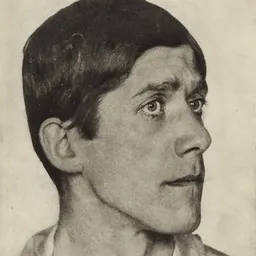
A portrait was made of Wellesz by Jean Cooke, who had been commissioned for the work by Lincoln College. (There is also an early portrait, painted in 1911 by Oskar Kokoschka). Wellesz continued composing until he suffered a stroke in 1972. He died two years later and was buried in the Zentralfriedhof in Vienna. His widow Emmy Stross, whom he married in 1908, returned to live in Vienna until her own death in 1987.
He wrote nine symphonies and nine numbered string quartets, the former starting in 1945 and the latter throughout his life, spanning from 1912 to 1966. Several of his symphonies have titles, including the second (the English), fourth (the Austriaca) and seventh (Contra torrentem). They were generally well received in Austria, Germany and England, but even so the Third Symphony (1950–51) was only published posthumously and only received its world premiere in Vienna in 2000. Other compositions included the Octet, Op. 67 (using Schubert's combination); a piano concerto, Op. 49, a violin concerto, Op. 84; and a number of vocal works with orchestral or chamber accompaniment.
Stylistically his earliest music, somewhat like that of Ernst Krenek, is in a dissonant but recognisably tonal style; there is a definite second period of sorts around the time of the first two symphonies (1940s) in which his music has a somewhat Brucknerian sound – in the symphonies sometimes an equal breadth. As well as the dramatic works, the chamber and orchestral pieces with voice often use these "baroque" elements. An example is the cantata Amor Timido (1933), a favourite of Wilfrid Mellers. Elsewhere, the neo-classical spirit of Hindemith is evident, as in the Piano Concerto (1931) and (still there much later) in the Divertimento (1969).
He wrote:In place of the infinite melody, the finite must return, in the place of dissolved, amorphous structures, clear, clearly outlined forms. The opera of the future must tie in with the traditions of Baroque opera. This is the natural form, the innermost essence of opera. Chamber music: Clarinet Quintet, Op. 81, String Trio, Op. 86, Four Pieces for String Quartet, Op. 103, and Four Pieces for String Trio, Op. 105. Veles Ensemble, Toccata TOCC0617 (2023) Choral music and song: Mass in F, Op. 61; Missa Brevis, Op. 89, To Sleep Op. 94. Choir of Christ Church Cathedral, Oxford. Nimbus NI5852 (2011) Piano Concerto: with Triptychon, Op. 98; Divertimento, Op. 107; Drei Skizzen, Op. 6; Eklogen, Op. 11. Karl-Andreas Kolly (piano), Luzerner Sinfonieorchester/Howard Griffiths, Pan Classics 510104 (1999) Sonata for solo violin, Op. 72. Siân Philipps. Claudio CC6035-2 (2024) String quartets: No. 3, 4 and 6. Vienna. Nimbus NI 5821 (2008) String quartets: No. 2, 5 and 7. aron quartet Vienna. CPO 555617-2 (2025) Symphonies No. 1–9 (4-CD Set). Radio Symphonieorchester Wien/Gottfried Rabl, CPO 777183-2 (2009) 20th Century Portraits''': The Dawn of Spring; Sonnets from the Portuguese Op. 52; Song of the World, Op. 54; Life, dream and death Op. 55; Ode to Music, Op. 92; Vision, Op. 99; Symphonic Epilogue, Op. 108. Deutsches Symphonie-Orchester Berlin/Roger Epple, Capriccio 67 077 (2004) Violin Concerto: with Prosperos Beschwörungen, Op. 53. Andrea Duka Lowenstein (violin), Radio Symphonie Orchester Wien/Gerd Albrecht, ORFEO C 478 981 (1999)
Works Stage Das Wunder der Diana, Op. 18 (1914–1917), ballet after Béla Balázs Die Prinzessin Girnara, Op. 27 (1919–1920), libretto by Jakob Wassermann Persisches Ballett, Op. 30 (1920), ballet after Ellen Tels Achilles auf Skyros, Op. 33 (1921), ballet after Hugo von Hofmannsthal Alkestis, Op. 35 (1924), libretto by Hugo von Hofmannsthal after Euripides Die Nächtlichen: Tanzsinfonien, Op. 37 (1924), Ballet scene after Max Terpis Die Opferung des Gefangenen, Op. 40 (1924–1925), Stage drama after Eduard Stucken Scherz, List und Rache, Op. 41 (1927), libretto after Johann Wolfgang von Goethe Die Bakchantinnen, Op. 44 (1931), libretto by the composer after Euripides, opera in 2 Acts Hymne der Agave aus Die Bakchantinnen, Op. 44, concert edition by Wellesz Incognita, Op. 69 (1950), libretto Elizabeth MacKenzie, based on the novel by William Congreve
Choral Drei gemischte Chöre, Op. 43 (1930), text: Angelus Silesius Fünf kleine Männerchöre, Op. 46 (1932) from Der fränkische Koran by Ludwig Derleth Drei geistliche Chöre, Op. 47 (1932) for men's chorus based on poems from Mitte des Lebens by Rudolf Alexander Schröder Zwei Gesänge, Op. 48 (1932) based on poems from Mitte des Lebens by Rudolf Alexander Schröder Mass in F minor, Op. 51 (1934). Recorded by the choir of Christ Church, Oxford, 2010 Quant'è bella Giovinezza, Op. 59 (1937), for women's choir Carol, Op. 62a (1944) for women's choir Proprium Missae, Laetare, Op. 71 (1953) for choir and organ Kleine Messe in G major, Op. 80a (1958) for three similar voices a capella Alleluia, Op. 80b (1958) for soprano or tenor solo Laus Nocturna, Op. 88 (1962) Missa brevis, Op. 89 (1963). Recorded by the choir of Christ Church, Oxford, 2010 To Sleep, Op. 94 (1965). Recorded by the choir of Christ Church, Oxford, 2010 Offertorium in Ascensione Domini (1965). Recorded by the choir of Christ Church, Oxford, 2010 Festliches Präludium, Op. 100 (1966) on a Byzantinium Magnificat for choir and organ
Orchestral Heldensang, Op. 2 (1905), symphonic prologue for large orchestra Vorfrühling ('The Dawn of Spring'), Op. 12 (1912), symphonic poem. Recorded by Deutsches Symphonie-Orchester Berlin, 2004 Suite, Op. 16 (1913), for orchestra Mitte des Lebens, Op. 45 (1931–32), cantata for soprano, choir, and orchestra Piano Concerto, Op. 49 (1933). Recorded by Berlin Radio Symphony Orchestra, soloist Margarete Babinsky, 2010 Amor Timido, Op. 50 (1933), aria for soprano and small orchestra, text: Pietro Metastasio Prosperos Beschwörungen, Op. 53 (1934–36), five symphonic movements for orchestra after The Tempest. Recorded by Radio Symphonie Orchester Wien/Gerd Albrecht. Lied der Welt, Op. 54 (1936–38), for soprano and orchestra. Text: Hugo von Hofmannsthal. Recorded by Deutsches Symphonie-Orchester Berlin, 2004 Leben, Traum und Tod, Op. 55 (1936–37), for alto and orchestra. Text: Hugo von Hofmannsthal. Recorded by Deutsches Symphonie-Orchester Berlin, 2004 Schönbüheler Messe in C major, Op. 58 (1937), for choir, orchestra, and organ Symphony No. 1, Op. 62 (1945) Symphony No. 2, Op. 65 (1947–48), The English Symphony No. 3, Op. 68 (1949–51) Symphony No. 4, Op. 70 (1951–53), Austriaca Symphony No. 5, Op. 75 (1955–56) Violin concerto, Op. 84 (1961), dedicated to the violinist Eduard Melkus. Recorded by Andrea Duka Lowenstein in 1999 and David Frühwirth in 2010. Four Songs of Return, Op. 85 (1961), for soprano and chamber orchestra, after texts by Elizabeth Mackenzie Duineser Elegie, Op. 90 (1963) for soprano, choir, and orchestra after Rainer Maria Rilke Ode an die Musik, Op. 92 (1965) for baritone or alto and chamber orchestra, text: Pindar, adapted from Friedrich Hölderlin. Recorded by Deutsches Symphonie-Orchester Berlin, 2004 Symphony No. 6, Op. 95 (1965) Vision for soprano and orchester, Op. 99 (1966), text: Georg Trakl. Recorded by Deutsches Symphonie-Orchester Berlin, 2004 Mirabile Mysterium, Op. 101 (1967) for soloist, choir, and Orchester Symphony No. 7, Op. 102 (1967–68), Contra torrentem Canticum Sapientiae, Op. 104 (1968) for baritone, choir, and orchestra after texts from the Old Testament Divertimento, Op. 107 (1969), for small orchestra. Recorded by Luzerner Sinfonieorchester/Howard Griffiths, 1999 Symphonic Epilogue, Op. 108 (1969). Recorded by Deutsches Symphonie-Orchester Berlin, 2004 Symphony No. 8, Op. 110 (1970) Symphony No. 9, Op. 111 (1970–71)
Chamber and instrumental Der Abend, Op. 4 (1909–10), four pieces for piano Drei Skizzen, Op. 6 (1911), for piano. Recorded by Karl-Andreas Kolly, 1999 Eklogen, Op. 11, four pieces for piano. Recorded by Karl-Andreas Kolly, 1999 String Quartet No. 1, Op. 14 (1912) String Quartet No. 2, Op. 20 (1915–16) Idyllen, Op. 21 (1917), five pieces for piano after poems by Stefan George Geistliches Lied, Op. 23 (1918–19) for singing voice, violin, viola, and piano String Quartet No. 3, Op. 25 (1918). Recorded by Artis-Quartett Vienna, 2008 String Quartet No. 4, Op. 28 (1920). Recorded by Artis-Quartett Vienna, 2008 Sonata for violoncello solo, Op. 31 (1920) Zwei Stücke for clarinet and piano, Op. 34 (1922) Sonata for violin solo, Op. 36 (1923) Suite for violin and chamber orchestra, Op. 38 (1924) Sonnets from the Portuguese for soprano and string quartet or string ensemble, Op. 52 (1934). Recorded by Deutsches Symphonie-Orchester Berlin, 2004 Suite for violoncello solo, Op. 39 (1924) Suite for violin and piano, Op. 56 (1937/1957) Suite for flute solo, Op. 57 (1937) String quartet No. 5, Op. 60 (1943) The Leaden Echo and the Golden Echo, cantata for soprano, clarinet, violoncello, piano, Op. 61 (1944), text: Gerard Manley Hopkins String Quartet No. 6, Op. 64 (1946). Recorded by Artis-Quartett Vienna, 2008 String Quartet No. 7, Op. 66 (1948) Octet, Op. 67 (1948–49) for clarinet, bassoon, horn, two violins, viola, violoncello, and contrabass Sonata for violin solo, Op. 72 (1953/59) Suite, Op. 73 (1954) for flute, oboe, clarinet, horn, and bassoon Suite for solo clarinet, Op. 74 (1956) Suite for solo oboe, Op. 76 (1956) Suite for solo bassoon, Op. 77 (1957) Fanfare for solo horn, Op. 78 (1957) String Quartet No. 8, Op. 79 (1957). Recorded by Artis-Quartett Vienna, 2008 Quintet, Op. 81 (1959) for clarinet, 2 violins, viola, and violoncello String trio, Op. 86 (1962) Rhapsody for viola solo, Op. 87 (1962) Musik for string orchestra in one movement, Op. 91 (1964) Fünf Miniaturen for violins and piano, Op. 93 (1965) Partita in Honor of Johann Sebastian Bach, Op. 96 (1965) for organ String Quartet No. 9, Op. 97 (1966) Triptychon, Op. 98, three pieces for piano (1966). Recorded by Karl-Andreas Kolly, 1999 Four Pieces for string quartet, Op. 103 (1968) Four Pieces for string trio, Op. 105 (1969, second version 1971) Five Studies in Grey, Op. 106, for piano (1969) Four Pieces for string quintet, Op. 109 (1970) Prelude for viola solo, Op. 112 (1971)
Decorations and awards 1953: City of Vienna Prize for Music 1957: Commander of the Order of the British Empire 1957: Great Silver Medal of the City of Paris 1959: Grand Decoration of Honour in Gold for Services to the Republic of Austria 1961: Grand Austrian State Prize for Music 1961: Order of St. Gregory the Great (Vatican) 1971: Foreign Member of the Serbian Academy of Sciences and Arts 1971: Austrian Decoration for Science and Art 1973: Honorary Member of the Society of Friends of Music in Vienna
Don’t just read it —
keep it.
Full-length biographies made to live with: read them, listen on the way to work, watch them tonight.
- E-book
- Audio
- Video
Instant download · yours to keep · every purchase keeps this site free
Important facts
People in Egon Wellesz's life
Named in this biography and alive at the same time




Related people
Same field, nearest in time



Contemporaries
People whose lives overlapped Egon Wellesz's




Frequently asked questions
Who was Egon Wellesz?
Austrian, later British composer, teacher and musicologist (1885-1974)
When was Egon Wellesz born?
Egon Wellesz was born on 21 October 1885 in Vienna.
When did Egon Wellesz die?
Egon Wellesz died on 9 November 1974 in Oxford.
What was Egon Wellesz's occupation?
Egon Wellesz was a composer, musicologist, university teacher, byzantinist and music teacher.
What nationality was Egon Wellesz?
Egon Wellesz was Austrian and British.
Sources & further reading
Cite this page
APA: Biography.guide. (2026). Egon Wellesz. https://biography.guide/egon-wellesz/
MLA: "Egon Wellesz." Biography.guide, https://biography.guide/egon-wellesz/.
Chicago: "Egon Wellesz." Biography.guide. https://biography.guide/egon-wellesz/.
Data last updated: 2026-09-22 · Spot an error? Report a correction.
Portrait: Wikimedia Commons · author & licence
Page generated 2026-09-27 05:01 UTC