
About Jakob Wassermann
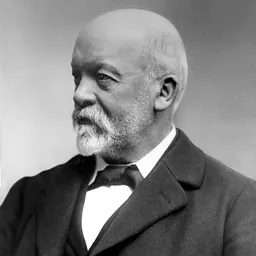
Lived 1873 – 1934 (aged 60). Jakob Wassermann was a German writer, novelist, screenwriter, critic, short story writer and prose writer.
Jakob Wassermann (; 10 March 1873 – 1 January 1934) was a German writer and novelist.
Though he was one of the best-selling German-language writers in the early 20th century, his books were banned in Germany following the Nazi seizure of power. Since then, his oeuvre has faded into relative obscurity.
Life Born into a Jewish family in Fürth (Bavaria), Wassermann was the son of a shopkeeper and lost his mother at an early age. He showed literary interest early and published various pieces in small newspapers. Because his father was reluctant to support his literary ambitions, he began a short-lived apprenticeship with a businessman in Vienna after graduation.
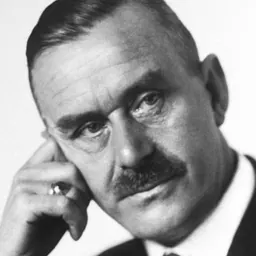
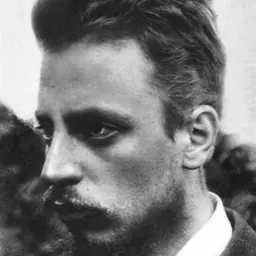
He completed his military service in Würzburg. Afterward, he stayed in southern Germany and in Zürich. In 1894, he moved to Munich where he worked as a secretary and later as a copy editor at the paper Simplicissimus. Around this time he also became acquainted with other writers such as Rainer Maria Rilke, Hugo von Hofmannsthal, and Thomas Mann.
In 1896, he released his first novel, Melusine (his surname means "water-man" in German, while a "Melusine" (or "Melusina") is a figure of European legends and folklore, a feminine spirit of fresh waters in sacred springs and rivers).
From 1898 on he was a theater critic in Vienna. In 1901, he married Julie Speyer, whom he divorced in 1915. Three years later, he married again and wedded Marta Karlweis.
After 1906, he alternated between Vienna and Altaussee in Styria.
In 1926, he was elected to the Prussian Academy of Arts. He resigned in 1933, narrowly avoiding expulsion by the Nazis. In the same year, his books were banned in Germany owing to his Jewish ancestry.
He died on 1 January 1934 at his home in Altaussee of a heart attack.
Wassermann's work includes poetry, essays, novels, and short stories. His most important works are considered the novel The Maurizius Case (Der Fall Maurizius, 1928) and the autobiography, My Life as German and Jew (Mein Weg als Deutscher und Jude, 1921), in which he discussed the tense relationship between his German and Jewish identities.
Works
Melusine (Novel, 1896) Die Juden von Zirndorf (English title: The Dark Pilgrimage) (Novel, 1897) Schläfst du, Mutter? (Novella, 1897) Die Geschichte der jungen Renate Fuchs (Novel, 1900) Der Moloch (Novel, 1902) Der niegeküsste Mund (Stories, 1903) Die Kunst der Erzählung (Essay, 1904) Alexander von Babylon (Novel, 1905) Donna Johanna von Castilien (Narrative, 1906) Die Schwestern (Novellas - Donna Johanna von Castilien, Sara Malcolm, Clarissa Mirabel - 1906) Caspar Hauser oder Die Trägheit des Herzens (Novel, 1908) Die Gefangenen auf der Plassenburg (Narrative, 1909) Die Masken Erwin Reiners (1910) Der goldene Spiegel (Novella, 1911) Geronimo de Aguilar (Story, 1911) Faustina (Narrative, 1912) Der Mann von vierzig Jahren (Novel, 1913) Das Gänsemännchen (Novel, 1915) Christian Wahnschaffe (Novel, 1919) (English translation under the title: The World's Illusion) Die Prinzessin Girnara, Weltspiel und Legende (Play, 1919, libretto for the Wellesz opera Die Prinzessin Girnara) "Golowin" (Novel, 1920) Mein Weg als Deutscher und Jude (Autobiography, 1921) Imaginäre Brücken (Studies and Essays, 1921) Sturreganz (Narrative, 1922) Ulrike Woytich (Novel, 1923) Faber, oder die verlorenen Jahre (Novel, 1924) Laudin und die Seinen (Novel, 1925) Das Amulett (Novella, 1926) Der Aufruhr um den Junker Ernst (Novella, 1926) Das Gold von Caxamalca (Stories, 1928) Columbus: Don Quixote of the Seas (Biography, 1929) Selbstbetrachtungen (Reflections, 1931) Novel trilogy: Der Fall Maurizius (1928). Etzel Andergast (1931). Joseph Kerkhovens dritte Existenz (1934).
Filmography Christian Wahnschaffe, directed by Urban Gad (1920, based on the novel Christian Wahnschaffe) The Masks of the Devil, directed by Victor Sjöström (1928, based on the novel Die Masken Erwin Reiners) On Trial (L'affaire Maurizius), directed by Julien Duvivier (1954, based on the novel Der Fall Maurizius) , directed by Anton Giulio Majano (1961, TV miniseries, based on the novel Der Fall Maurizius) , directed by (1981, TV miniseries, based on the novel Der Fall Maurizius)
Don’t just read it —
keep it.
Full-length biographies made to live with: read them, listen on the way to work, watch them tonight.
- E-book
- Audio
- Video
Instant download · yours to keep · every purchase keeps this site free
Important facts
People in Jakob Wassermann's life
Named in this biography and alive at the same time

Related people
Same field, nearest in time



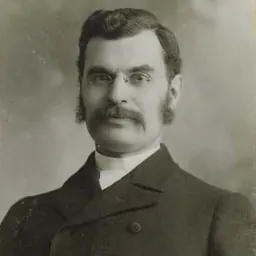
Contemporaries
People whose lives overlapped Jakob Wassermann's

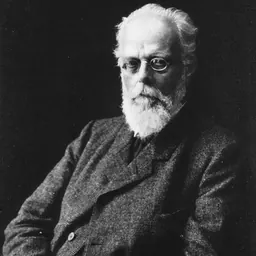
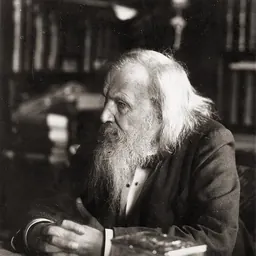
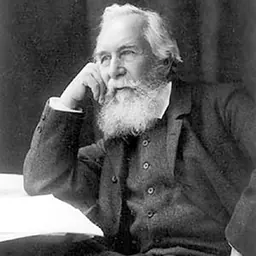
Frequently asked questions
Who was Jakob Wassermann?
German writer (1873-1934)
When was Jakob Wassermann born?
Jakob Wassermann was born on 10 March 1873 in Fürth.
When did Jakob Wassermann die?
Jakob Wassermann died on 1 January 1934 in Altaussee.
What was Jakob Wassermann's occupation?
Jakob Wassermann was a writer, novelist, screenwriter, critic, short story writer and prose writer.
What nationality was Jakob Wassermann?
Jakob Wassermann was German.
Sources & further reading
Cite this page
APA: Biography.guide. (2026). Jakob Wassermann. https://biography.guide/jakob-wassermann/
MLA: "Jakob Wassermann." Biography.guide, https://biography.guide/jakob-wassermann/.
Chicago: "Jakob Wassermann." Biography.guide. https://biography.guide/jakob-wassermann/.
Data last updated: 2026-09-20 · Spot an error? Report a correction.
Page generated 2026-09-27 05:27 UTC