
About Josef Strzygowski
Lived 1862 – 1941 (aged 78). Josef Strzygowski was an Austrian art historian, armenologist, professor, teacher and preservationist.
Josef Rudolph Thomas Strzygowski (7 March 1862 – 2 January 1941) was a Polish-Austrian art historian known for his theories promoting influences from the art of the Near East on European art, for example that of Early Christian Armenian architecture on the early Medieval architecture of Europe, outlined in his book.
Travels For the next three years Strzygowski lived in Rome, where he completed a study of Cimabue und Rom (1887) (Cimabue and Rome), which emphasized the Byzantine sources of the Italian painter's work. Late in life he stated that this work led to the question which would define all of his subsequent scholarship: "What is Rome, what, in reality, is Italian and European art?"
Following his Roman sojourn, Strzygowski travelled to Thessaloniki, Mount Athos, Saint Petersburg, and Moscow, thus developing a greater acquaintance with Byzantine and Russian art. In 1892, he was appointed to the faculty of the University of Graz, but in 1894 and 1895, he lived in Cairo, where he studied the early Byzantine and Islamic art of Egypt, and compiled a catalogue of the Coptic art in the Cairo Museum. Upon his return he entered a period of intense scholarly activity, publishing numerous articles on Byzantine and Islamic art, fields in which he considered himself to be the pioneer.
Polemics and conflict It was in the midst of this activity that Strzygowski published his first polemical work, (1901; 'The Orient or Rome: contributions to the history of late antique and early Christian art'). Drawing on such diverse materials as Palmyrene art and sculpture, Anatolian sarcophagi, late antique ivories from Egypt, and Coptic textiles, Strzygowski argued, in overtly racial and often racist terms, that style change in late antiquity was the product of an overwhelming "Oriental" or "Semitic" influence. In one modern characterization of both the argument and its rhetorical tone, "Strzygowski [presented] Hellas as a beautiful maiden who sold herself to an 'Old Semite' to be kept as the jewel of his harem."
was explicitly framed as an attack on (1895), by the Viennese art historian Franz Wickhoff, which had posited a Roman origin for the late antique style, a thesis that was pursued further by Alois Riegl in his , which also appeared in 1901. The ensuing controversy continued for decades and, if it resulted in no clear resolution, significantly raised the prominence of late antique art as an academic field of study.
Later career
In the early 1900s, Strzygowski was invited by Wilhelm von Bode to Germany to assist with the expansion of the Byzantine and other collections in Berlin museums.
In 1909, however, upon Wickhoff's death, Strzygowski was appointed as his successor at the University of Vienna, partly as a result of the breadth of his research, and partly as a result of intricate academic politics and (possibly) the advocacy of Archduke Franz Ferdinand. His appointment resulted in an enduring schism among Viennese art historians, pitting Strzygowski against Max Dvořák and Julius von Schlosser, which was exacerbated when Strzygowski established his own research institute within the university (the or ).
In Vienna, Strzygowski continued to publish on a variety of topics, focusing particularly on the arts of Byzantium and Islam, but also treating Armenian, Norse, and Slavic subjects, among others. He also gave frequent and well-attended public lectures to audiences "consisting partly, but not solely, of radical pan-German students and sycophants." As part of an FWF research project, a collection of Strzygowski’s offprints is being cataloged and analyzed at the University of Vienna.
Selected works (with contributions by John Winter Crowfoot and J. I. Smirnov), Leipzig 1903
Don’t just read it —
keep it.
Full-length biographies made to live with: read them, listen on the way to work, watch them tonight.
- E-book
- Audio
- Video
Instant download · yours to keep · every purchase keeps this site free
Important facts
People in Josef Strzygowski's life
Named in this biography and alive at the same time
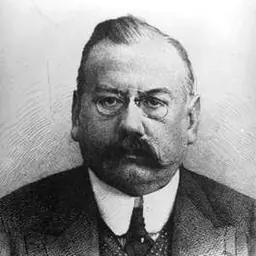




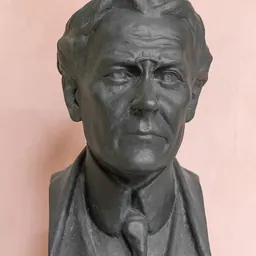
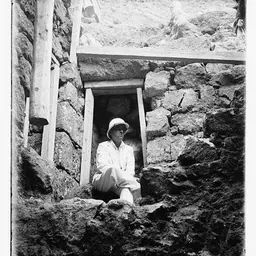
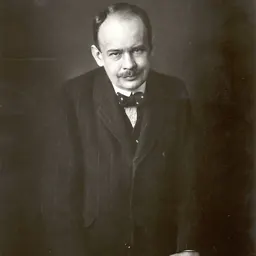
Related people
Same field, nearest in time


Contemporaries
People whose lives overlapped Josef Strzygowski's




Frequently asked questions
Who was Josef Strzygowski?
Austrian art historian (1862–1941)
When was Josef Strzygowski born?
Josef Strzygowski was born on 7 March 1862 in Bielsko-Biała.
When did Josef Strzygowski die?
Josef Strzygowski died on 2 January 1941 in Vienna.
What was Josef Strzygowski's occupation?
Josef Strzygowski was an art historian, armenologist, professor, teacher and preservationist.
What nationality was Josef Strzygowski?
Josef Strzygowski was Austrian.
Sources & further reading
· Wikipedia: Josef Strzygowski
Cite this page
APA: Biography.guide. (2026). Josef Strzygowski. https://biography.guide/josef-strzygowski/
MLA: "Josef Strzygowski." Biography.guide, https://biography.guide/josef-strzygowski/.
Chicago: "Josef Strzygowski." Biography.guide. https://biography.guide/josef-strzygowski/.
Data last updated: 2026-09-25 · Spot an error? Report a correction.
Page generated 2026-09-27 05:12 UTC