
About Monty Naicker
Lived 1910 – 1978 (aged 67). Monty Naicker was a South African politician.
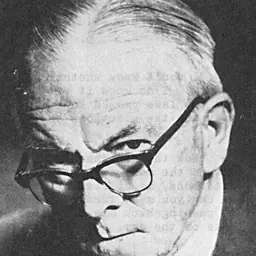
Gangathura Mohambry "Monty" Naicker (30 September 1910 – 12 January 1978) was a South African anti-apartheid activist. He is best known for his tenure as president of the Natal Indian Congress (NIC) between 1945 and 1963. He also served as president of the South African Indian Congress.
A medical doctor by training, Naicker rose to political prominence in his hometown of Durban as a member of the NIC's left wing. After his election as NIC president in October 1945, he led the organisation in its campaign of passive resistance to the Ghetto Act from 1946 to 1948. He became an important proponent of the Congress Alliance and of the anti-apartheid movement's ascendant non-racialism, but he was a committed Gandhian and opposed the movement's turn to armed struggle in 1960.
Because of his activism, Naicker was jailed eight times, charged in the Treason Trial, and subjected to banning orders that lasted, cumulatively, 14 years. Most notably, he was banned between 1963 and 1973, during which time the NIC fell into dormancy. After his return to public life in 1973, he retired from politics, though he participated in the NIC's subsequent campaign against the South African Indian Council.
Early life and education Naicker was born in Durban in the former Natal Province on 30 September 1910. His parents, Gangathura Papiah Naicker and Dhanam Pillay, were both descended from Indian migrants who had arrived in Natal via Mauritius in the 1880s; his father (commonly known as P. G. Naicker) was a prominent trader and banana exporter in Durban.
Upon his return to Durban in 1934, Naicker established a medical practice, drawing the majority of his patients from the nearby Magazine Barracks. His involvement in Indian political activism came later through the Liberal Study Group, an organisation dominated by intellectuals and trade unionists, and through the so-called Nationalist Bloc, a left-wing faction of the Natal Indian Congress (NIC).
Presidency of the Natal Indian Congress: 1945–1963 In April 1944, Naicker became the founding chairperson of the Anti-Segregation Council, which was established by members of the NIC's Nationalist Bloc to pursue mass mobilisation against Indian segregation. Naicker served as president of the NIC for the next 18 years.
Ghetto Act resistance
At its next congress in March 1946, the NIC committed itself to a major campaign of passive resistance to the Asiatic Land Tenure and Indian Representation Act, 1946, popularly known as the Ghetto Act. The campaign was coordinated at a national level by the South African Indian Congress (SAIC), with a joint Passive Resistance Council (PRC) composed of representatives from both the NIC and its Transvaal counterpart the Transvaal Indian Congress (TIC); Naicker and the TIC's Yusuf Dadoo (his classmate in Edinburgh) alternated in the presidency of the PRC. While in prison he reportedly arranged the sale of his own car to raise money to finance the Ghetto Act campaign. With the onset of legalised apartheid in 1948, this non-racial front led the Defiance Campaign of 1952. As part of the campaign, on 31 August 1952, Naicker addressed a rally in Red Square and led the crowd in occupying a whites-only waiting room at the Berea train station (an orchestrated act of civil disobedience); he and the others were jailed.
The Anti-SAIC Committee went on to play an important role in the establishment of the United Democratic Front, but Naicker died at an early stage of its activities: after a short illness, he was admitted to St Aidans Hospital, Durban, where he died on 12 January 1978. In 2008, the City of eThekwini renamed Durban's Pine Street as Monty Naicker Road. He is also a character in Alan Paton's Ah, but Your Land Is Beautiful, a 1983 historical fiction novel about resistance to apartheid.
In 2010, the Monty Naicker Commemorative Committee was launched, with NIC activist Paul David as its president. Its initiatives included Walk with Monty Naicker, an exhibition about Naicker's life and work at the Durban Art Gallery.
Personal life In 1936, Naicker married Mariemuthumal Apavoo, originally from Port Elizabeth; he had attended university with her two brothers. They had a son and a daughter together, and she also participated in the NIC's passive resistance campaigns. In 1966 their family was removed from their home in Percy Osborne Road, Durban in terms of the Group Areas Act.
Don’t just read it —
keep it.
Full-length biographies made to live with: read them, listen on the way to work, watch them tonight.
- E-book
- Audio
- Video
Instant download · yours to keep · every purchase keeps this site free
Important facts
People in Monty Naicker's life
Named in this biography and alive at the same time



Related people
Same field, nearest in time





Contemporaries
People whose lives overlapped Monty Naicker's





Frequently asked questions
Who was Monty Naicker?
South African activist
When was Monty Naicker born?
Monty Naicker was born on 30 September 1910 in Durban.
When did Monty Naicker die?
Monty Naicker died on 12 January 1978 in Durban.
What was Monty Naicker's occupation?
Monty Naicker was a politician.
What nationality was Monty Naicker?
Monty Naicker was South African.
Sources & further reading
Cite this page
APA: Biography.guide. (2026). Monty Naicker. https://biography.guide/monty-naicker/
MLA: "Monty Naicker." Biography.guide, https://biography.guide/monty-naicker/.
Chicago: "Monty Naicker." Biography.guide. https://biography.guide/monty-naicker/.
Data last updated: 2026-09-20 · Spot an error? Report a correction.
Page generated 2026-09-27 05:06 UTC