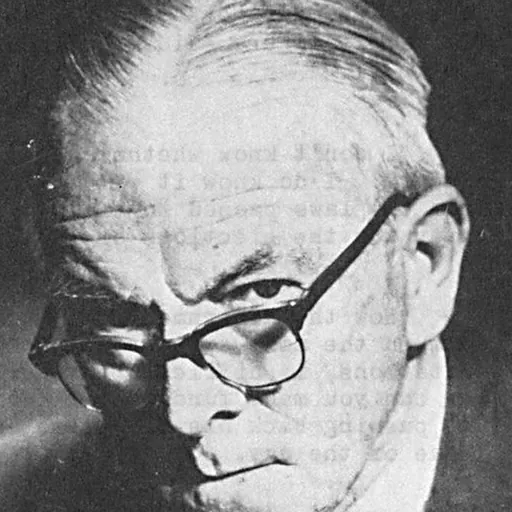
About Alan Paton
Lived 1903 – 1988 (aged 85). Alan Paton was a South African writer, autobiographer, screenwriter, politician, teacher and south Africa under apartheid.
Alan Stewart Paton (11 January 1903 – 12 April 1988) was a South African writer, anti-apartheid activist, and educator. His works include the novels Cry, the Beloved Country, Too Late the Phalarope (1953), of English descent. A year before he started as principal, the South African parliament transferred reformatory institutions for juveniles from the Department of Prisons to the Union Education Department, opening up principal positions at several reformatories. Paton expressed interest in a principal position to his close friend Jan Hendrik Hofmeyr (1894–1948), a politician, who advised Paton to apply to them. Ultimately, Paton was appointed to principal at Diepkloof at the age of 32 on July 1, 1935. His main task, as expressed by Hofmeyer, was the transform Diepkloof from a prison to a school. including policies on open dormitories, work permits, and home visitation.
On 11 January 2018, a Google Doodle honored the author on what would have been his 115th birthday.
Opposition to apartheid In 1948, four months after the publication of Cry, the Beloved Country, the right-wing National Party was elected to power in South Africa. Black South Africans did not receive the vote until 1994 so were unable to oppose this directly. The legislature soon passed laws to formally establish apartheid, a system of racial segregation.
Paton, together with Margaret Ballinger, Edgar Brookes, and Leo Marquard, formed the Liberal Association in early 1953. On 9 May 1953, it became the Liberal Party of South Africa, with Paton as a founding vice-president, which fought against the apartheid laws introduced by the National Party government. Alan and his wife Dorrie at times sought shelter from the police, at the safe house of Colin Webb.
Paton served as President of the LPSA until the government forced its dissolution in 1968 with the Prohibition of Political Interference Act which forbade political collaboration between different racial groups. Paton was a friend of Bernard Friedman, founder of the Progressive Party. Paton's writer colleague Laurens van der Post, who had moved to England in the 1930s, helped the party in many ways. The South African Secret Police were aware that van der Post was providing money to Paton and the LPSA, but they could not stop it by legal procedures.
Paton advocated peaceful opposition to apartheid, as did many others in the party. Yet, some LPSA members took a more violent stance − the African Resistance Movement (ARM). Consequently some stigma attached to the party, not just within South Africa, but also outside the country. The South African government confiscated Paton's passport when he returned from New York City in 1960, where he had been presented with the annual Freedom Award.
Other works Paton continued to explore racial themes and apartheid in his second and third novels, Too Late the Phalarope (1953) and Ah, but Your Land Is Beautiful (1981), and his collected short stories, Tales From a Troubled Land (1961).
He also wrote biographies of his friends Jan Hendrik Hofmeyr (Hofmeyr), and Geoffrey Clayton (Apartheid and the Archbishop). Another literary form that interested him throughout his life was poetry.
Paton was a Christian. His faith was one of the reasons he was so strongly opposed to apartheid.
Adaptations Cry, the Beloved Country was twice adapted for films, in 1951 and 1995. It was the basis for the Broadway musical Lost in the Stars, which was adapted by American playwright Maxwell Anderson with music by Kurt Weill.
Selected works Cry, The Beloved Country, 1948 – made into a film in 1951, directed by Zoltan Korda with a screenplay by Paton himself; in 1995, directed by Darrell Roodt; also a musical and an opera Lost in the Stars 1950 – a musical based on the above work (book and lyrics by Maxwell Anderson, music by Kurt Weill) Too Late the Phalarope, 1953 The Land and People of South Africa, 1955 South Africa in Transition, 1956 Debbie Go Home, 1960 Tales from a Troubled Land, 1961 Hofmeyr, 1964 South African Tragedy, 1965 Sponono, 1965 (with Krishna Shah) The Long View, 1967 Instrument of Thy Peace, 1968 Kontakion For You Departed, 1969 (also: For You Departed) D. C. S. Oosthuizen Memorial Lecture, 1970 Case History of a Pinky, 1972 Apartheid and the Archbishop: the Life and Times of Geoffrey Clayton, Archbishop of Cape Town, 1973 Knocking on the Door, 1975 Towards the Mountain: An Autobiography, 1980 Ah, but Your Land Is Beautiful, 1981 Journey Continued: An Autobiography, 1988 Save the Beloved Country, 1989 The Hero of Currie Road: the complete short pieces, 2008
Awards and honours
In 20 April 2006, Paton was posthumously awarded the Order of Ikhamanga in Gold for his "exceptional contribution to literature, exposing the apartheid oppression through his work and fighting for a just and democratic society."
Don’t just read it —
keep it.
Full-length biographies made to live with: read them, listen on the way to work, watch them tonight.
- E-book
- Audio
- Video
Instant download · yours to keep · every purchase keeps this site free
Important facts
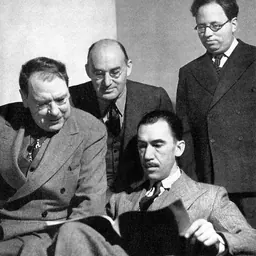
People in Alan Paton's life
Named in this biography and alive at the same time







Related people
Same field, nearest in time




Contemporaries
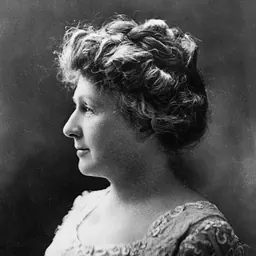
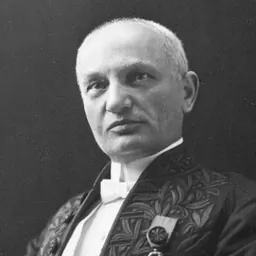
People whose lives overlapped Alan Paton's
Frequently asked questions
Who was Alan Paton?
South African writer and activist (1903-1988)
When was Alan Paton born?
Alan Paton was born on 11 January 1903 in Pietermaritzburg.
When did Alan Paton die?
Alan Paton died on 12 April 1988 in Durban.
What was Alan Paton's occupation?
Alan Paton was a writer, autobiographer, screenwriter, politician, teacher and south Africa under apartheid.
What nationality was Alan Paton?
Alan Paton was South African.
Sources & further reading
Cite this page
APA: Biography.guide. (2026). Alan Paton. https://biography.guide/alan-paton/
MLA: "Alan Paton." Biography.guide, https://biography.guide/alan-paton/.
Chicago: "Alan Paton." Biography.guide. https://biography.guide/alan-paton/.
Data last updated: 2026-09-22 · Spot an error? Report a correction.
Portrait: Wikimedia Commons · author & licence
Page generated 2026-09-27 05:03 UTC