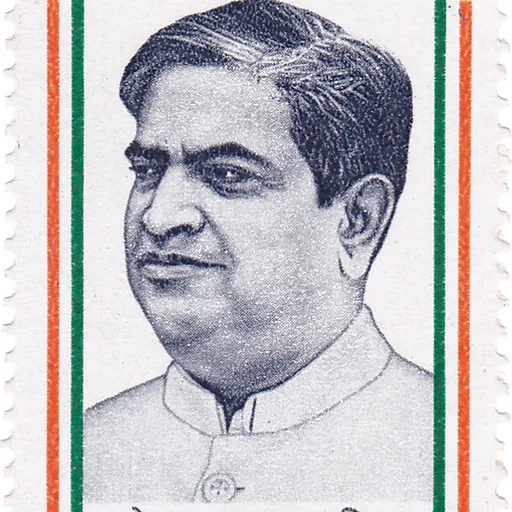
About Mohan Lal Sukhadia
Lived 1916 – 1982 (aged 65). Mohan Lal Sukhadia was an Indian politician.
Mohan Lal Sukhadia (31 July 1916 – 2 February 1982) was an Indian politician, who served as the Chief Minister of Rajasthan state for 17 years (1954–1971). He became chief minister at the age of 38 and was responsible for bringing major reforms and developments in Rajasthan. For this, he is still widely revered as the "founder of modern Rajasthan".
Later in his career, Sukhadia also served as the Governor of Karnataka, Andhra Pradesh and Tamil Nadu.
Early life Mohan Lal Sukhadia was born in a Jain family of Jhalawar, Rajasthan. His father, Purushottam Das Sukhadia, was a well known cricketer of the Bombay and Saurashtra teams.
After completing primary education in Nathdwara and Udaipur, Sukhadia went to Mumbai for a diploma in electrical engineering from VJTI. There, he was elected General Secretary of the student body. Mr. Berley, the British principal of the college, wanted to invite governor of Bombay in a college ceremony. Sukhadia, along with other students, vehemently opposed the idea and asserted to invite then Chief Minister of Bombay B. G. Kher instead. Finally, college authorities had to bow down against the demands of students. Sukhadia had successfully led his first revolt against British Rule exemplifying his uncanny leadership abilities and managerial skills.
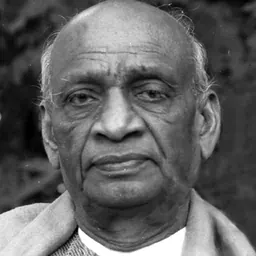
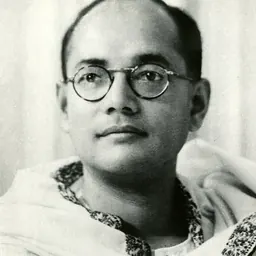
In college, he came in contact with prominent national leaders like Subhas Chandra Bose, Sardar Vallabhbhai Patel, Yusuf Meherally and Ashok Mehta. Sukhadia regularly attended meetings of Congress workers and volunteers headed by Patel in Mumbai.
When he came back to Nathdwara, he started a small electrical workshop. This shop was essentially a meeting place where Sukhadia and his friends would discuss about the ubiquitous autocracies of British rule and socio-economic reforms in the region. Various education and social awareness programs were schemed and executed in the region by Sukhadia and his fellow workers.
He married Indubala on 1 June 1938 in Beawar. This inter-caste marriage was not an ordinary event in those days. Expecting a stiff backlash in Nathdwara and Udaipur, Sukhadia decided to perform the ceremony in Beawar adhering to customs of the Arya Samaj. When he returned to Nathdwara with Indubala, he was hailed by a large number of his supporters. Young overjoyed supporters thronged the streets of Nathwara, steered a huge rally across the town and greeted him with slogans, "Mohan Bhaiya Jindabad". This remained to be one of the most memorable and inspiring moments of his life. Sukhadia himself acknowledged this fact to one of his protagonists a few days before his death.
Contribution in freedom struggle On account of excessive taxes and autocratic rule of princes and jagirdars, Praja Mandals were formed in different states of Rajputana. These mandals provided wider base to the agitation and direction to the civil right movement and administrative reforms in various princely states. In Udaipur state, Mewar Praja Mandal was founded in 1938 having renowned social activist and freedom fighter Manikya Lal Verma as its president. After one year of foundation, Mandal received a dose of fresh vigor with promising youth Mohal Lal Sukhadia joining it.
Independence and participation in government On 15 August 1947, 22 princely states of Rajasthan (erstwhile Rajputana) agreed to join the Union of India. Their merger and unification took place in a phased manner over a period of 2 years.
In the first phase, on 18 March 1948, four Princely States of Alwar, Bharatpur, Dholpur and Karauli formed the Matsya Union. Mohan Lal Sukhadia was one of the fifteen members of Executive Committee of Prantiya Sabha that consisted of prominent political elites of Rajasthan. Sukhadia along with other members of this committee played the crucial role of formulating and publicizing the policies and resolutions of the party.
Initial years were impaired by instability within the party, which witnessed four chief ministers in less than first six years (1948–1954), until Sukhadia was given the responsibility of leading the government. Major credit for deploying stability and institutionalization in Congress party goes to leadership abilities and political skills of Mohanlal Sukhadia. Serving on the post of Chief Minister for almost two decades clearly denotes the kind of support, affection and honor Sukahdia enjoyed from his party members and public.
Land reforms in the state Zamindari system, which had prevailed in Rajasthan for centuries, percolated deeply in socio-economic system of the state by the time of independence. Poor peasants were subjected to atrocities of their zamindars, had no right on the land they tilled and often had to pay very high land revenues.
Congress government under the leadership of Jawaharlal Nehru passed a law to abolish the zamindari system. Impact of law was very limited in beginning years as zamindars approached the Supreme Court challenging the orders. To come up with the backdrop, the Congress Government passed the Rajasthan Jagir Abolition Act in 1952. With this Act, Jagirdari system in the state was abolished and the power of judicial review over these legislations was taken away from the courts and the fundamental right to the property was amended. Sukhadia was given the challenging post of Revenue Minister in the cabinet, reckoning that land reforms would not be easy without establishing an efficient or uniform system of revenue administration.
When Sukhadia took over as Chief Minister in 1954, the challenging task of implementing the reforms lay ahead of him. Sukhadia's government passed Rajasthan Zamindari and Biswedari Abolition Act in 1959 that transferred the title of land to the tenants, doing away with centuries-old zamindari system in Rajasthan.
Factors like political influence of jagirdars and jamindars, confusing varieties of land system in the different princely states and lack of reliable land records made the implementation immensely difficult. Sukhadia confronted all these hindrances and led land reforms in the state successfully.
Development in health and education sector In his famous tryst with destiny speech, India's first prime minister Jawaharlal Nehru declared the eradication of ‘ignorance and disease’ as one of the most crucial tasks that the country faced. Challenge to eradicate ‘ignorance and disease’ was even bigger in Rajasthan as this was one of the least developed states in India at the end of British rule. During the early decades of the twentieth century Rajasthan had one of the lowest levels of education and highest levels of mortality of all provinces in India.
Sukhadia Era in Rajasthan witnessed a dramatic reversal of the colonial policy of almost complete neglect of the education and health sectors.
Results were evident by the end of 1970. Rajasthan's outlays on health and education were significantly higher than all other North-Central Indian states and all-India average. By 1969 Rajasthan's education spending as a proportion of total SDP (3.2%) was double that of UP (1.5%). Similarly, in the health sector, Rajasthan's expenditure grew to Rs.8.23 per capita in 1970–71 whereas UP spent only Rs.3.2.
Don’t just read it —
keep it.
Full-length biographies made to live with: read them, listen on the way to work, watch them tonight.
- E-book
- Audio
- Video
Instant download · yours to keep · every purchase keeps this site free
Important facts
Family & relationships
People in Mohan Lal Sukhadia's life
Named in this biography and alive at the same time



Related people
Same field, nearest in time





Contemporaries
People whose lives overlapped Mohan Lal Sukhadia's




Frequently asked questions
Who was Mohan Lal Sukhadia?
Indian politician (1916–1982)
When was Mohan Lal Sukhadia born?
Mohan Lal Sukhadia was born on 31 July 1916 in Jhalawar.
When did Mohan Lal Sukhadia die?
Mohan Lal Sukhadia died on 2 February 1982 in Bikaner.
What was Mohan Lal Sukhadia's occupation?
Mohan Lal Sukhadia was a politician.
What nationality was Mohan Lal Sukhadia?
Mohan Lal Sukhadia was Indian.
Sources & further reading
· Wikipedia: Mohan Lal Sukhadia
Cite this page
APA: Biography.guide. (2026). Mohan Lal Sukhadia. https://biography.guide/mohan-lal-sukhadia/
MLA: "Mohan Lal Sukhadia." Biography.guide, https://biography.guide/mohan-lal-sukhadia/.
Chicago: "Mohan Lal Sukhadia." Biography.guide. https://biography.guide/mohan-lal-sukhadia/.
Data last updated: 2026-09-21 · Spot an error? Report a correction.
Portrait: Wikimedia Commons · author & licence
Page generated 2026-09-27 04:58 UTC