
About Mohamed al-Achmar
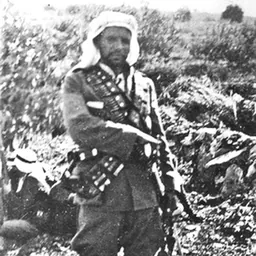
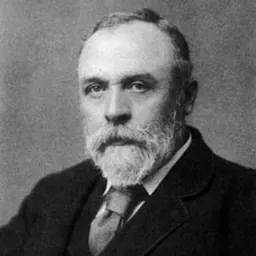
Lived 1880 – 1960 (aged 79–80). Mohamed al-Achmar was a Turkish politician and military personnel.
Muhammad al-Ashmar (1892 – 3 March 1960) was a Syrian rebel commander during the Great Syrian Revolt and the 1936–1939 Arab revolt in Palestine, and a prominent communist figure in post-independence Syria.
Early life and career
Al-Ashmar was born in the al-Midan quarter of Damascus in 1892 during the Ottoman era. He served in the Ottoman Army during World War I. He spent much of his early life studying Islamic theology. France gained control of Syria in 1918, establishing a mandate over the country in 1920. By then, al-Ashmar became a prominent Muslim sheikh based in al-Midan. According to Sami Moubayed, al-Ashmar joined Ibrahim Hananu's militia based in the region of Aleppo. Al-Ashmar and al-Atrash were supporters of the Hashemites, who had led the Arab Revolt in 1916, ruled Syria until 1918, and were the nominal leaders of Transjordan and Iraq at the time of the 1925 revolt. Later that year, al-Ashmar went into exile in Transjordan to escape an arrest warrant for his alleged responsibility in the killing of five French officers. When the French Mandatory government requested that the British authorities in Transjordan arrest al-Ashmar, the British refused, citing his status as a political refugee. He returned to Syria after a general amnesty in 1932. He commanded the Arab volunteer force's Syrian battalion between August and October 1936. He returned to Syria in late 1936 after a truce was reached. His was celebrated by the residents of Damascus when he arrived in the city. The British requested the French to arrest al-Ashmar for his role in the revolt, but they refused, claiming that the arrest of a popular public figure like al-Ashmar would provoke unrest in Syria. Al-Ashmar still maintained involvement with the revolt from Damascus and issued fatwas sought by Palestinian rebel commanders, often Yusuf Abu Durra and Farhan al-Sa'di, for the assassination of specific local Palestinian leaders who they suspected of collaborating with the authorities.
Politics in Syria Upon his return to Syria, al-Ashmar agitated for the establishment of a state governed by Islamic law and free of Western influence. He lent his support to Shukri al-Quwatli in the 1943 presidential elections because of the latter's promise to allow Muslim activist organizations more political freedom in return for al-Ashmar's help in gaining votes from the al-Midan quarter.
Al-Ashmar became a popular figure in Syria for his participation in the Syrian and Palestinian anti-colonial revolts. On 19 May 1944, he addressed a crowd of hundreds of conservative Syrian Muslims at the Tankiz Mosque in Marjeh Square, Damascus, strongly condemning the increasing prevalence of unveiled women, cinema and the city's hosting of a charity banquet at the French Officers' Club sponsored by the French-Christian "Drop of Milk" society and the wife of then-education minister, Nasuhi al-Bukhari. The speech inspired the crowd to demonstrate against the banquet, with the demonstrations descending into riots. Clashes between demonstrators and the police resulted in the deaths of two protesters, including a 12-year-old boy, in the al-Salihiyah quarter. Al-Ashmar was arrested and sent to the Tadmor Prison in the desert city of Palmyra the following day. The protests subsequently spread to other parts of Damascus, and also Aleppo and Homs, with participants calling for al-Ashmar's release. President Quwatli had al-Ashmar released days later in response to the uproar. Months later, al-Ashmar strongly condemned the Quwatli administration's participation in a women's suffrage conference in Cairo, Egypt in December 1944.
Following Syria's independence in 1946, al-Ashmar became a supporter of the Syrian Communist Party. His backing was a major factor in the party's good performance in al-Midan during the 1954 parliamentary elections. He largely retired from politics around this time and died in Damascus in 1960.
Don’t just read it —
keep it.
Full-length biographies made to live with: read them, listen on the way to work, watch them tonight.
- E-book
- Audio
- Video
Instant download · yours to keep · every purchase keeps this site free
Important facts
People in Mohamed al-Achmar's life
Named in this biography and alive at the same time

Related people
Same field, nearest in time





Contemporaries
People whose lives overlapped Mohamed al-Achmar's


Frequently asked questions
Who was Mohamed al-Achmar?
politician (1880–1960)
When was Mohamed al-Achmar born?
Mohamed al-Achmar was born in 1880 in Damascus.
When did Mohamed al-Achmar die?
Mohamed al-Achmar died on 3 March 1960 in Damascus.
What was Mohamed al-Achmar's occupation?
Mohamed al-Achmar was a politician and military personnel.
What nationality was Mohamed al-Achmar?
Mohamed al-Achmar was Turkish.
Sources & further reading
· Wikipedia: Mohamed al-Achmar
Cite this page
APA: Biography.guide. (2026). Mohamed al-Achmar. https://biography.guide/mohamed-al-achmar/
MLA: "Mohamed al-Achmar." Biography.guide, https://biography.guide/mohamed-al-achmar/.
Chicago: "Mohamed al-Achmar." Biography.guide. https://biography.guide/mohamed-al-achmar/.
Data last updated: 2026-09-20 · Spot an error? Report a correction.
Page generated 2026-09-27 05:27 UTC