
About Mo Udall
Lived 1922 – 1998 (aged 76). Mo Udall was an American politician, basketball player, biographer, banker, businessperson and autobiographer.
Morris King Udall (June 15, 1922 – December 12, 1998) was an American attorney and politician who served as a U.S. representative from Arizona from 1961 to 1991. As a member of the Democratic Party, he was a leading contender for the 1976 Democratic presidential nomination, but ultimately lost to eventual president Jimmy Carter. Udall was noted by many for his independent and liberal views.
In 1961, Udall won a special election to succeed his brother, Stewart Udall, as the congressman for Arizona's 2nd congressional district. In Congress, Udall became a prominent and popular figure for his independent ways, his leading role in the conservation and environmental protection movements, his key role in reforming Congress and political campaigns, and his pioneering role in opposing the Vietnam War. Udall and his siblings attended local schools in St. Johns.
At age six in 1928, his right eye was cut by a friend's pocket knife while the friend and he were trying to cut some string; he lost the eye because his family lacked the money to get him prompt treatment. Udall wore a glass eye for the rest of his life, and he later indicated that the loss of his eye influenced both his personality and his politics.
Regular season
Personality and philosophy Udall was a tall (6'5"), Lincolnesque figure with a self-deprecating wit and easy manner. Because of his wit, columnist James J. Kilpatrick deemed him "too funny to be president", which also ended up being the title of his autobiography in the 1980s. The Act asserts United States title to certain abandoned shipwrecks located on or embedded in submerged lands under state jurisdiction, and transfers title to the respective state, thereby empowering states to manage these cultural and historical resources more efficiently, with the goal of preventing treasure hunters and salvagers from damaging them. President Ronald Reagan signed it into law on April 28, 1988.
Government legislative reform Udall challenged the arcane and Byzantine rules and protocols of the House of Representatives, demanding a reduction in the ability of powerful leaders to covertly control legislation and dominate committees. Udall's efforts eventually led to substantial reform of congressional rules and operations. Carter had gone from obscure maverick to front runner after a string of early caucus and primary victories, beginning in Iowa and New Hampshire. At the time of the Wisconsin primary in April, most of the original 10 candidates had dropped out, leaving Udall, Senator Henry "Scoop" Jackson of Washington, Governor George Wallace of Alabama, and Carter. It appeared that Udall would win the primary, which might have slowed Carter's momentum. Udall was projected the winner, exclaiming "Oh, how sweet it is". But Carter eventually won in Wisconsin.
Some newspapers proclaimed Udall the winner because of his lead late the night before.
Carter won in Wisconsin by 1%, no more than 7,500 votes. He won 37% to Udall's 36%, gaining one more convention delegate than Udall. Despite the small margins, Carter got the headlines and a further boost to his momentum and pulled away from Udall and the other candidates. Udall finished second in the New Hampshire, Massachusetts, Wisconsin, New York, Michigan, South Dakota, and Ohio primaries, and won the caucuses in his home state of Arizona, while running even with Carter in the New Mexico caucuses. Udall finished a distant second to Carter at the Democratic National Convention, where his name was placed in nomination by Archibald Cox, and Udall's speech received great applause from his supporters.
During the Michigan primary Coleman Young, the mayor of Detroit, accused Udall of racism for belonging to the LDS church. At the time, it still prohibited blacks from serving in the church's priesthood (this was changed in 1978 by LDS Church President Spencer W. Kimball). Udall had been a longtime critic of that church policy, and had ceased being an active member because of it. Carter's subsequent sweeping of the black vote in the Michigan primary was key to his crucial and narrow victory in Michigan.
Udall supported Senator Edward Kennedy's challenge to President Carter in 1980, and Kennedy won the Arizona caucuses, one of only three wins for Kennedy in the West. Udall delivered the keynote speech at the 1980 Democratic National Convention. He considered running for president again in 1984, but he had been diagnosed with Parkinson's disease in 1979 and his illness kept him on the sidelines. At the convention that summer, Udall introduced his former opponent, President Carter.
Legacy
In 1992, the US Congress founded the Morris K. Udall Scholarship and Excellence in National Environmental Policy Foundation. It is an agency of the executive branch of the federal government, and among other functions, gives scholarships to students of environmental policy. In 2009, Congress added Mo's brother, Stewart Udall, as an honoree of the foundation by renaming it as the Morris K. Udall and Stewart L. Udall Foundation.
Federal funds for Parkinson's research are designated through the Morris K. Udall Parkinson's Disease Research Act of 1997. The legislation funded a national network of "Centers of Excellence" to diagnose and treat Parkinson disease patients and to refer patients into research protocols.
In 1996 Udall received the Presidential Medal of Freedom from President Clinton.
Point Udall on Guam, considered the westernmost point of the United States, was named for him in 1987. The easternmost spot, Point Udall, U.S. Virgin Islands, was named for his brother Stewart in 1968. This means that "America's day ... begin(s) and end(s) at a Point Udall."
In Tucson, Arizona, the main post office was named in his honor in 2007 as well as a local park.
Personal life Udall was married three times. In 1949, he married Patricia "Pat" Emery, with whom he had six children. Patricia, who hated politics, had arthritis and spent much time in a wheelchair. She and Udall rarely saw each other due to his hectic political schedule. By Mo Udall's own account, Pat had become unsatisfied with her life caused by her illnesses and disinterest in politics. She was also a high-spirited person who had a tendency to frequently start arguments.
Pat Udall struggled emotionally due to the strain of raising six children while struggling with arthritis. Unwilling to undergo psychological counseling due to social stigma, she finally acquiesced and filed for divorce in 1966. Mo Udall, who was opposed to the divorce, did not object to the dissolution of the marriage, mainly because he was more focused on politics than on his family.
Both the Udalls later regretted the divorce, explaining that the marriage ended because Pat had failed to get counseling or help and had simply acquiesced to pressure and made a poor impulse decision. Pat Udall herself stated that she was "ashamed" by her decision to end the marriage. Mo and Pat eventually reconciled, and they remained close friends for the rest of his life. His years in retirement were plagued by Parkinson's disease.
Udall's son Mark Udall was elected to the U.S. Congress from Colorado's 2nd district in 1998, and to the U.S. Senate in 2008. His nephew Tom Udall of New Mexico was also elected to the U.S. Senate in 2008. Mo Udall's second cousin, Republican Senator Gordon Smith of Oregon, was defeated for re-election the same year.
Books and archives With the exception of Udall's first book, his books have been described as "humorous and informative works." Arizona Law of Evidence (1960). The Job of a Congressman (1966) – a guidebook for freshmen Congressmen. Education of a Congressman (1972). Too Funny to Be President (1988) — his autobiography.
Udall's archives of his professional career and personal life are located the University of Arizona Libraries, Special Collections in Tucson, Arizona. MS 325 Papers of Morris K. Udall, 1920–1995
UAL Special Collections is also home to the Morris K. Udall Oral History Project, MS 396 that includes interviews from former Presidents, former and current Congressmen, Senators, journalists, key staff members, campaign aides, family and friends of Mo Udall and the Udall family.
Don’t just read it —
keep it.
Full-length biographies made to live with: read them, listen on the way to work, watch them tonight.
- E-book
- Audio
- Video
Instant download · yours to keep · every purchase keeps this site free
Important facts
Family & relationships
People in Mo Udall's life
Named in this biography and alive at the same time
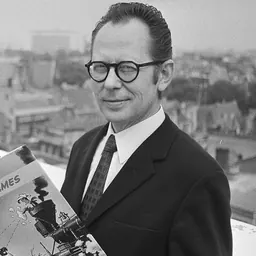

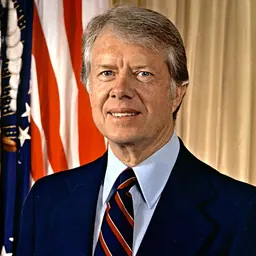




Related people
Same field, nearest in time





Contemporaries
People whose lives overlapped Mo Udall's

Frequently asked questions
Who was Mo Udall?
American politician (1922–1998)
When was Mo Udall born?
Mo Udall was born on 15 June 1922 in St. Johns.
When did Mo Udall die?
Mo Udall died on 12 December 1998 in Washington, D.C..
What was Mo Udall's occupation?
Mo Udall was a politician, basketball player, biographer, banker, businessperson and autobiographer.
What nationality was Mo Udall?
Mo Udall was American.
Sources & further reading
Cite this page
APA: Biography.guide. (2026). Mo Udall. https://biography.guide/mo-udall/
MLA: "Mo Udall." Biography.guide, https://biography.guide/mo-udall/.
Chicago: "Mo Udall." Biography.guide. https://biography.guide/mo-udall/.
Data last updated: 2026-09-21 · Spot an error? Report a correction.
Portrait: Wikimedia Commons · author & licence
Page generated 2026-09-27 05:00 UTC