
About Mikhail Tomsky
Lived 1880 – 1936 (aged 55). Mikhail Tomsky was a Russian politician, trade unionist, functionary, union member and trade union.
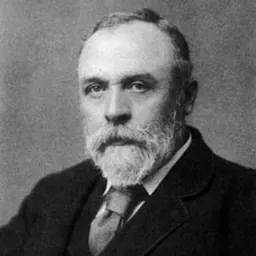
Mikhail Pavlovich Tomsky (Russian: Михаи́л Па́влович То́мский), born Mikhail Pavlovich Yefremov (Russian: Ефре́мов) (31 October 1880 – 22 August 1936) was a factory worker, trade unionist, and Soviet politician. He was the Chairman of the All-Union Central Council of Trade Unions in the 1920s.
In his youth, Tomsky worked at the Smirnov Engineering factory in St. Petersburg, but was eventually dismissed from that job for attempting to organise a trade union. His labour activities radicalized him politically and led him to become a socialist and join the Russian Social Democratic Labour Party in 1904 and eventually join the Bolshevik faction of the party. As such Tomsky was to become one of the relatively few "hereditary proletarians" (to use the term favored by Soviet historians) of the period.
Tomsky's formal education was extremely paltry. He managed to learn to read at age 5 at a private boarding school which he was allowed to attend for a year due to his aunt working as a servant there. At age 9 he was enrolled in a publicly-funded elementary school, which he attended for three years, finishing the program at the top of his class.
In 1894, at the age of just 14, Tomsky participated in his first strike as an employee of the Rouss–Smirnov engineering works. The strike proved a failure, resulting in Tomsky losing his job and forced to endure months of unemployment.
Early revolutionary activity (1903–1907)
Tomsky's life experiences made him a receptive target for illegal revolutionary literature, which he was first exposed to in 1903. He later recalled that he found the ideas expressed to be exhilarating and transformative, and in 1904 he became an active participant in a revolutionary socialist study circle [kruzhok] affiliated with the Russian Social Democratic Labour Party (RSDLP).
In July 1904, Tomsky formally joined the Bolshevik party. News of the "Bloody Sunday" massacre of unarmed workers in St. Petersburg on January 9 already had Revel seething in discontent. Tomsky gained a reputation as a clear public speaker and an effective political leader, and helped organize an October 1905 general strike in Revel — a dramatic event which held out for 10 days.
With the 1905 Revolution against the autocracy in full force, in November Tomsky was elected as a member of the governing Presidium of the Revel Council of Workers' Deputies — a body modeled after a similar organization in St. Petersburg. He was also one of three organizers of a December strike which shut down operations of the railroad line running through the city.
With the coming of 1906, the old regime began to strike back, with the secret police conducting mass arrests of known radical leaders.
On his way back to St. Petersburg, the former Mikhail Yefremov made use of the RSDLP's underground network of safehouses and began using the party pseudonym "Tomsky" — man from Tomsk — for the first time. He helped to establish the Engravers' and Chromolithographers' Union in St. Petersburg in 1907, heading that organization and leading it to merge with the Lithographers' and Printers' Union as a single organization. a gathering attended by all factions of the Russian socialist movement. Upon conclusion of the congress on June 1 he made his way back to Russia, where he was arrested, briefly imprisoned, and then released. Rather than face arrest by the NKVD, Tomsky committed suicide by gunshot in his dacha in Bolshevo, near Moscow. Before committing suicide, he told his wife to tell the investigators that it was Genrikh Yagoda who drove him to the path of opposition, which was later found by Nikolai Yezhov.
Legacy Tomsky was posthumously found guilty of participation in an anti-Soviet conspiracy during the Trial of the Twenty-One in March 1938.
In 1988, during Perestroika, the Soviet government cleared Tomsky of all charges, and he was reinstated as a member of the Communist Party of the Soviet Union.
Don’t just read it —
keep it.
Full-length biographies made to live with: read them, listen on the way to work, watch them tonight.
- E-book
- Audio
- Video
Instant download · yours to keep · every purchase keeps this site free
Important facts
People in Mikhail Tomsky's life
Named in this biography and alive at the same time


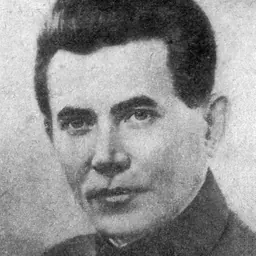
Related people
Same field, nearest in time





Contemporaries
People whose lives overlapped Mikhail Tomsky's

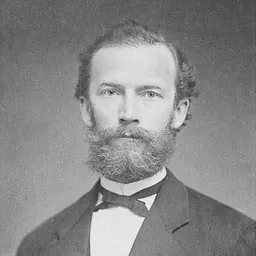

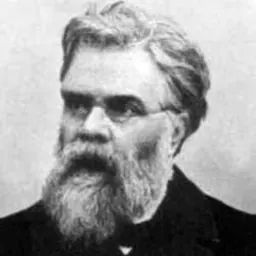
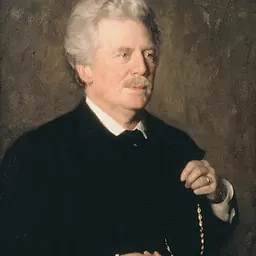
Frequently asked questions
Who was Mikhail Tomsky?
Soviet politician (1880-1936)
When was Mikhail Tomsky born?
Mikhail Tomsky was born on 19 October 1880 in Kolpino.
When did Mikhail Tomsky die?
Mikhail Tomsky died on 22 August 1936 in Korolyov.
What was Mikhail Tomsky's occupation?
Mikhail Tomsky was a politician, trade unionist, functionary, union member and trade union.
What nationality was Mikhail Tomsky?
Mikhail Tomsky was Russian.
Sources & further reading
Cite this page
APA: Biography.guide. (2026). Mikhail Tomsky. https://biography.guide/mikhail-tomsky/
MLA: "Mikhail Tomsky." Biography.guide, https://biography.guide/mikhail-tomsky/.
Chicago: "Mikhail Tomsky." Biography.guide. https://biography.guide/mikhail-tomsky/.
Data last updated: 2026-09-20 · Spot an error? Report a correction.
Page generated 2026-09-27 05:20 UTC