
About Mikhail Kedrov
Lived 1878 – 1941 (aged 63). Mikhail Kedrov was a Russian politician.
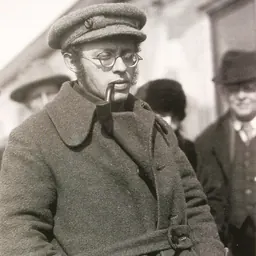
Mikhail Sergeyevich Kedrov (Russian: Михаи́л Сергеевич Кедров; 24 February [ O.S. 12 February] 1878 – 28 October 1941) was a Russian Soviet communist politician, an Old Bolshevik revolutionary, secret policeman and head of the military section of the Cheka.
Soviet postal cover featuring portrait of M. S. Kedrov, 1978.
Early career
Mikhail Kedrov was born in Moscow, into a family in the lower ranks of the Russian nobility. He was expelled from Moscow University for his political activity in 1899, without having graduated. He moved to Yaroslavl, where he studied law, joined the Russian Social Democratic Labour Party in 1901, and was arrested and deported to Vologda in 1902. He joined the Bolsheviks, after the split in the RSDLP in 1903, and donated the money he inherited from his father, approximately 100 thousand gold rubles.
During the 1905 Revolution he organised workers' detachments in Kostroma and supplied weapons for the armed rising in Moscow. After defeat of the revolution, he organised distribution of illegal Bolshevik literature, and ran a publishing house in St. Petersburg, until he was arrested. Released after two years in prison, he moved with his family to Switzerland in 1911, and studied at Lausanne and Berne universities.
He returned to Russia in 1916, and was a military doctor in the Caucasus during the final part of the war between Russia and Turkey. At the time of the February Revolution, he was in northern Iran, where he helped organise a short-lived soviet. By the end of March 1917, he was in Petrograd (St Petersburg), where he joined the Bolsheviks' military organisation, and edited Soldatskaya Pravda. After the October Revolution, he became member of the Collegium of the People's Commissariat for War, and Military Commissar for Demobilisation. In May 1918 he was sent to the North as a commissar in the Red Army to organise defence of Vologda against the White army.
Career in Cheka
In September 1918, Kedrov was appointed head of the military section of Cheka, which was renamed the Special Section on 1 January 1919, after a merger with another department. In May 1920, after defeat of the White Army in the north, Kedrov was appointed Cheka plenitpotentiary for the region, which included Arkhangelsk, Vologda, and the Solovetsky Islands, site of one of Russia's oldest monasteries. He ordered the closure of the monastery, expelled the monks, and created the first of the labour camps that formed what later became known as the Gulag. He also set up an extermination camp at Kholmogory, near Arkhangelsk, for the mass executions of former White officers and others suspected of opposing the Bolshevik revolution.
He was reportedly extremely cruel, even by the standards of the Red Terror. Donald Rayfield wrote that Kedrov "slaughter[ed] schoolchildren and Army officers in northern Russia with such ruthlessness that he had to be taken into psychiatric care." Kedrov reportedly executed captured White Russian officers by loading them onto barges and sinking them. He was ultimately relieved of his post after preparing to massacre the population of Vologda. On 5 April 1921, the chairman of the Arkhangelsk regional Cheka, Zinovi Katsnelson, reported to his superiors that:
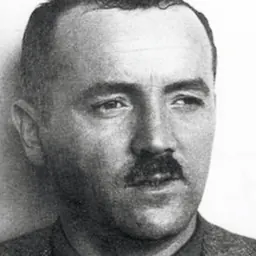
The Kholmogory camp was organized by Kedrov, I repeat Kedrov, secretly, and exclusively for the mass liquidation of the white officers ... No prisoners were held there. They were brought only for liquidation. who prepared the great Moscow show trials of 1936 and 1937, by forcing confessions out of old Bolsheviks such as Grigori Zinoviev and Karl Radek. In a tribute to father and son, published in Pravda, Igor was described as a handsome, intelligent youth who loved music, but Elizabeth Poretsky, widow of a murdered agent Ignace Reiss remembered him as a "pimpled youth with a stupid expression", and a fellow NKVD officer, Alexander Orlov believed that he and his father were both mentally ill.
He later remarried. His second wife, Rebekka Plastinina, assisted him in conducting the mass executions in 1920 in the northern region, where she was known as the 'female executioner'. From prison, he wrote a letter to the Politburo member, Andrei Andreyev:
Brought in front of a Military Collegium he was – very unusually – acquitted, but was still in custody after the German invasion of the USSR. He was evacuated from Moscow on Beria's instructions, and taken with other prisoners to a village in Kuibyshev (Samara), and shot on 28 October 1941.
Posthumous reputation Soviet leader Nikita Khrushchev had decided to denounce crimes committed by the secret police during Stalin's time, but needed to retain the support of Cheka's successor organisation, the KGB. Khrushchev had ordered the execution of Beria, and therefore had a motive for stressing Beria's role in the repression. Kedrov consequently suited his purpose, as a former Chekist who was not implicated in the purges of the 1930s and whose murder could be attributed to Beria personally.
The extract from Kedrov's letter to Andreyev, quoted above, was read out by Khrushchev during his famous Secret Speech to the 20th Party Congress of the Soviet communist party in 1956. Khrushchev's renewed campaign against the neo-Stalinists was accompanied by a detailed account of Kedrov's and Beria's mutual enmity, in Leningradskaya Pravda, 25 February 1964. He was profiled again in Izvestya, 7 November 1970, and there was a 90th birthday tribute in Pravda 24 February 1978, when postage stamps were issued in his honour. Streets were named after him in Arkhangelsk, Moscow and Kotlas. A whole page of Pravda was devoted to Mikhail and Igor Kedrov, 17 February 1989.
A petition calling for Kedrov Street in Arkhangelsk to be renamed was blocked by the authorities in 2016. )
Honours and awards
Don’t just read it —
keep it.
Full-length biographies made to live with: read them, listen on the way to work, watch them tonight.
- E-book
- Audio
- Video
Instant download · yours to keep · every purchase keeps this site free
Important facts
People in Mikhail Kedrov's life
Named in this biography and alive at the same time


Related people
Same field, nearest in time





Contemporaries
People whose lives overlapped Mikhail Kedrov's





Frequently asked questions
Who was Mikhail Kedrov?
Russian revolutionary and Soviet politician (1878–1941)
When was Mikhail Kedrov born?
Mikhail Kedrov was born on 12 February 1878 in Moscow.
When did Mikhail Kedrov die?
Mikhail Kedrov died on 1 November 1941 in Saratov.
What was Mikhail Kedrov's occupation?
Mikhail Kedrov was a politician.
What nationality was Mikhail Kedrov?
Mikhail Kedrov was Russian.
Sources & further reading
· DBpedia: Mikhail Kedrov (politician)
Cite this page
APA: Biography.guide. (2026). Mikhail Kedrov. https://biography.guide/mikhail-kedrov-politician/
MLA: "Mikhail Kedrov." Biography.guide, https://biography.guide/mikhail-kedrov-politician/.
Chicago: "Mikhail Kedrov." Biography.guide. https://biography.guide/mikhail-kedrov-politician/.
Data last updated: 2026-09-20 · Spot an error? Report a correction.
Page generated 2026-09-27 05:09 UTC