
About Ignace Reiss
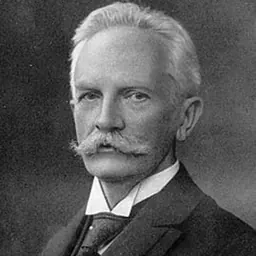
Lived 1899 – 1937 (aged 37–38). Ignace Reiss was a Polish and Austrian revolutionary and spy.
Ignace Reiss (1899 – 4 September 1937) – also known as "Ignace Poretsky," "Ignatz Reiss," "Ludwig," "Ludwik", "Steff Brandt," Nathan Poreckij, and "Walter Scott (an officer of the U.S. military intelligence)" – was one of the "Great Illegals" or Soviet spies who worked in third party countries where they were not nationals in the late 1920s and 1930s. He was known as a nevozvrashchenec ("unreturnable").
An NKVD team assassinated him on 4 September 1937 near Lausanne, Switzerland, a few weeks after he declared his defection in a letter addressed to Joseph Stalin. He was a lifelong friend of Walter Krivitsky; his assassination influenced the timing and method of Whittaker Chambers's defection a few months later.
Background
Reiss was born Nathan Markovich Poreckij then in Galicia, Austria-Hungary (now Ukraine). He was a Lithuanian Jew
Their father had Nathan and Nathan's elder brother educated in Lwow (now Lviv), the provincial capital. There, he formed lifelong friendships with several other boys, all of whom would become committed Communist spies. These included Kalyniak, Willy Stahl, Berchtold Umansky ("Brun"), his brother Mikhail Umansky ("Misha," later "Ilk"), Fedia (later "Fedin"), and the young Walter Krivitsky (born Samuel Ginsberg).
In Vienna, friends included Yuriy Kotsiubynsky, Alexander Schlichter, and Angelica Balabanov. In Amsterdam, Reiss and his wife knew Henriette Roland-Holst, Hildo Krop, Princess Juliana of the Netherlands, "H. C. Pieck" (Henri Pieck), and most importantly "Henricus" or "Henryk Sneevliet" (Henk Sneevliet). While criticizing Stalin and Yezhov, Reiss promised not to reveal any state security secrets.
Reiss then fled with his wife and child to the remote village of Finhaut, Valais canton, Switzerland, to hide. After they had been hiding for a month, Gertrude Schildbach contacted them. Schildbach acted on the instruction of Roland Lyudvigovich Abbiate, alias Francois Rossi, alias Vladimir Pravdin, codename LETCHIK ("Pilot"), a Russian expatriate, citizen of Monaco, and a Soviet NKVD agent. She refused a request by Abbiate to give Reiss a box of chocolates filled with strychnine but agreed to set up a meeting with him. On 4 September, Reiss agreed to meet Schildbach in Lausanne. His wife and son Roman boarded a train for Territet, Vaud canton, Switzerland. Reiss stayed with Schildbach and was then to board a train for Reims, France, to meet Sneevliet (who was to publish Reiss's letter and news of his defection). Then he was to rejoin his family in Territet. He never made it to his train to Reims. Realizing what was about to happen, Reiss lunged for Schildbach, grabbing a lock of her hair before Abbiate shot him. Reiss was hit by fifteen bullets from Abbiate's submachine gun, killing him instantly: he was found with five bullets in the head and seven in the body. The two then dumped Reiss's body on the side of the road.
Police investigations revealed that a long strand of grey hair was found clutched in the hand of the dead man. In his pockets were a passport in the name of Hans Eberhardt and a railway ticket for France. An American-brand automobile, abandoned on 6 September at Geneva, was found to contain abandoned clothing, which led to the identification of two men and a woman. One of the men was Roland Abbiate, who had registered on 4 September at the Hotel de la Paix in Lausanne with Schildbach, the two had fled without their baggage and without paying their bill. Among the effects left by Schildbach at the hotel was a box of chocolates containing strychnine.
In a 1951 French Ministry of Interior study titled A Soviet Counter-espionage Network Abroad: the Reiss Case the French government analyzed the actions of Soviet state security forces involved in Reiss's abduction and assassination. Published on 20 September, the study concluded that "the assassination of Ignace Reiss on 4 September 1937 at Chamblandes near Lausanne, Switzerland, is an excellent example of the observation, surveillance and liquidation of a 'deserter' from the Soviet secret service". in Moscow; at times, Reiss used her maiden name as another alias. (In French, her book received the title Les nôtres by "Elisabeth K. Poretski" in the Bibliothèque nationale de Paris and by "Elizaveta Poretskaya" in The Black Book of Communism. ) They had one child, a boy named Roman, born around 1926. (Participating in the film are Vanessa Redgrave, who reads from adaptations of Elisabeth Poretsky's memoirs, and Gerard Rosenthal, who recounts his services as lawyer to both Leon Trotsky and Elisabeth Poretsky. )
1998: Fear of Mirrors, by Tariq Ali
"Ludwik" forms the background history of Tariq Ali's 1998 novel Fear of Mirrors, set during German reunification in 1990. Ali was fascinated by the story of Ignace Reiss: "Ludwik became an obsession with me."
Don’t just read it —
keep it.
Full-length biographies made to live with: read them, listen on the way to work, watch them tonight.
- E-book
- Audio
- Video
Instant download · yours to keep · every purchase keeps this site free
Important facts
People in Ignace Reiss's life
Named in this biography and alive at the same time




Related people
Same field, nearest in time


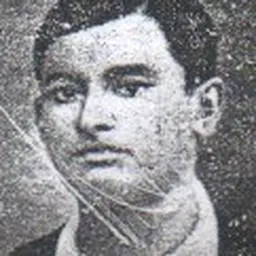
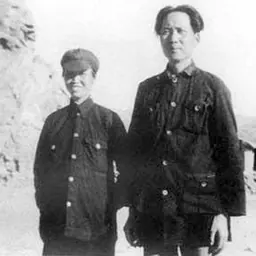

Contemporaries
People whose lives overlapped Ignace Reiss's
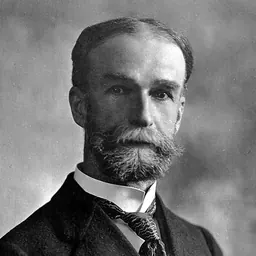
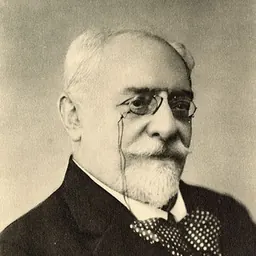
Frequently asked questions
Who was Ignace Reiss?
Soviet spy (1899–1937)
When was Ignace Reiss born?
Ignace Reiss was born in 1899 in Pidvolochysk.
When did Ignace Reiss die?
Ignace Reiss died on 4 September 1937 in Lausanne.
What was Ignace Reiss's occupation?
Ignace Reiss was a revolutionary and spy.
What nationality was Ignace Reiss?
Ignace Reiss was Polish and Austrian.
Sources & further reading
Cite this page
APA: Biography.guide. (2026). Ignace Reiss. https://biography.guide/ignace-reiss/
MLA: "Ignace Reiss." Biography.guide, https://biography.guide/ignace-reiss/.
Chicago: "Ignace Reiss." Biography.guide. https://biography.guide/ignace-reiss/.
Data last updated: 2026-09-20 · Spot an error? Report a correction.
Page generated 2026-09-27 05:22 UTC