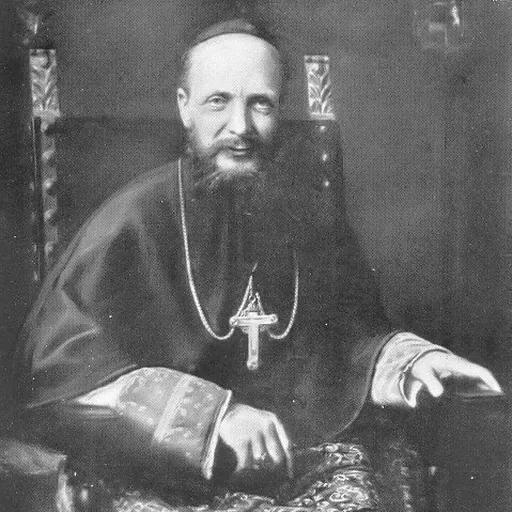
About Michel d'Herbigny
Lived 1880 – 1957 (aged 77). Michel d'Herbigny was a French catholic priest, catholic bishop and university teacher.
Secret mission to the USSR By 1926 the level of religious persecution in the Soviet Union was such that the entire leadership of the Catholic Church in that country had effectively been eliminated by exile or imprisonment. Pope Pius XI took the decision to attempt the establishment of a provisional hierarchy without the knowledge, still less the approval, of the Soviet government. The Pope's plans were set down in the rescript Plenitudine Potestatis and the decree Quo aptius, and involved the establishment of ten apostolic administrations in metropolitan centres, covering the entire country.
D'Herbigny was selected as the man to lead this attempt, receiving his orders in an audience with Pius XI on February 11, 1926. Pius was inspired by his personal charisma and his conviction. He was empowered by the pope as a "delegate for aims known to us" in a sealed motu proprio. On March 29, en route to Moscow under the pretext of an Easter pastoral visit to western European Catholics resident in the Soviet capital, he received episcopal ordination in secret and behind closed doors from Eugenio Pacelli (the future Pope Pius XII), the papal nuncio in Berlin. Later in the same tour, d'Herbigny also consecrated Aleksander Frison and Boļeslavs Sloskāns and appointed them to similar roles, in Odessa and Mogilev respectively. He also consecrated Antoni Malecki and appointed him to a similar role in Leningrad. In total, d'Herbigny visited Russia three times: once in October 1925 and two separate times during 1926, in April-May and August-September. However, on September 4 of that year, the Soviet government, which had been aware of his mission, cancelled his visa and made him leave the country. D'Herbigny continued to receive regular reports on the situation inside the Soviet Union from Neveu. Most of the Catholic clergy were arrested by the Soviets, but Neveu was an exception because he was a French citizen. He and d'Herbigny were able to arrange for many religious objects to be saved from destruction, with thousands of such objects being sent to the Pontifical Oriental Institute in Rome through the Italian embassy in Moscow.
When Sergius, the patriarchal administrator of the Russian Orthodox Church, pledged loyalty to the Soviet government in 1927, it caused opposition among Russian emigres in Europe. Pius XI sent d'Herbigny on a tour of the major centers of Orthodoxy outside of the Soviet Union. D'Herbigny's goal was to build trust with Orthodox clergy, but obtaining their reunification with Rome was the purpose of putting together a united front against Bolshevism. Several years later, he also entertained the thought of having Bartholomew Remov, a Russian Orthodox bishop who was received into the Catholic Church by Neveu and wanted to form a common front against communism, get the other bishops to elect a new patriarch who could leave the Soviet Union and declare a union with Rome.
In 1928 he was responsible for the founding of the Pontifical Russian College, the Collegium Russicum, in Rome, to educate clergy that would help bring about the reunification of Russian Orthodoxy with Catholicism. D'Herbigny arranged the funding for this institution from a wealthy relative of the sainted nun Thérèse of Lisieux, after whom the college is also named. An extension of the Pontifical Oriental Institute, it was built for a Russian Greek Catholic Church. The students there only spoke Russian and wore the same clothing as Orthodox priests. D'Herbigny even grew out a beard, following the example of Orthodox clergy, on the advice of the pope.
D'Herbigny was made president of the Pontifical Commission for Russia on April 6, 1930, when it was separated from the Congregation for the Oriental Churches by the pope. Previously he had been its effective head as an assistant to the cardinal who led the congregation. The commission had authority over Russian Catholics of both the Latin and Byzantine rites. In that role he prepared candidates to carry out missionary work within the Soviet Union, which included education to become fluent in the Russian language and knowledgeable of Russian culture and history. They also received training from the Polish military to be parachuted into Soviet territory. The Soviets denounced the Russian College and the Pontifical Oriental Institute, claiming they were preparing to rebuild the White Army.
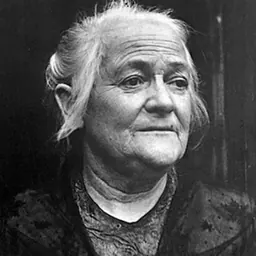
At the end of 1932, d'Herbigny was seriously compromised by the scandal created by Alexander Deubner, Russian priest and nephew of Clara Zetkin, the famous Communist and one of Moscow's international agents. D'Herbigny had hired him as a translator, and the priest was officially the co-author of the last book that he had just published. Having left precipitously in November 1932 for Berlin, for reasons that were not very honourable, Deubner was denounced as a Soviet spy.
Downfall and isolation Within little more than a decade, all those appointed in secret by Bishop d'Herbigny had been imprisoned, exiled or executed, and the Vatican's policy of attempting to organise an underground Church hierarchy in Russia by means of clandestine consecrations was temporarily abandoned. D'Herbigny was stripped of his powers and silenced, in circumstances which historians have not been able to explain or clarify. French papal biographer Yves Chiron gives a number of possible reasons: an internal settlement of affairs within the Jesuit order; jealousy of his influence over Pius XI on the part of his Polish Jesuit superior general, Wlodimir Ledóchowski; an affair with a woman; Russian provocation in revenge for his antics; general failure of his policies and tactics. Despite this, on May 25, 1933, he was given the title of assistant to the papal throne by Pius XI.
In July 1933 d'Herbigny was sent to a monastery. On September 29, 1933, he was told by Pius XI to leave Rome and go to a Belgian clinic, and he departed on October 2. In November he was asked to resign from his office, which he did. After that, his second-in-command, Filippo Giobbe, became the acting head of the Pontifical Commission for Russia. In the years after 1933, d'Herbigny tried to figure out the reason for his dismissal, but was not able to obtain that information. During 1935 and 1936, he went on tours in European countries to speak about the situation of the church in Russia and the dangers of communism. He still kept his titles as assistant to the papal throne and consultant to the Congregation for the Oriental Churches.
In July 1937, d'Herbigny was forced to abdicate his titular see and forbidden from all public activity whatsoever. After that he lived in different places in Belgium and France, before finally living a Jesuit residence in Aix-en-Provence, France, until his death on December 23, 1957, and he was not allowed to speak publicly about his past activities.
Don’t just read it —
keep it.
Full-length biographies made to live with: read them, listen on the way to work, watch them tonight.
- E-book
- Audio
- Video
Instant download · yours to keep · every purchase keeps this site free
Important facts
People in Michel d'Herbigny's life
Named in this biography and alive at the same time




Related people
Same field, nearest in time

Contemporaries
People whose lives overlapped Michel d'Herbigny's




Frequently asked questions
Who was Michel d'Herbigny?
Catholic bishop (1880–1957)
When was Michel d'Herbigny born?
Michel d'Herbigny was born on 8 May 1880 in Lille.
When did Michel d'Herbigny die?
Michel d'Herbigny died on 23 December 1957 in Aix-en-Provence.
What was Michel d'Herbigny's occupation?
Michel d'Herbigny was a catholic priest, catholic bishop and university teacher.
What nationality was Michel d'Herbigny?
Michel d'Herbigny was French.
Sources & further reading
· Wikipedia: Michel d'Herbigny
Cite this page
APA: Biography.guide. (2026). Michel d'Herbigny. https://biography.guide/michel-d-herbigny/
MLA: "Michel d'Herbigny." Biography.guide, https://biography.guide/michel-d-herbigny/.
Chicago: "Michel d'Herbigny." Biography.guide. https://biography.guide/michel-d-herbigny/.
Data last updated: 2026-09-23 · Spot an error? Report a correction.
Portrait: Wikimedia Commons · author & licence
Page generated 2026-09-27 05:05 UTC