
Mia Cranwill
Irish designer and metal artist
About Mia Cranwill
Lived 1880 – 1972 (aged 92). Mia Cranwill was a jewelry designer.
Mia Cranwill (born Maria Cranwill; 1 March 1880 – 20 October 1972) was an Irish designer and metal artist, and was one of the leading artists of the Irish Celtic Revival.
Early life and education Mia Cranwill at 3 Charlotte Place, Drumcondra, Dublin on 1 March 1880. She was the daughter of two first cousins, Arthur Henry Cranwill, an analytical chemist, son of Thomas Smith Cranwill Jnr and Maria Hogan and "Amy" Amelia Frances Holland, daughter of William Thomas Holland and Emily Amelia Cranwill. Arthur Henry Cranwill was an ardent Parnellite, and acted as a treasurer of the Irish Protestant Home Rule Association. Throughout her childhood Cranwill suffered poor health which affected her education, which was a mix of home education and private schooling. The family moved to Manchester when she was aged fifteen. Whilst there, Cranwill attended night classes in art, going on to receive a scholarship to the Manchester School of Art. She qualified as a teacher and taught for eight years until ill-health and dissatisfaction with her job led to her resignation in 1915. After this, Cranwill ran a fruit and poultry farm in Emsworth with a friend. They were forced to abandon the farm after 18 months, when her friend fell ill. Cranwill remained interested in Ireland during her time in England, with her father's friend Charles Hubert Oldham encouraged her to study Irish history and mythology whenever she visited Dublin. Through this study, Cranwill became familiar with the work of George Coffey on early Irish art, which led to her beginning to experiment with Celtic design in metal and enamel assisted by Frederick Newland Smith from the Manchester School of Art. She decided to return to Ireland permanently, moving to Dublin in May 1917.
Early artistic career Upon her return to Dublin, Cranwill set up her studio on Suffolk Street, which was known as "a joyous haven". She would produce special order pieces of individual orders, primarily in gold and silver with semi-precious stones and minerals. These included Irish Achill amethyst, and other native materials when possible. Upon its completion in 1924, it received universal praise, being exhibited at the NMI and the Manchester Art Federation. When the Senate was dissolved in 1936, it was presented to the Royal Irish Academy. Newland Smith reviewed the casket, described Cranwill was a "designer and craftswoman who understands the national Irish style and can interpret it, create anew within it, and add to the old and delightful forms a personality and expression quite new".
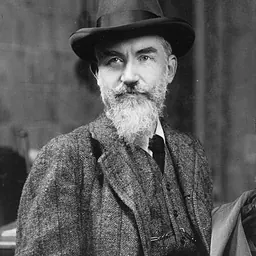
Cranwill's other works include an episcopal ring for John Dignan (1924), a tabernacle door for St. Michael's Church, Ballinasloe (1926), and a hymnal board for Holy Trinity church, Killiney (1932). In collaboration with Neville Wilkinson, she produced a miniature reproduction of the Cross of Cong and the Ardagh Chalice for Titania's Palace. In 1933, she designed a presentation cup for the Catholic Boy Scouts of Ireland, illustrated with scenes from Irish history. She created rings for people such as Micheál Mac Liammóir, Compton Mackenzie, and Charlotte Payne-Townshend. George Bernard Shaw described her as "the Irish Benvenuto Cellini", and wrote of her issues with vested interests in the Irish gold and silver trade over the lack of hallmarks on her work. Cranwill designed the standards for the Irish Free State Army, which were produced by Cuala Industries, and were first borne on St Patrick's day 1937. Due to failing health in her later life, Cranwill gave up metalwork, instead weaving and illustrating. She illustrated the Dolmen Press's Ewart Milne's poem Galion (1953) and Thomas Kinsella's translation of The sons of Usnech (1954).
Later life Cranwill made her own clothes and cobbled her own shoes into her seventies. She left her Killiney home and workshop, living the last ten years of her life in the Alexandra Guild House, Leinster Road West, Dublin. She died there on 20 October 1972. Eva Douglas painted a portrait of her. She is said to have believed she was a reincarnation of a Mayan princess.
Don’t just read it —
keep it.
Full-length biographies made to live with: read them, listen on the way to work, watch them tonight.
- E-book
- Audio
- Video
Instant download · yours to keep · every purchase keeps this site free
Important facts
People in Mia Cranwill's life
Named in this biography and alive at the same time




Related people
Same field, nearest in time





Contemporaries
People whose lives overlapped Mia Cranwill's




Frequently asked questions
Who was Mia Cranwill?
Irish designer and metal artist (1880-1972)
When was Mia Cranwill born?
Mia Cranwill was born on 1 March 1880 in Drumcondra.
When did Mia Cranwill die?
Mia Cranwill died on 20 October 1972.
What was Mia Cranwill's occupation?
Mia Cranwill was a jewelry designer.
Sources & further reading
Cite this page
APA: Biography.guide. (2026). Mia Cranwill. https://biography.guide/mia-cranwill/
MLA: "Mia Cranwill." Biography.guide, https://biography.guide/mia-cranwill/.
Chicago: "Mia Cranwill." Biography.guide. https://biography.guide/mia-cranwill/.
Data last updated: 2026-09-20 · Spot an error? Report a correction.
Page generated 2026-09-27 05:04 UTC