
About Charlotte Payne-Townshend
Lived 1859 – 1943 (aged 83–84). Charlotte Payne-Townshend was an Irish political activist.
Charlotte Frances Payne-Townshend (20 January 1857 – 12 September 1943) was an Irish political activist in Britain. She was a member of the Fabian Society and was dedicated to the struggle for women's rights. She married the playwright George Bernard Shaw.
Early life Daughter of Horace Townshend, she grew up in a wealthy Irish family in County Cork before moving to England. Charlotte met Beatrice Webb in 1895. Webb described her as: " large graceful woman with masses of chocolate brown hair ... She dresses well, in flowing white evening robes she approaches beauty. At moments she is plain." Her mother was determined to find her a husband. Charlotte later commented: "Even in my earliest years I had determined I would never marry." She turned down Count Sponnek, Finch Hutton and Arthur Smith-Barry. Charlotte fell in love with Axel Munthe, but he never asked for her hand in marriage.
Beatrice and Sidney Webb persuaded Charlotte to donate £1,000 to the London School of Economics library and the endowment of a woman's scholarship. According to Michael Holroyd, Webb developed a plan "to marry Charlotte off to" Graham Wallas, who worked at the London School of Economics.
In July 1897, Charlotte proposed marriage. He rejected the idea because he was poor and she was rich and people might consider him a "fortune-hunter". He told Ellen Terry that the proposal was like an "earthquake" and he "with shuddering horror and wildly asked the fare to Australia". Charlotte decided to leave Shaw and went to live in Italy.
Marriage
In April 1898, Shaw had an accident; he was living at 29 Fitzroy Square with his mother. According to Shaw his left foot swelled up "to the size of a church bell". He wrote to Charlotte complaining that he was unable to walk. When she heard the news she travelled back to visit him at his home. Soon after she arrived on 1 May she arranged for him to go into hospital. Shaw had an operation that scraped the necrosed bone clean. Charlotte married Shaw on 1 June 1898, while he was recuperating from surgery. He was nearly forty-two; she was six months younger. The couple resided at first at 10 Adelphi Terrace, London, overlooking the Embankment. In the view of the biographer and critic St John Ervine, "their life together was entirely felicitous". Their marriage is generally believed never to have been consummated; whether this was wholly at Charlotte's wish, as Shaw liked to suggest, is less widely credited. However, according to Michael Holroyd they had a "careful sexual experience". Charlotte soon made herself almost indispensable to Shaw. She learnt to read his shorthand and to type, took dictation and helped him prepare his plays for the press.
In 1906, the couple moved into a house, now called Shaw's Corner, in Ayot St. Lawrence, a small village in Hertfordshire. They also maintained a pied-à-terre in Fitzroy Square, London, and travelled the world extensively during the 1930s. According to Shaw's friend Archibald Henderson Shaw's 1933 play A Village Wooing is based on their courtship. The play is about a writer and a woman who meet on a cruise but only become a couple when they develop a working relationship:
She died from Paget's disease in 1943, and was cremated at Golders Green Crematorium, where her ashes were kept until Shaw's death in 1950. Their ashes were taken to Shaw's Corner, mixed and then scattered along footpaths and around the statue of Saint Joan in their garden.
Publications Payne-Townshend was also a translator. Among other things she translated Eugène Brieux's play Maternité for the London stage. It was put on by the Stage Society, at Daly's Theatre in 1910.
Legacy Shaw Library, on the sixth floor of the Old Building, London School of Economics, was founded by and named after her.
Don’t just read it —
keep it.
Full-length biographies made to live with: read them, listen on the way to work, watch them tonight.
- E-book
- Audio
- Video
Instant download · yours to keep · every purchase keeps this site free
Important facts
People in Charlotte Payne-Townshend's life
Named in this biography and alive at the same time

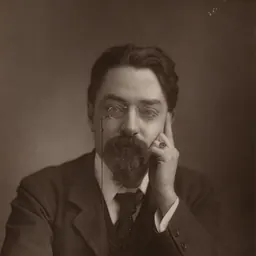

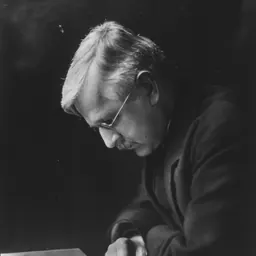

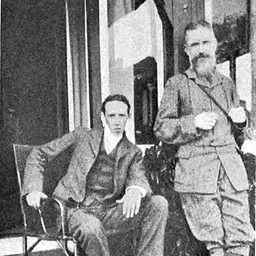
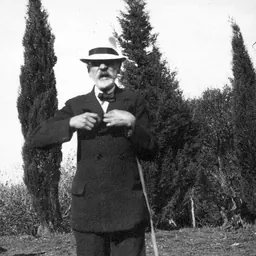
Related people
Same field, nearest in time


Contemporaries
People whose lives overlapped Charlotte Payne-Townshend's



Frequently asked questions
Who was Charlotte Payne-Townshend?
Irish writer
When was Charlotte Payne-Townshend born?
Charlotte Payne-Townshend was born in 1859 in Ireland.
When did Charlotte Payne-Townshend die?
Charlotte Payne-Townshend died on 12 September 1943.
What was Charlotte Payne-Townshend's occupation?
Charlotte Payne-Townshend was a political activist.
What nationality was Charlotte Payne-Townshend?
Charlotte Payne-Townshend was Irish.
Sources & further reading
· Wikipedia: Charlotte Payne-Townshend
· DBpedia: Charlotte Payne-Townshend
Cite this page
APA: Biography.guide. (2026). Charlotte Payne-Townshend. https://biography.guide/charlotte-payne-townshend/
MLA: "Charlotte Payne-Townshend." Biography.guide, https://biography.guide/charlotte-payne-townshend/.
Chicago: "Charlotte Payne-Townshend." Biography.guide. https://biography.guide/charlotte-payne-townshend/.
Data last updated: 2026-09-20 · Spot an error? Report a correction.
Page generated 2026-09-27 05:17 UTC