
About Maurice Garin
Lived 1871 – 1957 (aged 85). Maurice Garin was an Italian and French sport cyclist.
Amateur racing He began racing in northern France in the same year when the secretary of the cycling club at Maubeuge persuaded him to enter a regional race, Maubeuge-Hirson-Maubeuge, over 200 km. Garin finished fifth despite suffering from the sun The race was over 102 km. He was leading by Dinant when he punctured. Spotting a soigneur waiting with a spare bike for a rival, Garin rested his own against the wall of a bridge, grabbed the soigneur's spare bike and rode off. At the finish, winning with ten minutes over the field, he gave back the bike and recovered his own the next day where he had left it.
Professional racing Garin became a professional by chance. He planned to ride a race at Avesnes-sur-Helpes, 25 km from where he lived. He arrived to find it was only for professionals. Not allowed to compete, he waited until the riders had left, raced after them and passed them all. He fell off twice but finished ahead of the racers. The crowd was enthusiastic but the organisers less so. They refused to pay him the 150 francs (approx €525 at 2008 values) It was held on the Champ de Mars, site of the Eiffel Tower. The riders competed, as was the custom, behind a succession of pacers. The event took place in February and the cold drove out riders one after the other. Garin rode 701 km in 24 hours, beating the only other rider to finish by 49 km. While other riders would consume much strong red wine, Garin chose a more apt diet, and said he had survived on:
In 1897 he won Paris–Roubaix, beating the Dutchman Mathieu Cordang in the last two kilometres of the velodrome at Roubaix. Sergent said:
As the two champions appeared they were greeted by a frenzy of excitement and everyone was on their feet to acclaim the two heroes. It was difficult to recognise them. Garin was first, followed by the mud-soaked figure of Cordang. Suddenly, to the stupefaction of everyone, Cordang slipped and fell on the velodrome's cement surface. Garin could not believe his luck. By the time Cordang was back on his bike, he had lost 100 metres. There remained six laps to cover. Two miserable kilometres in which to catch Garin. The crowd held its breath as they watched the incredible pursuit match. The bell rang out. One lap, there remained one lap. 333 metres for Garin, who had a lead of 30 metres on the Batave.
A classic victory was within his grasp but he could almost feel his adversary's breath on his neck. Somehow Garin held on to his lead of two metres, two little metres for a legendary victory. The stands exploded and the ovation united the two men. Garin exulted under the cheers of the crowd. Cordang cried bitter tears of disappointment. He started by chasing another Frenchman, Lucien Lesna, who rode the first 600 km at 28km/h and had two hours' lead at Brest. At Rennes he stopped for a bath to recover from the tiredness, filth and heat, then found he could not get racing again into the headwind. Garin passed him at Mayenne and Lesna gave up shortly afterwards with 200 km to go. Garin finished 19h 11m better than Charles Terront ten years earlier.
In 1902 Garin won Bordeaux–Paris, a race of 500 km from south-west France.
Tour de France
1903 Tour de France
The Tour de France was established to promote a new daily sports newspaper, L'Auto which was startted as a rival to the then largest paper in France, Le Vélo, which sold 80,000 copies a day. Some of Le Vélos advertisers had disagreed with that paper's support for Alfred Dreyfus, an officer found guilty on trumped up charges of selling secrets to the Germans, who would be eventually acquitted after being long jailed on Devil's Island. The Tour was to promote their new anti-Dreyfus rival paper, L'Auto.
The editor, Henri Desgrange, planned a five-week race from 31 May to 5 July. This proved too daunting and only 15 entered. Desgrange cut the length to 19 days and offered a daily allowance.
The race began at the Au Reveil Matin café at a crossroads in Montgeron, south of Paris, and ended in Ville-d'Avray, another suburb, having circuited France in six days of racing over 2,428 km. One stage, between Nantes and Paris, was 471 km. Sixty riders started at an entry fee of 10 francs – €87.50 today with inflation – and 21 finished. Garin won 3,000 francs (approx €10,500 at 2008 values) Lucien Pothier was second and Fernand Augereau third.
Pierre Chany wrote: In the town which adopted Maurice Garin, at Lens, an immense procession was organised with the participation of all the notables of the region. Before leaving Paris on Monday evening, the day after the race finished, the winner paid a visit, out of politeness, to Henri Desgrange and, in a gesture without precedent, pulled a sheet of paper from his pocket. It was an article 'in order to simplify the interview', he explained! There he gave his feelings during the race, gave his opinion on the formula by which the race was run, gave a word of congratulation to his rivals.
Garin's written note said:
Garin also won the 1904 Tour de France, by a small margin over Lucien Pothier, but was subsequently stripped of the title which was awarded to Henri Cornet. The race aroused a passion among spectators, who felled trees to hold back rivals and beat up others at night outside St-Étienne. Garin was one of the mob's victims. Pierre Chany wrote:
In the climb of the col de la République, leaving St-Étienne, supporters of the regional rider, Faure, assault the Italian, Gerbi. He is thrown to the ground, beaten like plaster. He escapes with a broken finger...
Misbehaviour was rife too between riders and nine were thrown out during the race for, among other things, riding in or being pulled by cars. There were claims, too, that the organisers had allowed Garin to break rules – at one stage being given food where it was not permitted by its chief official – because his sponsor, La Française, had a financial stake in the race.
The French cycling union, the Union Vélocipédique Française, heard from dozens of competitors and witnesses and in December disqualified all the stage winners and the first four finishers: Garin, Pothier, César Garin, and Hippolyte Aucouturier. The UVF did not say precisely what had happened and the details were lost when Tour archives were transported south in 1940 to avoid the German invasion and never seen again. Stories spread of riders spreading tacks on the road to delay rivals with punctures, of riders being poisoned by each other or by rival fans. Lucien Petit-Breton said he complained to an official that he had seen a rival hanging on to a motorcycle, only to have the cheating rider pull out a revolver.
Tales were also said to include 'Garin taking a train', a claim confirmed by a cemetery attendant looking after his grave who, as a boy, heard Garin tell his stories as an old man. used to bring out a chair in fine weather and sit in the doorway of the little office of the service station he owned at 116 rue de Lille in Lens, under the sign for Antar fuel and oil. My barber was in the neighbouring house and I used to go there once a month to have a crew cut, [couper en brosse] which was the fashion in those days. My friends and I were aged seven to ten and on our one-speed bikes we used to pin numbers on our back... and we never missed riding past Maurice Garin in a tight group so that he would see. It's strange that nobody thought to take a picture of me, the little kid, alongside the first great champion of the biggest race in the world. But life's like that.
Garin kept his interest in cycling. He returned just once to his birthplace, in 1949, to see the Tour pass through. He began a professional team under his name after the Second World War. The Dutchman Piet van Est won Bordeaux–Paris in 1950 and 1952 in the team's red and white jersey. On the Tour's 50th anniversary in 1953, Garin was among several old stars waiting at the finish as part of a celebration.
Death and commemoration
In 1933 the Stade Vélodrome Maurice Garin was built in Lens, and named in his honour.
In 1938 Garin was awarded the gold medal of Physical Education by the Minister of Sport for France, Leo Lagrange. Winner 3 stages
Grand Tour general classification results timeline
Grand Tour 1903 1904Tour de France 1 DSQGiro d'Italia N/A N/AVuelta a España N/A N/A
Don’t just read it —
keep it.
Full-length biographies made to live with: read them, listen on the way to work, watch them tonight.
- E-book
- Audio
- Video
Instant download · yours to keep · every purchase keeps this site free
Important facts
People in Maurice Garin's life
Named in this biography and alive at the same time




Related people
Same field, nearest in time




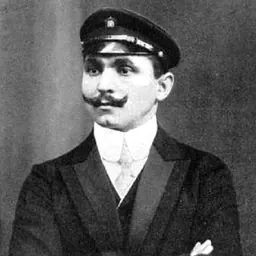
Contemporaries
People whose lives overlapped Maurice Garin's
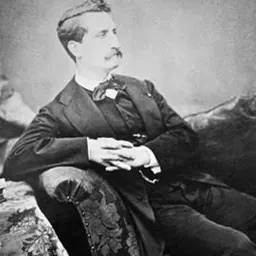
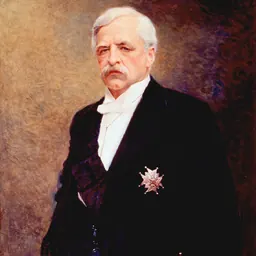
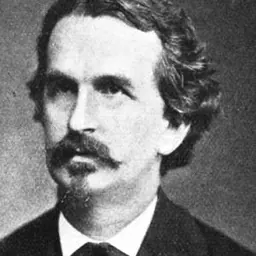
Frequently asked questions
Who was Maurice Garin?
French cyclist (1871–1957)
When was Maurice Garin born?
Maurice Garin was born on 3 March 1871 in Arvier.
When did Maurice Garin die?
Maurice Garin died on 19 February 1957 in Lens.
What was Maurice Garin's occupation?
Maurice Garin was a sport cyclist.
What nationality was Maurice Garin?
Maurice Garin was Italian and French.
Sources & further reading
Cite this page
APA: Biography.guide. (2026). Maurice Garin. https://biography.guide/maurice-garin/
MLA: "Maurice Garin." Biography.guide, https://biography.guide/maurice-garin/.
Chicago: "Maurice Garin." Biography.guide. https://biography.guide/maurice-garin/.
Data last updated: 2026-09-26 · Spot an error? Report a correction.
Page generated 2026-09-27 05:15 UTC