
About George Pilkington Mills
Lived 1867 – 1945 (aged 78). George Pilkington Mills was a British sport cyclist.
George Pilkington Mills (8 January 1867 – 8 November 1945 ) was the dominant English racing cyclist of his generation, and winner of the inaugural Bordeaux–Paris cycle race. He frequently rode from Land's End to John o' Groats, holding the world record time on six occasions between 1886 and 1895. He was a member of the Anfield and North Road cycling clubs. He later won races and broke records as a car racer and motorcycle rider. the tricycle in 5 days 10 hours, an improvement of hours.
Mills' penny-farthing record stood until July 2019, when it was beaten by Richard Thoday in 4 days 11hrs and 52 mins. Mills was helped by other members of the Anfield Bicycle Club, who organised accommodation and food, and enrolled other cyclists to guide him.
Other timed races In the summer Mills broke the Land's End-John o'Groats record, he also won the North Road 24-hour time-trial on a penny-farthing with 288 miles,
In 1887, he won the North Road 24-hour on a tricycle. He rode miles on a tandem with R. Tingley in the same year.
Bordeaux–Paris George Mills won the inaugural Bordeaux–Paris race in 1891. He was invited by the organisers, the newspaper Véloce Sport because of his reputation in an age when long-distance racing was the fashion. A race from Bordeaux in the south-west to the capital in Paris would be the longest annual event in France.
The race started at 5 am in the Place du Pont Bastide in Bordeaux. There were 38 riders. As well as the British – Mills, Monty Holbein, Selwyn Francis Edge and Joah Edward Lionel Bates – there were a Pole and a Swiss. The British riders had woollen jerseys and leggings and their bicycles had footrests on the forks to profit from descents. The French were less organised and had trousers strapped closed at the ankle.
Mills fell on bad roads after 10 km when he touched with the French favourite, Jiel-Laval, but neither was hurt. The English group moved to the front when the field began to straggle after the first hour. They led by a mile at dawn after averaging 14 mph. The historian Victor M. Head write: "At 10.30 Angoulème was reached and the Englishmen stopped to gulp down bowls of hot soup. When they restarted, Mills began to make all the running, drawing steadily away from his companions until, arriving at Ruffeo, he was half an hour in the lead."
Mills reached Tours after 215 miles and more than 12 hours on the road. He rested for five minutes, ate raw meat "and a specially prepared stimulant",
The first Frenchman – Jiel-Laval – was fifth, five and a half hours behind Mills. Riders were still coming in two days later.
The Bicycle Union – later renamed the National Cyclists Union – had strict views about amateurism and had demanded its French equivalent ensure that all taking part met its own amateur ideals. Only then would the NCU allow Mills and other British amateurs to take part, although it accepted that professionals such as Charles Terront could be employed as pacers. Only when he could prove that he had would the Bicycle Union concede that he was not a professional.
Cycling club life Mills joined the Anfield Bicycle Club, in Liverpool 1884, five years after it was formed. He was a founding member of the North Road Club in London. At his death on 8 November 1945, he was one of only two founding members still alive. The other was E. P. Moorehouse. With Mills dead and Moorehouse ill, the club cancelled presentations to mark their achievements and their long association.
Military service Mills joined the army in 1889 and retired in 1906 as a major. He volunteered again in 1914 and in March 1915 was stationed at Colchester. He was a captain in the Bedfordshire regiment. He left for France in December 1915 and by 1917 had been promoted to lieutenant-colonel. He was awarded the Distinguished Service Order and he was mentioned in dispatches three times.
Civilian life Mills moved several times for work. He worked at Beeston, Nottinghamshire, home of the Humber Cycle company. Raleigh employed him to run operations at its new factory when it opened in Lenton, Nottingham, in 1896. There he introduced automation and, in Raleigh's words, "other American practices." He moved in 1910 to west London to join the motor manufacturer Clément-Talbot. It was from there that he joined the army. He worked for the Aster Engineering Company in Wembley after the war, then in 1924 at Belsize Motor Company in Manchester.
Car and motorcycle racing In 1907 he won the TT Race for international heavy touring cars in a 30 hp Beeston Humber. An undated news cutting says he also beat a motorcycling record. It says: "Mr G.P. Mills on his Raleigh motorcycle completed his run from Land's End to John o'Groats on Saturday forenoon and established a new record. He started on his long and trying journey at eight on Thursday morning, and arrived at his destination at 11am on Saturday, after being 50h 46m 30s on the road. Mr F.T. Bidlake was the timekeeper. Mr J. Silver previously held the record, having done the distance in 64h 29m, and Mr E.H. Arnott in 65h 45m. He has not only beaten the motor cycle record, but is also nearly two hours ahead of best motor car time."
Personal life Mills was an excellent shot, and carried a Colt revolver while training to fend off dogs. He shot five of them.
In 1929 he lived in Bathampton, near Bath, then in 1932 at Malvern, in 1935 in Bournemouth From 1938 until he died he lived at Shirley, in Surrey. He died in Westminster Hospital, London, followed by a funeral at Shirley parish church, Shirley, Croydon.
Don’t just read it —
keep it.
Full-length biographies made to live with: read them, listen on the way to work, watch them tonight.
- E-book
- Audio
- Video
Instant download · yours to keep · every purchase keeps this site free
Important facts
People in George Pilkington Mills's life
Named in this biography and alive at the same time


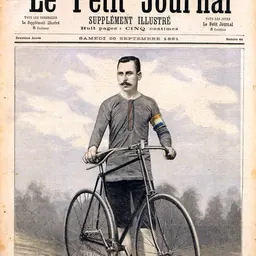
Related people
Same field, nearest in time



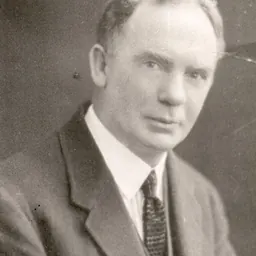
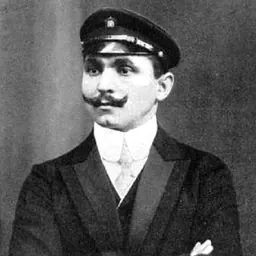
Contemporaries
People whose lives overlapped George Pilkington Mills's
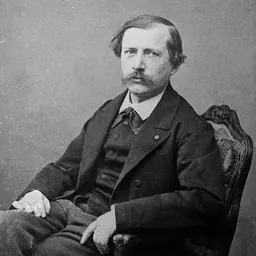


Frequently asked questions
Who was George Pilkington Mills?
English racing cyclist
When was George Pilkington Mills born?
George Pilkington Mills was born on 8 January 1867 in London.
When did George Pilkington Mills die?
George Pilkington Mills died on 25 November 1945 in London.
What was George Pilkington Mills's occupation?
George Pilkington Mills was a sport cyclist.
What nationality was George Pilkington Mills?
George Pilkington Mills was British.
Sources & further reading
· Wikipedia: George Pilkington Mills
· DBpedia: George Pilkington Mills
Cite this page
APA: Biography.guide. (2026). George Pilkington Mills. https://biography.guide/george-pilkington-mills/
MLA: "George Pilkington Mills." Biography.guide, https://biography.guide/george-pilkington-mills/.
Chicago: "George Pilkington Mills." Biography.guide. https://biography.guide/george-pilkington-mills/.
Data last updated: 2026-09-20 · Spot an error? Report a correction.
Page generated 2026-09-27 05:26 UTC