
About Mary Neal
Lived 1860 – 1944 (aged 84). Mary Neal was a British suffragette, suffragist, feminist and social worker.
Mary Neal (born Clara Sophia Neal; 5 June 1860 – 22 June 1944) was an English social worker, suffragette and collector of English folk dances.
Neal was born in Edgbaston, Birmingham, to a prosperous family. Her father was David Neal, a button manufacturer. In 1888, she began voluntary social work with the West London Methodist Mission of Hugh Price Hughes, helping the poor of Soho, Fitzrovia, and Marylebone in London, taking the name "Sister Mary". Neal set up and ran a "Club for Working Girls" at the mission's Cleveland Hall, and also wrote for the Mission Magazine. According to Emmeline Pethick, who worked with her in the Girls' Club, Neal had "a strong sense of humour and a profound aversion from unreality; she had also a sharp tongue".
Neal said of the Girls' Club,
The Girls' Club was a great success, but in the autumn of 1895, Neal and Pethick left the mission to set up their own Espérance Club for girls in Cumberland Market, as they wanted to escape from the mission's institutional constraints and to experiment with dance and drama. They also started the Maison Espérance tailoring establishment to provide employment.
In 1905, Neal met Cecil Sharp at the Hampstead Conservatoire. She and Sharp began to collaborate during a revival of English folk music, in which Neal felt that the working girls of London would be able to reclaim their heritage. The girls of the Espérance Club became in demand as teachers of folk music in London and further afield and they also put on several public performances in London.
Neal and Lily Montagu, who sponsored a club for Jewish working girls, bought a house in Littlehampton, Sussex, in 1925 and called it "Green Bushes", and it became a holiday home for girls. She also went to the United States between 1910 and early 1912 to promote folk dancing.
Neal became a socialist, following Keir Hardie and Edward Carpenter. In 1899, she attended the London International Congress of Women. In 1906, Neal and Emmeline Pethick-Lawrence went to a meeting in the Chelsea home of Sylvia Pankhurst, where the Women's Social and Political Union (WSPU) was established. Neal joined the WSPU, and later she joined a group for women and men, militants and non-militants started with Agnes Harben and others, the United Suffragists.
Neal was a leading member of the Kibbo Kift youth organisation. She was a justice of the peace in West Sussex in 1934, dealing with child delinquency, and also became a member of the Howard League for Penal Reform. Her services to the English folk song and dance movement led to her being appointed Commander of the Order of the British Empire (CBE) in 1937.
Don’t just read it —
keep it.
Full-length biographies made to live with: read them, listen on the way to work, watch them tonight.
- E-book
- Audio
- Video
Instant download · yours to keep · every purchase keeps this site free
Important facts
People in Mary Neal's life
Named in this biography and alive at the same time






Related people
Same field, nearest in time

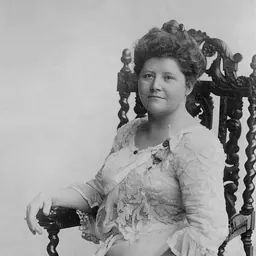

Contemporaries
People whose lives overlapped Mary Neal's
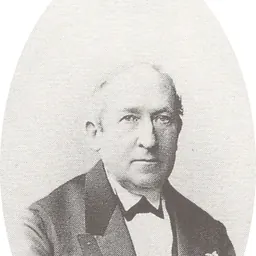

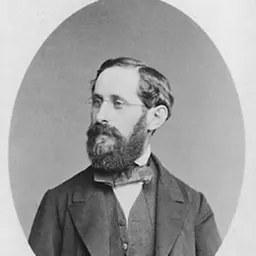
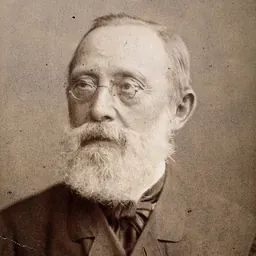
Frequently asked questions
Who was Mary Neal?
British suffragist
When was Mary Neal born?
Mary Neal was born on 5 June 1860 in Edgbaston.
When did Mary Neal die?
Mary Neal died on 22 June 1944.
What was Mary Neal's occupation?
Mary Neal was a suffragette, suffragist, feminist and social worker.
What nationality was Mary Neal?
Mary Neal was British.
Sources & further reading
Cite this page
APA: Biography.guide. (2026). Mary Neal. https://biography.guide/mary-neal/
MLA: "Mary Neal." Biography.guide, https://biography.guide/mary-neal/.
Chicago: "Mary Neal." Biography.guide. https://biography.guide/mary-neal/.
Data last updated: 2026-09-22 · Spot an error? Report a correction.
Page generated 2026-09-27 05:14 UTC