
About Alice Hawkins
Lived 1863 – 1946 (aged 82–83). Alice Hawkins was a British suffragette, known for Leicester.
Alice Hawkins (1863–1946) was a leading English suffragette among the boot and shoe machinists of Leicester. She went to prison five times for acts committed as part of the Women’s Social and Political Union (WSPU) militant campaign. Her husband Alfred Hawkins was also an active suffragist and received £100 when his kneecap was fractured as he was ejected from a meeting in Bradford. In 2018 a statue of Alice was unveiled in Leicester Market Square.
Life
Alice Riley was born in 1863 in Stafford, one of ten children, 7 girls 3 boys. By 23/24 years old, she moved to Leicester creating boots and shoes. In 1884 she married Alfred Hawkins, whom she lived in the next street to.
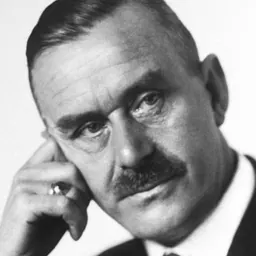
Hawkins became a mother of six children and continued to work as a machinist at Equity Shoes. In 1896 she joined the new factory's new Women's Co-operative Guild where she learnt about socialism and the writings of Thomas Mann.
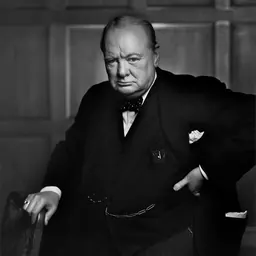
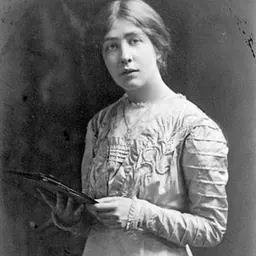
Hawkins joined the Independent Labour Party in 1894 and through that organisation met Sylvia Pankhurst. Pankhurst came to Leicester in 1907 and Hawkins made introductions. They were soon joined by Mary Gawthorpe and they established a WSPU presence in Leicester. Alfred paid the fine, but Alice again opted for prison. This time she was imprisoned in Leicester jail and she went on hunger strike. which some but not by any means all suffragists could claim. Alfred suffered for his support, when he was eventually awarded £100 compensation after having his leg broken during a suffragette protest on 26 November 1910. His case had been taken up by the Men's Political Union for Women's Enfranchisement after he was thrown down some stairs after protesting against Winston Churchill during a Liberal party meeting Bradford. The judge ruled that he had been ejected without warning after merely asking a question and that was an assault. Her third imprisonment was later in 1911 after throwing a brick through a Home Office window in full view of a policeman. When Emmeline Pankhurst's son Tom died of a brain tumour in 1912, Hawkins wrote to Pankhurst in deep sympathy. She received a Hunger Strike Medal from the WSPU. Hawkins was one of the prisoners who built a relationship with the female prison warders, who were also working-class women and comforted the prisoners as well as having the job of holding them down to be force-fed.
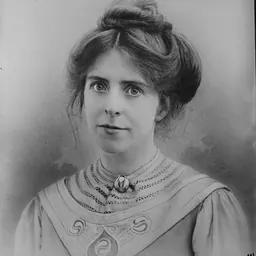
In 1913 Hawkins was among the representatives chosen to speak with leading politicians David Lloyd George and Sir Edward Grey. The meeting had been arranged by Annie Kenney and Flora Drummond with the proviso that these were working-class women representing their class. The boot and shoe industry was particularly unfair in its treatment of women, who did exactly the same work as men but for unequal pay, lived in the poor quality housing and worked in sweated conditions. She was also suspected of being one of the four women who damaged a golf course writing "no votes, no golf" in horse dung, but this was not proven.
Later life Three of Hakwins's sons joined the army in World War I, in different regiments, and all met by chance 10 miles behind enemy lines and a local photographer captured them. When some women were given the vote in the Representation of the People Act (1918), Hawkins was proud of the role that women had taken in the factories and land during the war, and also said that suffragette action had led to this and the right to vote. Due to the property-owning conditions of the Act however, she was unable to vote herself for a further 10 years, at the age of 63.
Her great-grandson, Peter Barratt speaks to schools and at public events, a century later, that Hawkins was fighting for women to have equal pay and that is still not achieved, and encouraging all people to use their right to vote. He found the transcript in the National Archives of the delegation including Hawkins of Working Women to Lloyd George, the chancellor, from January 1913. with historical re-enactment actress, Ruth Pownall: Alice Hawkins Suffragette - A Sister for Freedom in which he shared family archive material as well as public material.
Hawkins granddaughter, Vera recounted that her grandmother said: "Vera, you must use your vote, we suffered for it". Tejera, P. (2018). Reinas de la carretera. Madrid. Ediciones Casiopea.
Don’t just read it —
keep it.
Full-length biographies made to live with: read them, listen on the way to work, watch them tonight.
- E-book
- Audio
- Video
Instant download · yours to keep · every purchase keeps this site free
Important facts
People in Alice Hawkins's life
Named in this biography and alive at the same time



Related people
Same field, nearest in time

Contemporaries
People whose lives overlapped Alice Hawkins's


Frequently asked questions
Who was Alice Hawkins?
Leicester suffragette
When was Alice Hawkins born?
Alice Hawkins was born in 1863 in Stafford.
When did Alice Hawkins die?
Alice Hawkins died in 1946 in Leicester.
What was Alice Hawkins's occupation?
Alice Hawkins was a suffragette.
What was Alice Hawkins known for?
Alice Hawkins was known for Leicester.
What nationality was Alice Hawkins?
Alice Hawkins was British.
Sources & further reading
Cite this page
APA: Biography.guide. (2026). Alice Hawkins. https://biography.guide/alice-hawkins/
MLA: "Alice Hawkins." Biography.guide, https://biography.guide/alice-hawkins/.
Chicago: "Alice Hawkins." Biography.guide. https://biography.guide/alice-hawkins/.
Data last updated: 2026-09-25 · Spot an error? Report a correction.
Page generated 2026-09-27 05:11 UTC