
About Martin van Meytens
Lived 1695 – 1770 (aged 74). Martin van Meytens was a Swedish painter and visual artist.
Martin van Meytens (24 June 1695 – 23 March 1770) was a Swedish-Austrian painter who painted members of the Royal Court of Austria such as Marie Antoinette, Maria Theresa of Austria, Francis I, Holy Roman Emperor, the Emperor's family and members of the local aristocracy. His painting style inspired many other painters to paint in a similar format.
Life and career
Martin van Meytens was born and baptised in Stockholm, Sweden, son of the painter Martin Meytens the Elder, who had moved around 1677 from The Hague to Sweden. He went early in his career on an extended study trip. He visited London, Paris and Vienna, then he lived and worked for a long time in Italy (Rome, Turin). At the beginning he painted little enamel miniature portraits, and he changed to oil painting only around 1730, having settled in Vienna. Here he became very popular as a portrait painter in the circles of the court and the aristocracy. In 1732 he became a court painter, and in 1759 the director of the Viennese Academy of Fine Arts. Franz Xaver Messerschmidt was his protégé.
Aristocratic Baroque Meytens was paid by Maria Theresa of Austria for opulent commissions. For example, in 1743 Maria Theresa waged war against her male counterparts in Europe, who entered a coalition. So Meytens had to paint, what was in the judgement of Alfred von Arneth an anachronistic "art of war" tournament motif, depicting Maria Theresa as warrior. This was only one instance of Meytens painting aristocratic Baroque culture in expensive splendidness.
The Wedding Supper depicts the wedding of Princess Isabella of Parma and Joseph II, Holy Roman Emperor, 5 October 1760, at Hofburg Palace's Redoutensaele (Redoute Hall). The moment depicted is when the dessert is served, in the middle of the table is a garden made by sugar crust.
Meytens has been credited with painting the European elite true to life. His most noticeable pupil was Joseph Hickel.
Works ca. 1731; Kneeling Nun, Recto, (Nationalmuseum – Stockholm) 1741; Kaiser Franz I 1744; Maria Theresia, (Ghent Town Hall) 1745–1750; Familie der Grafen Pálffy 1750; Archduke Maximilian, (The Winnipeg Art Gallery) 1752–1753; Fam. Grill, ( Museum Gothenburg) 1750–1755; Maria Theresia als Herrscherin, (Schönbrunn Palace) 1754; Ksl. Familie, (Schönbrunn Palace); 1759; Maria Theresia, (Academy of Fine Arts)
Selected works
Don’t just read it —
keep it.
Full-length biographies made to live with: read them, listen on the way to work, watch them tonight.
- E-book
- Audio
- Video
Instant download · yours to keep · every purchase keeps this site free
Important facts
more
Martin van, II van Mytens, Marten Mytens, Martin Myttens, the younger Mijtens, II Meytens, Martinus, II Mytens, the younger Meytens, Marten van, Martin van Meytens II, II Maytens, Martin II Van Meytens, II van Meytens, Martin van Meytens d. J., Martin van MaytensPeople in Martin van Meytens's life
Named in this biography and alive at the same time


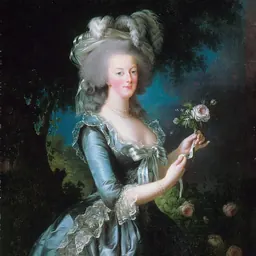
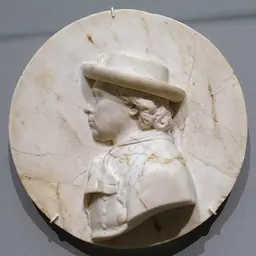

Related people
Same field, nearest in time

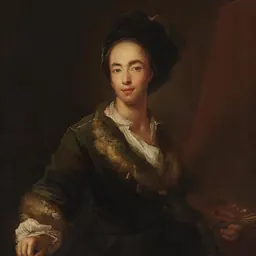


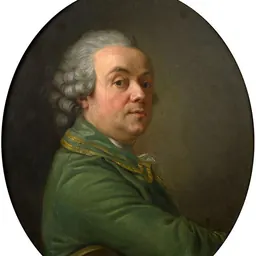

Contemporaries
People whose lives overlapped Martin van Meytens's


Frequently asked questions
Who was Martin van Meytens?
Swedish-Austrian painter (1695–1770)
When was Martin van Meytens born?
Martin van Meytens was born on 24 June 1695 in Stockholm.
When did Martin van Meytens die?
Martin van Meytens died on 23 March 1770 in Vienna.
What was Martin van Meytens's occupation?
Martin van Meytens was a painter and visual artist.
What nationality was Martin van Meytens?
Martin van Meytens was Swedish.
Sources & further reading
· Wikipedia: Martin van Meytens
Cite this page
APA: Biography.guide. (2026). Martin van Meytens. https://biography.guide/martin-van-meytens/
MLA: "Martin van Meytens." Biography.guide, https://biography.guide/martin-van-meytens/.
Chicago: "Martin van Meytens." Biography.guide. https://biography.guide/martin-van-meytens/.
Data last updated: 2026-09-20 · Spot an error? Report a correction.
Page generated 2026-09-27 05:28 UTC