
Joseph Hickel
Austrian painter
About Joseph Hickel
Lived 1736 – 1807 (aged 71). Joseph Hickel was a German court painter and portraitist.
Joseph Hickel (19 March 1736 – 28 March 1807) was a prominent portraitist born in Böhmisch-Leipa, who built a successful career as the imperial-royal court painter (k.k. Kammermaler) to the Habsburg monarchy in Vienna.
His most notable body of work consists of his definitive portraits of Emperor Joseph II, which became central to the visual identity and philosophical spirit of the Josephinian Enlightenment.
A student of Martin van Meytens, Hickel departed from the opulent Baroque traditions of his mentor, transitioning Viennese portraiture toward a more restrained, psychologically grounded aesthetic aligned with Early Classicism.
Biography
Hickel received his initial training from his father, Johann Hickel (1705–1778), a Prague-born painter who worked in Böhmisch-Leipa (now Česká Lípa). Demonstrating precocious talent, Joseph was already executing complex compositions in oil by the age of 12, a significant feat at the time given the demanding nature of grinding pigments and mixing oil mediums by hand. At 15, he successfully completed a full-scale altarpiece for the town church of Hirschberg am See (now Doksy) in Bohemia. His younger brother, Anton Hickel (1745–1798), also became a successful painter and studied under his guidance for a time.
In 1756, he moved to Vienna to further his education, studying at the Vienna Academy where he specialized in portraiture. His talent caught the attention of Empress Maria Theresa, who funded an extended educational sojourn to Italy. There, in Milan, Parma, and Florence, he painted numerous portraits of the Habsburg archdukes and archduchesses ruling the Italian courts, commissioned by his patroness. Following his travels, rivalries at the Viennese court led to a temporary loss of imperial favor. Hickel used this period to hone his skills further, and in 1769, the Florentine Academy inducted him as a member.
Court appointment and career Upon his return to Vienna, he was commissioned to paint a portrait of Emperor Joseph II. The work delighted and impressed both the Empress Maria Theresa and Emperor Joseph II, and Hickel was appointed imperial-royal court painter (k.k. Kammermaler) in 1771. In 1778, however, he applied unsuccessfully for the directorship of the Vienna Academy. Continuing his work as Joseph II's favorite court painter, his style went on to define the Emperor's visual legacy. For subsequent imperial portraits—whether bust-length or full-length—he reused a signature head tilt to the half-left, featuring sharply modeled facial features and eyes fixed on the viewer. This specific depiction became Hickel’s artistic trademark, and the pose itself became a defining emblem of Emperor Joseph II's public image.
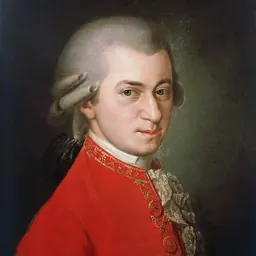
Social circle and the "Mozart Connection" While both Joseph Hickel and Wolfgang Amadeus Mozart moved within Viennese artistic and social circles during the 1780s, their interactions were largely connected to imperial court networking. Musicologist Michael Lorenz demonstrated that Mozart composed his Wind Serenade No. 11 in E-flat major, K. 375, specifically for St. Teresa's Day in 1781. It was premiered at the Hickel family residence for Hickel's sister-in-law, Theresia Wutka. Letters from Mozart to his father indicate that he intentionally used this specific celebration to gain favor with the imperial valet, Johann Kilian Strack. Because Strack was a frequent guest of the Hickel family and had direct access to the sovereign, Mozart hoped the performance would secure an introduction to Emperor Joseph II.
Later career and recognition Among Joseph Hickel's most noted paintings is his portraiture of Emperor Joseph II, who is said to have sat for him five times. His professional success brought financial stability, enabling him to acquire the properties at Erdbergstraße 31 and 33 in Vienna's third district, while his legacy in the city was later commemorated by the naming of Hickelgasse.
Selected works Among his most notable paintings are portraits of:
The Sovereigns of the Habsburg Monarchy Maria Theresa, Holy Roman Empress Joseph II, Holy Roman Emperor Leopold II, Holy Roman Emperor Francis II, Holy Roman Emperor
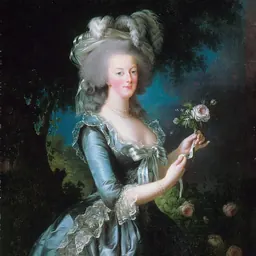
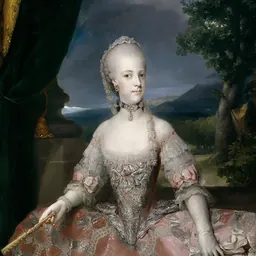
The Imperial Family and Royalty Prince Albert of Saxony, Duke of Teschen and Archduchess Maria Christina, Duchess of Teschen King Ferdinand of Naples and his wife Maria Carolina of Austria Queen Marie Antoinette of France
Spiritual and Military Leaders Pope Pius VI General Count von Lacy
Statesmen and Ministers Prince Kaunitz Franz de Paula Ulrich, 3rd Prince Kinsky of Wchinitz and Tettau Franz Josef von Saurau, Count von Saurau
Gallery
Museum collections Joseph Hickel's original portraits, alongside the widespread engravings based on his works, are preserved in numerous international institutions, including:
Austria Albertina, Vienna Burgtheater Portrait Gallery, Vienna Heeresgeschichtliches Museum, Vienna Kunsthistorisches Museum, Vienna The Princely Collections, Vaduz–Vienna Österreichische Galerie Belvedere, Vienna Austrian National Library, Vienna Universalmuseum Joanneum, Graz Vienna Museum, Vienna
Czech Republic Chateau Jaroměřice nad Rokytnou Museum of Fine Arts, Liberec State Chateau of Rájec nad Svitavou
Germany Germanisches Nationalmuseum, Nürnberg Kunstsammlungen und Museen Augsburg Museum für Franken, Würzburg Stiftung Preußische Schlösser und Gärten Berlin-Brandenburg, Potsdam
Italy Palace of Caserta Royal Palace of Naples Uffizi Gallery, Florence
Sweden Gripsholm Castle, Mariefred Nationalmuseum, Stockholm
United Kingdom British Museum, London National Portrait Gallery, London Royal Collection, Windsor Castle
Other international collections Bratislava City Gallery, Slovakia National Gallery of Art, Washington, D.C., United States Rijksmuseum, Amsterdam, Netherlands Royal Castle, Warsaw, Poland The Hermitage, St. Petersburg, Russia
Don’t just read it —
keep it.
Full-length biographies made to live with: read them, listen on the way to work, watch them tonight.
- E-book
- Audio
- Video
Instant download · yours to keep · every purchase keeps this site free
Important facts
People in Joseph Hickel's life
Named in this biography and alive at the same time


Related people
Same field, nearest in time





Contemporaries
People whose lives overlapped Joseph Hickel's





Frequently asked questions
Who was Joseph Hickel?
Austrian painter (1736-1807)
When was Joseph Hickel born?
Joseph Hickel was born on 19 March 1736 in Česká Lípa.
When did Joseph Hickel die?
Joseph Hickel died on 28 March 1807 in Vienna.
What was Joseph Hickel's occupation?
Joseph Hickel was a court painter and portraitist.
What nationality was Joseph Hickel?
Joseph Hickel was German.
Sources & further reading
Cite this page
APA: Biography.guide. (2026). Joseph Hickel. https://biography.guide/joseph-hickel/
MLA: "Joseph Hickel." Biography.guide, https://biography.guide/joseph-hickel/.
Chicago: "Joseph Hickel." Biography.guide. https://biography.guide/joseph-hickel/.
Data last updated: 2026-09-20 · Spot an error? Report a correction.
Page generated 2026-09-27 05:21 UTC