
About Martin Heinrich Klaproth
Lived 1743 – 1817 (aged 73). Martin Heinrich Klaproth was a German chemist, pharmacist, university teacher, mineralogist, scientist and inventor, known for Zirconium.
Martin Heinrich Klaproth (1 December 1743 – 1 January 1817) was a German chemist. and an independent inventor of gravimetric analysis. His attention to detail and refusal to ignore discrepancies in results led to improvements in the use of apparatus. He was a major figure in understanding the composition of minerals and characterizing the elements. Klaproth discovered uranium (1789) and zirconium (1789). He was also involved in the discovery or co-discovery of titanium (1795), strontium (1793), cerium (1803), and chromium (1797) and confirmed the previous discoveries of tellurium (1798) and beryllium (1798).
Klaproth was a member and director of the Berlin Academy of Sciences.
Beginning in 1782, he was the assessor of pharmacy for the examining board of the Ober-Collegium Medicum. In 1787 Klaproth was appointed lecturer in chemistry to the Prussian Royal Artillery.
Contributions Memorial plate on the Dorotheenstädtischer Friedhof in Berlin, by Ralf Sander.
An exact and conscientious worker, Klaproth did much to improve and systematise the processes of analytical chemistry and mineralogy. His appreciation of the value of quantitative methods led him to become one of the earliest adherents of the Lavoisierian doctrines outside France. He also discovered zirconium in 1789, Klaproth analyzed a brightly-colored form of the mineral called "hyacinth" from Ceylon. He gave the new element the name zirconium based on its Persian name "zargun", gold-colored.
Klaproth characterised uranium and zirconium as distinct elements, though he was unable to isolate them.
William Gregor of Cornwall was the first to identify the element titanium in 1791, correctly concluding that he had found a new element in the ore ilmenite from the Menachan valley. He proposed the name "menachanite", but his discovery attracted little attention.
Klaproth clarified the composition of numerous substances until then imperfectly known, including compounds of then newly recognised elements tellurium, strontium and chromium.
Klaproth was one of several scientists involved in the characterization of strontium compounds and minerals. In 1808, Humphry Davy became the first to successfully isolate the pure element.
Louis Nicolas Vauquelin reported the existence of a new element common to emerald and beryl in 1798, and suggested that it be named "glucine". Klaproth confirmed the presence of a new element, and became involved in a lengthy and ongoing debate over its name by suggesting "beryllia". The element was first isolated in 1828, independently by Friedrich Wöhler and Antoine Bussy. Only in 1949 did IUPAC rule exclusively in favor of the name beryllium.
Klaproth published extensively, collecting over 200 papers by himself in Beiträge zur chemischen Kenntnis der Mineralkörper (5 vols., 1795–1810) and Chemische Abhandlungen gemischten Inhalts (1815). He also published a Chemisches Wörterbuch (1807–1810), and edited a revised edition of F. A. C. Gren's Handbuch der Chemie (1806).
His mineral collection, which contained the original samples for his analyses and comprised 4828 pieces at the end of his life, was purchased by the University of Berlin after his death and is now housed in the Museum für Naturkunde Berlin.
Klaproth became a foreign member of the Royal Society of London in 1795, and a foreign member of the Royal Swedish Academy of Sciences in 1804.
The crater Klaproth on the Moon is named after him.
In 1823, botanist Carl Sigismund Kunth published a genus of flowering plants (belonging to the family Loasaceae), from Central America as Klaprothia in his honour.
His son Julius was a famous orientalist.
Works Beiträge zur Chemischen Kenntniss der Mineralkörper . Vol. 1–5 . Rottmann, Berlin 1795–1810 Digital edition by the University and State Library Düsseldorf Chemisches Wörterbuch . Vol. 1–9 . Voss, Berlin 1807–1819 Digital edition by the University and State Library Düsseldorf Chemische Abhandlungen gemischten Inhalts . Nicolai, Berlin [u. a.] 1815 Digital edition by the University and State Library Düsseldorf
Don’t just read it —
keep it.
Full-length biographies made to live with: read them, listen on the way to work, watch them tonight.
- E-book
- Audio
- Video
Instant download · yours to keep · every purchase keeps this site free
Important facts
People in Martin Heinrich Klaproth's life
Named in this biography and alive at the same time
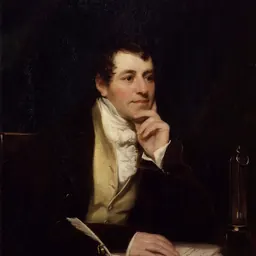


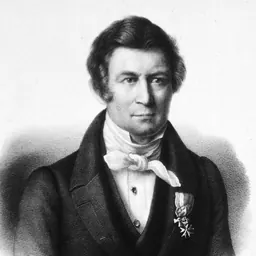

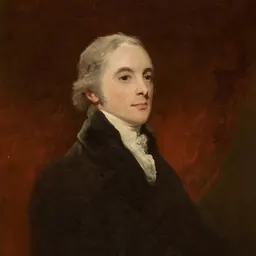
Related people
Same field, nearest in time
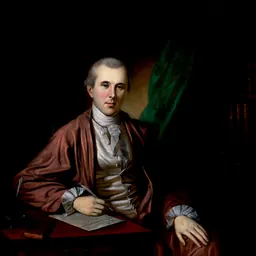

Contemporaries
People whose lives overlapped Martin Heinrich Klaproth's





Frequently asked questions
Who was Martin Heinrich Klaproth?
German chemist (1743-1817)
When was Martin Heinrich Klaproth born?
Martin Heinrich Klaproth was born on 1 December 1743 in Wernigerode.
When did Martin Heinrich Klaproth die?
Martin Heinrich Klaproth died on 1 January 1817 in Berlin.
What was Martin Heinrich Klaproth's occupation?
Martin Heinrich Klaproth was a chemist, pharmacist, university teacher, mineralogist, scientist and inventor.
What was Martin Heinrich Klaproth known for?
Martin Heinrich Klaproth was known for Zirconium.
What nationality was Martin Heinrich Klaproth?
Martin Heinrich Klaproth was German.
Sources & further reading
· Wikipedia: Martin Heinrich Klaproth
· DBpedia: Martin Heinrich Klaproth
Cite this page
APA: Biography.guide. (2026). Martin Heinrich Klaproth. https://biography.guide/martin-heinrich-klaproth/
MLA: "Martin Heinrich Klaproth." Biography.guide, https://biography.guide/martin-heinrich-klaproth/.
Chicago: "Martin Heinrich Klaproth." Biography.guide. https://biography.guide/martin-heinrich-klaproth/.
Data last updated: 2026-09-20 · Spot an error? Report a correction.
Page generated 2026-09-27 05:25 UTC