
About Márk Rózsavölgyi
Lived 1789 – 1848 (aged 58–59). Márk Rózsavölgyi was a Hungarian composer, violinist and musician.
Márk Rózsavölgyi (; born Mordecai Rosenthal; 14 August 1787 – 23 January 1848) was a Hungarian composer and violinist. He has been called "the father of csárdás".
Life and music Rózsavölgyi was born to a poor tradesman's family in Balassagyarmat, where his bust (made by Jelena Veszely in 1973) can be found in the Palóc-parkland. His family is believed to have had klezmer connections.
From the ages of 11 to 19 he worked as a clerk in Vienna, Pressburg (now Bratislava), and Prague, teaching himself to play the violin. Returning to Pest, he dedicated himself to music, composing in the Hungarian traditional styles, including the verbunkos. His first works were published in Pest in 1811; eventually he published over 200 works. In 1812, he was appointed conductor of the orchestra at the German Theater in Pest.
Basing himself in Pest, he travelled through the Habsburg Empire for many years, including extended stays in Baja and Temesvár (now Timișoara, Romania).
In 1824, he was made a regular salaried member of the Philharmonic Society of the county of Veszprém, and his name "Rosenthal" was Magyarized to "Rózsavölgyi" (both mean 'rose valley' in German (or Yiddish) and Hungarian respectively) on the occasion of his election. (This name change was not however officially recognised until 1846). He gave several official concerts during the coronation ceremonies at Pressburg in 1825; and in 1835 he appeared at the Court Opera House in Vienna on the occasion of the Diet of Pressburg. Two years later, at the opening of the new National Theater of Pest, the Hungarian Orchestra of that city played a work composed by him for the occasion, and he subsequently became a regular member of that orchestra.
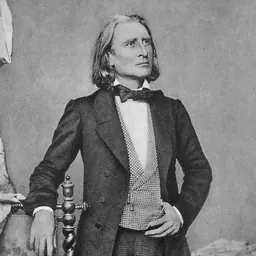
During the 1840s he formed his own band, and performed before Franz Liszt in May 1846 in Pest. Liszt used some of Rózsavölgyi's melodies in his own Hungarian Rhapsodies (nos. 8 and 12). After 1846 his health began to decline.
A number of famous Romani musicians, including Patikárus, Sárközi, Farkas, and others, were pupils of Rózsavölgyi. After his death, the Hungarian nationalist poet Sándor Petőfi sang his praises in a long poem, reproaching the Hungarian people for permitting the last years of the artist to be clouded by financial difficulties.
Rózsavölgyi died in relative poverty in Pest, and was buried there in Kozma Street Cemetery.
His son Julius (Gyula) founded a music publishing company in 1850, which still exists in Budapest. Another son, Leopold, became a doctor.
Don’t just read it —
keep it.
Full-length biographies made to live with: read them, listen on the way to work, watch them tonight.
- E-book
- Audio
- Video
Instant download · yours to keep · every purchase keeps this site free
Important facts
People in Márk Rózsavölgyi's life
Named in this biography and alive at the same time

Related people
Same field, nearest in time




Contemporaries
People whose lives overlapped Márk Rózsavölgyi's


Frequently asked questions
Who was Márk Rózsavölgyi?
Hungarian musician
When was Márk Rózsavölgyi born?
Márk Rózsavölgyi was born in 1789 in Balassagyarmat.
When did Márk Rózsavölgyi die?
Márk Rózsavölgyi died on 23 January 1848 in Pest.
What was Márk Rózsavölgyi's occupation?
Márk Rózsavölgyi was a composer, violinist and musician.
What nationality was Márk Rózsavölgyi?
Márk Rózsavölgyi was Hungarian.
Sources & further reading
Cite this page
APA: Biography.guide. (2026). Márk Rózsavölgyi. https://biography.guide/mark-rozsavolgyi/
MLA: "Márk Rózsavölgyi." Biography.guide, https://biography.guide/mark-rozsavolgyi/.
Chicago: "Márk Rózsavölgyi." Biography.guide. https://biography.guide/mark-rozsavolgyi/.
Data last updated: 2026-09-20 · Spot an error? Report a correction.
Page generated 2026-09-27 05:22 UTC