
About Mario Sironi
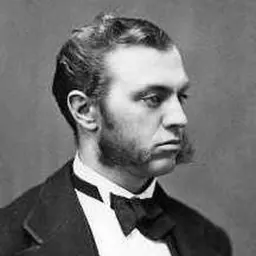
Lived 1885 – 1961 (aged 76). Mario Sironi was an Italian painter, draftsperson, engraver, graphic artist, illustrator and sculptor.
Mario Sironi (May 12, 1885 – August 13, 1961) was an Italian Modernist artist who was active as a painter, sculptor, illustrator, and designer. His typically somber paintings are characterized by massive, immobile forms.
Biography He was born in Sassari, on the island of Sardinia. His father was an engineer; his maternal grandfather was the architect and sculptor Ignazio Villa. Sironi spent his childhood in Rome. He embarked on the study of engineering at the University of Rome but quit after a nervous breakdown in 1903, one of many severe depressions that would recur throughout his life. Thereafter he decided to study painting, and began attending the Scuola Libera del Nudo of the Accademia di Belle Arti di Roma. There he met Giacomo Balla, who became "his first real teacher". Sironi returned to Milan in 1905 before traveling to Paris in 1906. Like his friends Gino Severini and Umberto Boccioni, he began painting in a Divisionist style under the guidance of Balla. Sironi's works from this period include self-portraits and portraits of his family. After the war, he abandoned Futurism and developed a style that emphasized massive, immobile forms. In paintings such as La Lampada of 1919 (Pinacoteca di Brera, Milan), mannequins substitute for figures, as in the metaphysical paintings of Giorgio de Chirico and Carlo Carrà. In 1922, Sironi was one of the founders of the Novecento Italiano movement, which was part of the return to order in European art during the post-war period. Paintings such as Venere of 1921–1923 (Galleria Civica d'Arte Moderna, Turin) and Solitudine ("Solitude", 1925; Galleria Nazionale d'Arte Moderna, Rome), with their contained, geometric forms, bear some kinship to the Neoclassicism evident in works produced at the same time by Picasso. thumb
In the late 1920s, Sironi painted monumental figures of nudes, peasants, and family groupings in bare, mountainous landscapes. In these works—described by Fabio Benzi as "marked by a sense of humanity burdened with history ... [and] an almost Romanesque spirit of a solemn expressionism" —the pure forms of Sironi's earlier work were replaced by a primitivist form of classicism, and his style became more painterly. In paintings of fishermen at work or drinkers in cafés, he adopted a deliberately ungainly style similar to that of Georges Rouault. The state commissioned from him several large-scale decorative works in the 1930s, such as the mural L'Italia fra le arti e le scienze (Italy Between the Arts and Sciences) of 1935, and he also contributed to the Exhibition of the Fascist Revolution in 1932. Although his esthetic of brutal monumentality represented the dominant style of Italian fascism, his work was attacked by right-wing critics for its lack of overt ideological content.
As an artist closely identified with Fascism, Sironi's reputation declined dramatically in the post-World War II period. Embittered by the course of events, he had returned to easel painting in 1943, and worked in relative isolation. His withdrawal from society increased after the death of his daughter Rossana by suicide in 1948. The paintings of his later years sometimes approach abstraction, resembling assemblages of archaeological fragments, or juxtaposed sketches. He continued working until shortly before his death on August 13, 1961, in Milan.
Legacy During his lifetime, Sironi exhibited internationally. It is possible that the cellular style of his compositions exhibited in the US during the 1930s influenced WPA muralists. A revival of interest in Sironi's work began in the 1980s, when his work was featured in major exhibitions, notably Les Réalismes at the Centre Georges Pompidou (1981) and Italian Art in the Twentieth Century at the Royal Academy of Arts, London (1989).
Public collections holding works by Sironi include Galleria Civica d'Arte Moderna in the Palazzo Massari, Ferrara; Galleria Civica di Modena in Palazzo Santa Margherita; Civico Museo d'Arte Contemporanea, Milan; Museo del Novecento, Milan; Pinacoteca di Brera, Milan; Galleria Comunale d'Arte Moderna, Rome; Revoltella Museum, Trieste; Ca' Pesaro, Venice; Guggenheim Collection, Venice; Neue Nationalgalerie, Berlin; Tate Gallery, London; the Musée National d'Art Moderne, Paris; the Vatican Museums; and the Kunsthaus Zürich, Zurich.
Don’t just read it —
keep it.
Full-length biographies made to live with: read them, listen on the way to work, watch them tonight.
- E-book
- Audio
- Video
Instant download · yours to keep · every purchase keeps this site free
Important facts
People in Mario Sironi's life
Named in this biography and alive at the same time



Related people
Same field, nearest in time


Contemporaries
People whose lives overlapped Mario Sironi's


Frequently asked questions
Who was Mario Sironi?
Italian artist (1885-1961)
When was Mario Sironi born?
Mario Sironi was born on 12 March 1885 in Sassari.
When did Mario Sironi die?
Mario Sironi died on 13 August 1961 in Milan.
What was Mario Sironi's occupation?
Mario Sironi was a painter, draftsperson, engraver, graphic artist, illustrator and sculptor.
What nationality was Mario Sironi?
Mario Sironi was Italian.
Sources & further reading
Cite this page
APA: Biography.guide. (2026). Mario Sironi. https://biography.guide/mario-sironi/
MLA: "Mario Sironi." Biography.guide, https://biography.guide/mario-sironi/.
Chicago: "Mario Sironi." Biography.guide. https://biography.guide/mario-sironi/.
Data last updated: 2026-09-20 · Spot an error? Report a correction.
Page generated 2026-09-27 05:23 UTC