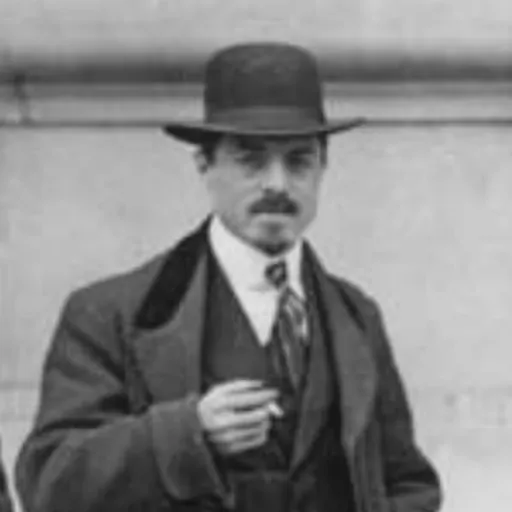
About Carlo Carrà
Lived 1881 – 1966 (aged 85). Carlo Carrà was an Italian painter, writer, draftsperson, poet, printmaker and artist.
Carlo Carrà (; February 11, 1881 – April 13, 1966) was an Italian painter and a leading figure of the Futurist movement that flourished in Italy during the beginning of the 20th century. In addition to his many paintings, he wrote a number of books concerning art. He taught for many years in the city of Milan.
Biography Carrà was born in Quargnento, a comune just northwest of Alessandria, Italy (Piedmont). At the age of 12 he left home in order to work as a mural decorator.
In 1899–1900, Carrà was in Paris decorating pavilions at the Exposition Universelle, where he became acquainted with contemporary French art. He then spent a few months in London in contact with exiled Italian anarchists, and returned to Milan in 1901. In 1906, he enrolled at Brera Academy (Accademia di Brera) in the city, and studied under Cesare Tallone. In 1910 he signed, along with Umberto Boccioni, Luigi Russolo, and Giacomo Balla the Manifesto of Futurist Painters, and began a phase of painting that became his most popular and influential.
Carlo Carrà, 1912, Woman on the Balcony, (Simultaneità, La donna al balcone), Collezione R. Jucker, Milan, Italy Carrà's Futurist phase ended around the time World War I began. His work, while still using some Futurist concepts, began to deal more clearly with form and stillness, rather than motion and feeling. In his 1913 manifesto, "The Painting of Sounds, Noises and Smells," Carrà discussed his interest in synaesthesia, describing it as "being a perceptual phenomenon that relates to the idea that exposure to one external stimulus (say, sound or smell), induces a parallel visualization (say, color)."
Inspired by Trecento painting, children's art, and the work of Henri Rousseau, Carrà soon began creating still lifes in a simplified style that emphasized the reality of ordinary objects. In 1917 he met Giorgio de Chirico in Ferrara, and worked with him there for several weeks. Influenced by de Chirico, Carrà began including mannequin imagery in his paintings. The two artists were the innovators of a style they called "metaphysical painting". By 1919, Carrà's metaphysical phase was giving way to an archaicism inspired by the works of Giotto, whom he admired as "the artist whose forms are closest to our manner of conceiving the construction of bodies in space". Carrà's painting The Daughters of Lot (1919) exemplifies the new direction of his work. He was among the contributors of the Rome-based literary magazine La Ronda between 1919 and 1922. Throughout the 1920s and 1930s, he concentrated mainly on landscape painting and developed a more atmospheric style. An example from this period is his 1928 Morning by the Sea.
Carrà is best known for his 1911 Futurist work, The Funeral of the Anarchist Galli. He was indeed an anarchist as a young man but, along with many other Futurists, later held more reactionary political views, becoming ultranationalist and irredentist before and during the war. He supported fascism after 1918. In the 1930s, Carrà signed a manifesto in which called for support of the state ideology through art. The Strapaese group he joined, founded by Giorgio Morandi, was strongly influenced by fascism and responded to the Neo-classical guidelines which had been set by the regime after 1937, but was opposed to the ideological drive towards strong centralism.
Carrà died in Milan, Italy on April 13, 1966 at age 85.
Selected works The Funeral of the Anarchist Galli (1911) The Enchanted Chamber (1917) The Metaphysical Muse (1917) The Daughter of the West (1919) The Engineer's Lover (1921) Canale a Venezia (1926)
Don’t just read it —
keep it.
Full-length biographies made to live with: read them, listen on the way to work, watch them tonight.
- E-book
- Audio
- Video
Instant download · yours to keep · every purchase keeps this site free
Important facts
more
Carlo Carrá, C. Dalmazza, Carlo Dalmal Carrà, Carlo Dalmazzo Carra, C. Carra, Carlo Dalmazza Carra, Carlo Dalmal Carra, Carlo D. CarràPeople in Carlo Carrà's life
Named in this biography and alive at the same time


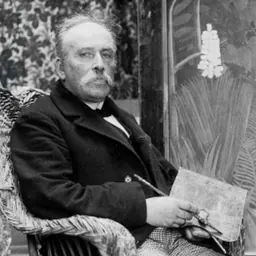

Related people
Same field, nearest in time
Contemporaries
People whose lives overlapped Carlo Carrà's


Frequently asked questions
Who was Carlo Carrà?
Italian painter (1881-1966)
When was Carlo Carrà born?
Carlo Carrà was born on 11 February 1881 in Quargnento.
When did Carlo Carrà die?
Carlo Carrà died on 13 April 1966 in Milan.
What was Carlo Carrà's occupation?
Carlo Carrà was a painter, writer, draftsperson, poet, printmaker and artist.
What nationality was Carlo Carrà?
Carlo Carrà was Italian.
Sources & further reading
Cite this page
APA: Biography.guide. (2026). Carlo Carrà. https://biography.guide/carlo-carra/
MLA: "Carlo Carrà." Biography.guide, https://biography.guide/carlo-carra/.
Chicago: "Carlo Carrà." Biography.guide. https://biography.guide/carlo-carra/.
Data last updated: 2026-09-21 · Spot an error? Report a correction.
Portrait: Wikimedia Commons · author & licence
Page generated 2026-09-27 04:58 UTC