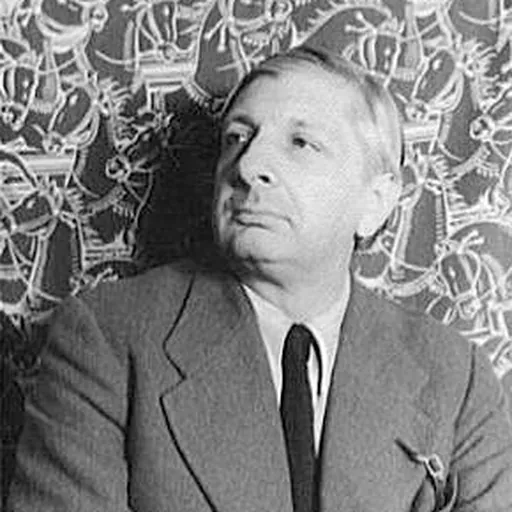
About Giorgio de Chirico
Lived 1888 – 1978 (aged 90). Giorgio de Chirico was an Italian artist, painter, sculptor, writer, scenographer and illustrator.
Style De Chirico's best-known works are the paintings of his metaphysical period. In them, he developed a repertoire of motifs—empty arcades, towers, elongated shadows, mannequins, and trains, among others—that he arranged to create "images of forlornness and emptiness" that paradoxically also convey a feeling of "power and freedom". According to Sanford Schwartz, de Chirico—whose father was a railroad engineer—painted images that suggest "the way you take in buildings and vistas from the perspective of a train window. His towers, walls, and plazas seem to flash by, and you are made to feel the power that comes from seeing things that way: you feel you know them more intimately than the people do who live with them day by day."
In 1982, Robert Hughes wrote that de Chirico
In this, de Chirico resembles his more representational American contemporary, Edward Hopper: their pictures' low sunlight, their deep and often irrational shadows, their empty walkways and portentous silences creating an enigmatic visual poetry.
Legacy
De Chirico won praise for his work almost immediately from the writer Guillaume Apollinaire, who helped to introduce his work to the later Surrealists. De Chirico strongly influenced the Surrealist movement: Yves Tanguy wrote how one day in 1922 he saw one of de Chirico's paintings in an art dealer's window, and was so impressed by it he resolved on the spot to become an artist, although he had never even held a brush. Other Surrealists who acknowledged de Chirico's influence include Max Ernst, Salvador Dalí, and René Magritte, who described his first sighting of de Chirico's The Song of Love as "one of the most moving moments of my life: my eyes saw thought for the first time."
Michelangelo Antonioni, an Italian film director, said he was influenced by de Chirico. Some comparison can be made to the long takes in Antonioni's films from the 1960s, in which the camera continues to linger on desolate cityscapes populated by a few distant figures, or none at all, in the absence of the film's protagonists. Other artists as diverse as Giorgio Morandi, Carlo Carrà, Paul Delvaux, Carel Willink, Harue Koga, Philip Guston, Andy Warhol, and Mark Kostabi were influenced by de Chirico. De Chirico's style has influenced several filmmakers, particularly in the 1950s through 1970s. The visual style of the French animated film Le Roi et l'oiseau, by Paul Grimault and Jacques Prévert, was influenced by de Chirico's work, primarily via Tanguy, a friend of Prévert. The visual style of Valerio Zurlini's film The Desert of the Tartars (1976) was influenced by de Chirico's work.
In 1958, Riverside Records used a reproduction of de Chirico's 1915 painting The Seer (originally painted as a tribute to French poet Arthur Rimbaud) as the cover art for pianist Thelonious Monk's live album Misterioso. The choice was made to capitalize on Monk's popularity with intellectual and bohemian fans from venues such as the Five Spot Café, where the album had been recorded, but Monk biographer Robin Kelley later observed deeper connections between the painting and the pianist's music; Rimbaud had "called on the artist to be a seer in order to plumb the depths of the unconscious in the quest for clairvoyance ... The one-eyed figure represented the visionary. The architectural forms and the placement of the chalkboard evoked the unity of art and science—a perfect symbol for an artist whose music has been called 'mathematical.
Writers who have appreciated de Chirico include John Ashbery, who has called Hebdomeros "probably ... the finest [major work of Surrealist fiction]". Several of Sylvia Plath's poems are influenced by de Chirico. In his book Blizzard of One, Mark Strand included a poetic diptych called "Two de Chiricos": "The Philosopher's Conquest" and "The Disquieting Muses". Gabriele Tinti composed three poems, inspired by de Chirico's paintings: The Nostalgia of the Poet (1914), The Uncertainty of the Poet (1913), and Ariadne (1913), works in the Peggy Guggenheim Collection, the Tate, and the Metropolitan Museum of Art, respectively. The poems were read by actor Burt Young at the Met in 2016.
The box art for Fumito Ueda's PlayStation 2 game Ico sold in Japan and Europe was strongly influenced by de Chirico. The cover art of New Order's single "Thieves Like Us" is based on de Chirico's painting The Evil Genius of a King. The music video for the David Bowie song "Loving the Alien" was partly influenced by de Chirico. Bowie was an admirer of his genderless tailors' dummies. A 2018 study by researchers from the Magna Græcia University, published in Frontiers in Neurology, suggested that de Chirico suffered from Alice in Wonderland syndrome (AIWS), a neurological disorder affecting a person's perception, leading the individual to perceive the sizes of some parts of their body and other objects, in an unreal way, like Alice in Lewis Carroll's novel.
Honours 1958: Member of the Royal Academy of Science, Letters and Fine Arts of Belgium. Académie de France
Selected works
Flight of the Centauri, Enigma of an Autumn Afternoon and Enigma of the Oracle (1909) Ritratto di Andrea de Chirico (Alias Alberto Savinio) (1909–1910) The Enigma of the Hour (1911) The Nostalgia of the Infinite (1911), or 1912–1913 Melanconia, The Enigma of the Arrival and La Matinée Angoissante (1912) The Soothsayer's Recompense, The Red Tower, Ariadne, The Awakening of Ariadne, The Uncertainty of the Poet, La Statua Silenziosa, The Anxious Journey, Melancholy of a Beautiful Day, Le Rêve Transformé, and Self-Portrait (1913) The Anguish of Departure (begun in 1913), Portrait of Guillaume Apollinaire, The Nostalgia of the Poet, L'Énigme de la fatalité, Gare Montparnasse (The Melancholy of Departure), The Song of Love, The Enigma of a Day, The Philosopher's Conquest, The Child's Brain, The Philosopher and the Poet, Still Life: Turin in Spring, Piazza d'Italia (Autumn Melancholy), and Melancholy and Mystery of a Street (1914) The Evil Genius of a King (begun in 1914), The Seer (or The Prophet), Piazza d'Italia, The Double Dream of Spring, The Purity of a Dream, Two Sisters (The Jewish Angel) and The Duo (1915) Andromache, The Melancholy of Departure, The Disquieting Muses, Metaphysical Interior with Biscuits (1916) Metaphysical Interior with Large Factory and The Faithful Servitor (both began in 1916), The Great Metaphysician, Ettore e Andromaca, Metaphysical Interior, Geometric Composition with Landscape and Factory and Great Metaphysical Interior (1917)
Il grande metafisico (The Grand Metaphysician) (1917) Metaphysical Muses and Hermetic Melancholy (1918) Still Life with Salami and The Sacred Fish (1919) Self-portrait (1920)
Italian Piazza, Maschere and Departure of the Argonauts (1921) The Great Tower (1921) The Prodigal Son (1922) Florentine Still Life (c. 1923) The House with the Green Shutters (1924) The Great Machine (1925) Honolulu Museum of Art Au Bord de la Mer, Le Grand Automate, The Terrible Games, Mannequins on the Seashore and The Painter (1925) La Commedia e la Tragedia (Commedia Romana), The Painter's Family and Cupboards in a Valley (1926) L'Esprit de Domination, The Eventuality of Destiny (Monumental Figures), Mobili nella valle and The Archaeologists (1927) Temple et Forêt dans la Chambre (1928) Gladiatori (began in 1927), The Archaeologists IV (from the series Metamorphosis), The return of the Prodigal son I (from the series Metamorphosis) and Bagnante (Ritratto di Raissa) (1929) I fuochi sacri (for the Calligrammes) 1929 Illustrations from the book Calligrammes by Guillaume Apollinaire (1930) I Gladiatori (Combattimento) (1931) Milan Cathedral, 1932 Cavalos a Beira-Mar (1932–1933) Cavalli in Riva al Mare (1934) La Vasca di Bagni Misteriosi (1936) The Vexations of The Thinker (1937) Self-portrait (1935–1937) Archeologi (1940) Illustrations from the book L'Apocalisse (1941) Portrait of Clarice Lispector (1945) Villa Medici – Temple and Statue (1945) Minerva (1947) Metaphysical Interior with Workshop (1948) Venecia, Puente de Rialto Fiat (1950) Piazza d'Italia (1952) The Fall – Via Crucis (1947–54) Venezia, Isola di San Giorgio (1955) Salambò su un cavallo impennato (1956) Metaphysical Interior with Biscuits (1958) Piazza d'Italia (1962) Cornipedes, (1963) La mia mano sinistra, (1963), Chianciano Museum of Art Manichino (1964) Ettore e Andromaca (1966) The Return of Ulysses, Interno Metafisico con Nudo Anatomico and Mysterious Baths – Flight Toward the Sea (1968) Il rimorso di Oreste, La Biga Invincibile and Solitudine della Gente di Circo (1969) Orfeo Trovatore Stanco, Intero Metafisico and Muse with Broken Column (1970) Metaphysical Interior with Setting Sun (1971) Sole sul cavalletto (1973) Mobili e rocce in una stanza, La Mattina ai Bagni misteriosi, Piazza d'Italia con Statua Equestre, La mattina ai bagni misteriosi and Ettore e Andromaca (1973) Pianto d'amore – Ettore e Andromaca and The Sailors' Barracks (1974)
Writings Hebdomeros (1929) The Memoirs of Giorgio De Chirico, trans. Margaret Crosland (Da Capo Press 1994) Geometry of Shadows (poems), trans. Stefania Heim (Public Space Books 2019)
Films about de Chirico Aenigma Est (1990) – Director: Dimitri Mavrikios; Screenplay: Thomas Moschopoulos, Dimitri Mavrikios Giorgio de Chirico: Argonaut of the Soul (2010) – documentary film: Directors and screenplay: Kostas Anestis and George Lagdaris
Don’t just read it —
keep it.
Full-length biographies made to live with: read them, listen on the way to work, watch them tonight.
- E-book
- Audio
- Video
Instant download · yours to keep · every purchase keeps this site free
Important facts
Family & relationships
People in Giorgio de Chirico's life
Named in this biography and alive at the same time




Related people
Same field, nearest in time



Contemporaries
People whose lives overlapped Giorgio de Chirico's




Frequently asked questions
Who was Giorgio de Chirico?
Italian artist (1888–1978)
When was Giorgio de Chirico born?
Giorgio de Chirico was born on 10 July 1888 in Volos.
When did Giorgio de Chirico die?
Giorgio de Chirico died on 20 November 1978 in Rome.
What was Giorgio de Chirico's occupation?
Giorgio de Chirico was an artist, painter, sculptor, writer, scenographer and illustrator.
What nationality was Giorgio de Chirico?
Giorgio de Chirico was Italian.
Sources & further reading
· Wikipedia: Giorgio de Chirico
Cite this page
APA: Biography.guide. (2026). Giorgio de Chirico. https://biography.guide/giorgio-de-chirico/
MLA: "Giorgio de Chirico." Biography.guide, https://biography.guide/giorgio-de-chirico/.
Chicago: "Giorgio de Chirico." Biography.guide. https://biography.guide/giorgio-de-chirico/.
Data last updated: 2026-09-21 · Spot an error? Report a correction.
Portrait: Wikimedia Commons · author & licence
Page generated 2026-09-27 05:00 UTC