
About Philip Guston
Lived 1913 – 1980 (aged 66). Philip Guston was an American and Canadian painter, illustrator, muralist, lithographer, engraver and draftsperson.
Philip Guston (born Phillip Goldstein, June 27, 1913 – June 7, 1980) was a Canadian and American painter, printmaker, muralist and draftsman. "Guston worked in a number of artistic modes, from Renaissance-inspired figuration to formally accomplished abstraction," and is now regarded as one of the "most important, powerful, and influential American painters of the last 100 years". He frequently depicted racism, antisemitism, fascism and American identity, as well as—especially in his later most cartoonish and mocking work—the banality of evil. In 2013, Guston's painting To Fellini set an auction record at Christie's when it sold for US$25.8 million. which Guston explained this way: "They are self-portraits ... I perceive myself as being behind the hood ... The idea of evil fascinated me ... I almost tried to imagine that I was living with the Klan." The paintings of Klan figures were set to be part of an international retrospective sponsored by the National Gallery of Art, the Tate Modern, the Museum of Fine Arts, Houston, and the Museum of Fine Arts, Boston in 2020, but in late September, the museums jointly postponed the exhibition until 2024, "a time at which we think that the powerful message of social and racial justice that is at the center of Philip Guston's work can be more clearly interpreted."
The announcement spurred an open letter, published online by The Brooklyn Rail and signed by more than 2,000 artists. It criticizes the postponement and the museums' lack of courage to display or attempt to interpret Guston's work, as well as the museums' own "history of prejudice". It calls Guston's KKK themes a timely catalyst for a "reckoning" with cultural and institutional white supremacy, and argues that that is why the exhibition must proceed without delay.
Guston's interest in drawing led his mother to enroll him in a correspondence course from the Cleveland School of Cartooning.
Apart from his high school education and a one-year scholarship at the Otis Art Institute in Los Angeles, and Kadish joined their friend the poet Jules Langsner on a trip to Mexico, where they were commissioned to paint a mural on a wall in the former summer palace of the Emperor Maximilian in the state capital of Morelia. They produced the impressive The Struggle Against Terror, whose antifascist themes were clearly influenced by the work of David Siqueiros. The mural "includes the hooded figures that became a lifelong symbol of bigotry for the artist."
A two-page review in Time magazine quoted Siqueiros's description of Guston and Kadish: "the most promising painters in either the US or Mexico." As of December, 2025, the latter mural was under threat of demolition.
Abstract expressionism In the 1950s, Guston achieved success and renown as a first-generation abstract expressionist, although he preferred the term New York School. During this period his paintings often consisted of blocks and masses of gestural strokes and marks of color floating within the picture plane, as seen in his painting Zone, 1953–1954. These works, with marks often grouped toward the center of the composition, recall the "plus and minus" compositions of Piet Mondrian or the late Nymphea canvases by Monet.
Guston used a relatively limited palette, favoring black and white, grays, blues and reds. It was a palette that would remain evident in his later work, despite Guston's attempts to expand his palette and reintroduce abstraction to his work late in life, as evidenced in some of his untitled work from 1980 that has more blues and yellows.
Neoexpressionism In 1967, Guston moved to Woodstock, New York. He was increasingly frustrated with abstraction and began painting representationally again, but in a personal, cartoonish manner. It received scathing reviews from most of the art establishment. referring to "mandarin" in the sense of an influential figure and "stumblebum" meaning a clumsy person.
According to Musa Mayer's biography of her father in Night Studio, the painter Willem de Kooning was one of the few who instantly understood the importance of these paintings, telling Guston at the time that they were "about freedom." Cherries III from 1976, held in the collection of the Honolulu Museum of Art, is an example of his late-style representational paintings. Although cherries are a mundane subject, their spiky stems can be a metaphor for the crudeness and brutality of modern life.
As a result of the poor reception of his new figurative style, Guston isolated himself even more in Woodstock, far from the art world that had so utterly misunderstood his art. From 1968 onward, after moving away from abstraction, he created a lexicon of images such as Klansmen, light bulbs, shoes, cigarettes and clocks.
Legacy Public collections Art Institute of Chicago Detroit Institute of Arts Governor Nelson A. Rockefeller Empire State Plaza Art Collection (Albany, NY) High Museum of Art, Atlanta Honolulu Museum of Art, Hawai this acquisition of more than 200 pieces is the largest collection of Guston's work held by a single institution. In 2023, the Museum celebrated this promised gift with the Philip Guston: What Kind of Man Am I? exhibition. In 2025, Mayer reflected about her father and his legacy.
Academic affiliations Guston was a lecturer and teacher at a number of universities, and served as an artist-in-residence at the School of Art and Art History at the University of Iowa from 1941 to 1945. He then served an artist-in-residence at the St. Louis School of Fine Arts at Washington University in St. Louis, Missouri until 1947. He continued with his teaching at New York University and at the Pratt Institute in Brooklyn and, from 1973 to 1978, he conducted a monthly graduate seminar at Boston University.
Among Guston's students were two graduates of the University of Iowa, painters Stephen Greene (1917–1999) and Fridtjof Schroder (1917–1990), as well as Ken Kerslake (1930–2007), who attended the Pratt Institute. Rosemary Zwick was a student at Iowa. Among those who attended his graduate seminars at Boston University were painter Gary Komarin (1951–), sculptor and painter Susan Mastrangelo (1951–) and new media artist Christina McPhee (1954–).
He was also posthumously elected to the National Academy of Design as an Associate Academician.
2020 controversy In the fall of 2020, Philip Guston Now, a long-planned traveling retrospective of Guston's work, which included 24 of the Klan paintings, In a joint press release issued by the museums, they wrote: "The racial justice movement that started in the U.S. and radiated to countries around the world, in addition to challenges of a global health crisis, have led us to pause," explaining that the international tour, which had already been rescheduled because of the coronavirus, was best delayed "until a time at which we think that the powerful message of social and racial justice ... can be more clearly interpreted." As of October 3, 2020, more than 2,000 artists Philip Guston Now opened at the Museum of Fine Arts in Boston on May 1, 2022.
Popular culture In "Cat and Girl versus Contemporary Art", part of the Cat and Girl webcomic series, author Dorothy Gambrell critiques the difficulty and purpose of finding the meaning behind art using Guston's iconic Head and Bottle painting.
Auction record In May 2013, Christie's set an auction record for the artist's work To Fellini, which sold for US$25.8 million.
Don’t just read it —
keep it.
Full-length biographies made to live with: read them, listen on the way to work, watch them tonight.
- E-book
- Audio
- Video
Instant download · yours to keep · every purchase keeps this site free
Important facts
Family & relationships
People in Philip Guston's life
Named in this biography and alive at the same time
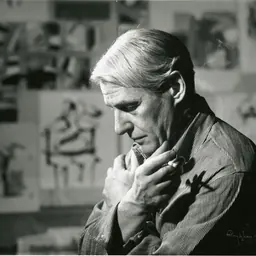

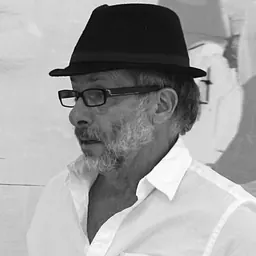
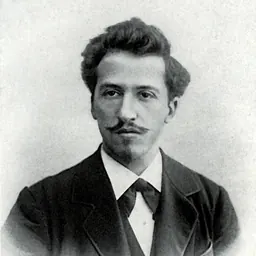




Related people
Same field, nearest in time
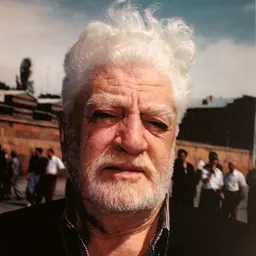

Contemporaries
People whose lives overlapped Philip Guston's




Frequently asked questions
Who was Philip Guston?
American artist (1913-1980)
When was Philip Guston born?
Philip Guston was born on 27 June 1913 in Montreal.
When did Philip Guston die?
Philip Guston died on 7 June 1980 in Woodstock.
What was Philip Guston's occupation?
Philip Guston was a painter, illustrator, muralist, lithographer, engraver and draftsperson.
What nationality was Philip Guston?
Philip Guston was American and Canadian.
Sources & further reading
Cite this page
APA: Biography.guide. (2026). Philip Guston. https://biography.guide/philip-guston/
MLA: "Philip Guston." Biography.guide, https://biography.guide/philip-guston/.
Chicago: "Philip Guston." Biography.guide. https://biography.guide/philip-guston/.
Data last updated: 2026-09-25 · Spot an error? Report a correction.
Page generated 2026-09-27 05:12 UTC