
About Marie-Guillemine Benoist
Lived 1768 – 1826 (aged 57). Marie-Guillemine Benoist was a French painter and artist.
Marie-Guillemine BenoistPortrait d'une négresse, now known as Portrait of Madeleine1800, Musée du Louvre.
Marie-Guillemine Benoist, born Marie-Guillemine Laville-Leroux (18 December 1768 – 8 October 1826), was a French neoclassical, historical, and genre painter.
Biography Marie Guillemine Laville-Leroux was born in Paris, the daughter of a civil servant. Her training as an artist began in 1781 under Élisabeth Vigée Le Brun, and she entered Jacques-Louis David's atelier in 1786 along with her sister Marie-Élisabeth Laville-Leroux.
She first exhibited in the in 1784, showing a portrait of her father and two pastel studies of heads. She continued to exhibit at the Exposition until 1788. The poet Charles-Albert Demoustier, who met her in 1784, was inspired by her in creating the character Émilie in his work (1801).
In 1791, Laville-Leroux exhibited for the first time at the Paris Salon, displaying her mythology-inspired picture . Another of her paintings of this period, , is similarly mythological and reveals her feminist interests — in this picture, vice is represented by a man, although it was traditionally represented by a woman. In 1793, she married the lawyer .
Her work, reflecting the influence of Jacques-Louis David, tended increasingly toward history painting by 1795. In 1800, Benoist exhibited (as of 2019 renamed Portrait of Madeleine ) in the Salon. Six years previously, slavery had been abolished, and this image became a symbol for women's emancipation and black people's rights. James Smalls, a professor of Art History at the University of Maryland, declared that "the painting is an anomaly because it presents a black person as the sole aestheticized subject and object of a work of art." The picture was acquired by Louis XVIII for France in 1818.
An important commission for a full-length portrait of Napoléon Bonaparte — in this period — was awarded to her in 1803. This portrait was to be sent to the city of Ghent, newly ceded to France by the Treaty of Lunéville in 1801. Other honors came to her; she was awarded a Gold Medal in the Salon of 1804 and received a governmental allowance.
Her career was harmed by political developments, however, when her husband Comte Benoist, the supporter of royalist causes, was nominated in the Conseil d'État during the post-1814 Bourbon Restoration. Despite being at the height of her popularity, "she was obliged to abandon painting" and pursue women's causes, due in part to her ("tactful withdrawal") in the face of the growing wave of conservatism in European society.
Her last entry to the Salon was in 1812. She died in Paris in 1826, having painted few items in the years before this. Portrait of Madame Philippe Panon Debassayns de Richmont and Her Son Eugene (1802, Metropolitan Museum of Art); Portrait de Napoléon (1804, court of Ghent); Portrait du Maréchal Brune (1805, détruit; une copie se trouve au Musée du Château de Versailles); Portrait de Pauline Borghèse (1807, Musée du Château de Versailles); Portrait de Marie-Élise, grande duchesse de Toscane (Pinacoteca Nazionale, Lucca); Portrait de l'impératrice Marie-Louise (Château de Fontainebleau); La lecture de la Bible, (1810, musée municipal, Louviers); La Consultation ou La Diseuse de bonne-aventure, Saintes Musée municipal.
Gallery
Don’t just read it —
keep it.
Full-length biographies made to live with: read them, listen on the way to work, watch them tonight.
- E-book
- Audio
- Video
Instant download · yours to keep · every purchase keeps this site free
Important facts
more
Marie Guilhelmine De Laville-Leroux, Marie Guillemine Benoist, Marie-Guillemine Laville-Leroux, Marie Guilhelmine Benoist, Marie-Guillemine de Laville-Leroulx, Marie-Guillemine nee Leroulx-Delaville, Marie-Guilhelmine Benoist, Marie Benoist, Mme BenoistFamily & relationships
People in Marie-Guillemine Benoist's life
Named in this biography and alive at the same time
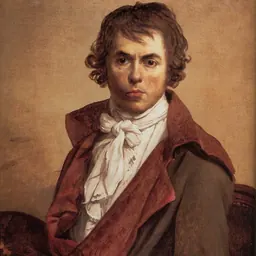
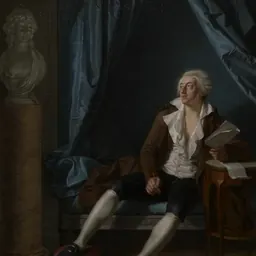

Related people
Same field, nearest in time



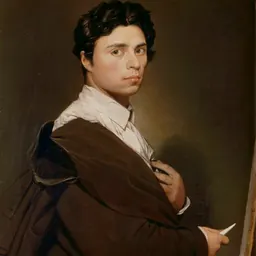

Contemporaries
People whose lives overlapped Marie-Guillemine Benoist's





Frequently asked questions
Who was Marie-Guillemine Benoist?
French painter (1768–1826)
When was Marie-Guillemine Benoist born?
Marie-Guillemine Benoist was born on 18 December 1768 in Paris.
When did Marie-Guillemine Benoist die?
Marie-Guillemine Benoist died on 8 October 1826 in Paris.
What was Marie-Guillemine Benoist's occupation?
Marie-Guillemine Benoist was a painter and artist.
What nationality was Marie-Guillemine Benoist?
Marie-Guillemine Benoist was French.
Sources & further reading
· Wikipedia: Marie-Guillemine Benoist
· DBpedia: Marie-Guillemine Benoist
Cite this page
APA: Biography.guide. (2026). Marie-Guillemine Benoist. https://biography.guide/marie-guillemine-benoist/
MLA: "Marie-Guillemine Benoist." Biography.guide, https://biography.guide/marie-guillemine-benoist/.
Chicago: "Marie-Guillemine Benoist." Biography.guide. https://biography.guide/marie-guillemine-benoist/.
Data last updated: 2026-09-25 · Spot an error? Report a correction.
Page generated 2026-09-27 05:11 UTC