
About Marianne Grunberg-Manago
Lived 1921 – 2013 (aged 91). Marianne Grunberg-Manago was a French biochemist.
Marianne Vladimirovna Grunberg Manago (January 6, 1921 – January 3, 2013) was a Russian-born French biochemist. Her work helped make possible key discoveries about the nature of the genetic code. Grunberg-Manago was the first woman to lead the International Union of Biochemistry and the 400-year-old French Academy of Sciences. She was the first woman to head the Société Française de Biochimie et Biologie Moléculaire, the organisation behind the Marianne Grunberg-Manago medal.
In early 2026 she was confirmed to be one of the 72 women to have their names added to those of the men already engraved on the Eiffel Tower.
Early life and education Marianne Grunberg was born in Petrograd, Russia (now St. Petersburg), on January 6, 1921 to Catherine and Wladimir Grunberg, an agent for artists. From her mother's side, she was descended from the Swiss educator Johann Heinrich Pestalozzi and the Russian historian Vasily Tatishchev. When she was nine months old, her parents emigrated from Russia, first to Germany and then to France to avoid the aftermath of the Russian Revolution. She lived in Nice from the age of 12 and when she was 17, she passed the baccalauréat.
After first obtaining a qualification in comparative literature (1940), she embarked on scientific studies. She graduated at the University of Paris in 1943 and in 1947 went on to defend her doctorate thesis.
There she first worked at Irwin Gunsalus' laboratory at the University of Illinois and then in 1954 at Severo Ochoa's moledcular biology laboratory ar the New York University School of Medicine. While there, in 1955 she discovered the first nucleic-acid-synthesizing enzyme, polynucleotide phosphorylase.
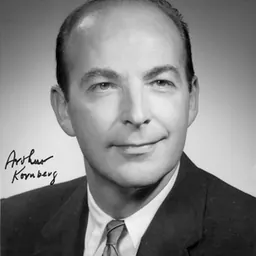
Although the new enzyme could link a few nucleotides together, the reaction was highly reversible and it later became clear that the enzyme polynucleotide phosphorylase usually catalyzes the breakdown of RNA, not its synthesis. The enzyme was extraordinarily useful and important. Almost immediately, Marshall Nirenberg and J. Heinrich Matthaei put it to use to form the first three-nucleotide RNA codons, which coded for the amino acid phenylalanine. This first step in cracking the genetic code entirely depended on the availability of Grunberg-Manago’s enzyme. Severo Ochoa and Arthur Kornberg won the 1959 Nobel Prize in Physiology or Medicine "for the synthesis of the nucleic acids RNA and DNA".
Grunberg-Munago returned to France in 1956 to work at the Institut de biologie physico-chimique. a Foreign Associate Member of the National Academy of Sciences in 1982, and an International member of the American Philosophical Society in 1992.
Grunberg-Manago was the first woman president of the International Union of Biochemistry (1985–1988), and she was also the first woman to preside over the French Academy of Sciences (1995–1996). She was the first woman to lead the Société Française de Biochimie et Biologie Moléculaire in 1975.
Late in her career, Grunberg-Manago was named emeritus director of research at CNRS, France's National Center for Scientific Research. She was buried with her husband and parents in the Sainte-Geneviève-des-Bois Russian Cemetery near Paris.
Awards and honours The Société Française de Biochimie et Biologie Moléculaire is the leading French organisation for Biochemistry. It was founded in 1914 and it announced that it was to give an annual award of 3,000 Euros. The winner would receive a medal and it would be called the Marianne Grunberg-Manago Award. It was open to any woman who had been a member of the society for three years.
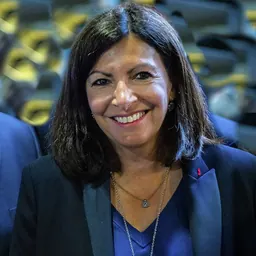
Grunberg-Manago received many awards and distinctions, including: and it was announced by the Mayor of Paris, Anne Hidalgo following the recommendations of a committee led by Isabelle Vauglin of Femmes et Sciences and Jean-François Martins, representing the operating company which runs the Eiffel Tower.
Don’t just read it —
keep it.
Full-length biographies made to live with: read them, listen on the way to work, watch them tonight.
- E-book
- Audio
- Video
Instant download · yours to keep · every purchase keeps this site free
Important facts
People in Marianne Grunberg-Manago's life
Named in this biography and alive at the same time


Related people
Same field, nearest in time




Contemporaries
People whose lives overlapped Marianne Grunberg-Manago's

Frequently asked questions
Who was Marianne Grunberg-Manago?
French biochemist (1921–2013)
When was Marianne Grunberg-Manago born?
Marianne Grunberg-Manago was born on 6 January 1921 in Saint Petersburg.
When did Marianne Grunberg-Manago die?
Marianne Grunberg-Manago died on 3 January 2013 in 13th arrondissement of Paris.
What was Marianne Grunberg-Manago's occupation?
Marianne Grunberg-Manago was a biochemist.
What nationality was Marianne Grunberg-Manago?
Marianne Grunberg-Manago was French.
Sources & further reading
· Wikipedia: Marianne Grunberg-Manago
· DBpedia: Marianne Grunberg-Manago
Cite this page
APA: Biography.guide. (2026). Marianne Grunberg-Manago. https://biography.guide/marianne-grunberg-manago/
MLA: "Marianne Grunberg-Manago." Biography.guide, https://biography.guide/marianne-grunberg-manago/.
Chicago: "Marianne Grunberg-Manago." Biography.guide. https://biography.guide/marianne-grunberg-manago/.
Data last updated: 2026-09-20 · Spot an error? Report a correction.
Page generated 2026-09-27 05:20 UTC