
Maria Louisa Catherine Cecilia Cosway
Painter from Italy who lived and worked in Italy, England and France
About Maria Louisa Catherine Cecilia Cosway
Lived 1760 – 1838 (aged 77). Maria Louisa Catherine Cecilia Cosway was a British painter, musician, printmaker, illustrator and architectural drafter.
Maria Luisa Caterina Cecilia Cosway (ma-RYE-ah; née Hadfield; 11 June 1760 – 5 January 1838) was an Italian-English painter, musician, and educator. She worked in England, France, and later Italy, cultivating a large circle of friends and clients, mainly as an initiate of Swedish and French Illuminism and an enthusiastic revivalist of the Masonic Knights Templar.
She exhibited at the Royal Academy of Arts, and commissioned the first portrait of Napoleon to be seen in England. Her paintings and engravings are held by the British Museum, the British Library, and the New York Public Library. Her work was included in London exhibitions at the National Portrait Gallery in 1995–96 and Tate Britain in 2006.
Cosway was an accomplished composer, musician, and society hostess with her husband, painter Richard Cosway. She had a brief romantic relationship with widowed American statesman Thomas Jefferson in 1786, while he served in Paris as the envoy to France; the pair kept up a correspondence until his death in 1826.
Cosway founded a girls' school in Lyon, which she directed from 1803 to 1809. Soon after it closed, she founded a girls' college and school in Lodi, northern Italy, which she directed until her death. She bequeathed the school to the Catholic Institute of the "English Ladies" (Dame inglesi in Italian), a branch of the religious Order founded by Mary Ward, now seat of the "Fondazione Maria Cosway" (Maria Cosway Foundation).
She was made a Baroness of the Austrian Empire in 1834 (Lodi was then in the Kingdom of Lombardy–Venetia, a State of the House of Habsburg-Lorraine).
Childhood in Italy
She was born in 1760 in Florence, Italy, to Charles Hadfield, said to have been a native of Shrewsbury, England, and an Italian mother. Her father was a successful innkeeper at Livorno, where he had become very wealthy. The Hadfields operated three inns in Tuscany, frequented by British aristocrats taking the Grand Tour. One of eight children, Maria demonstrated artistic talent at a young age during her Roman Catholic convent education. She remained a devout Catholic all her life.
Four of the Hadfield children were killed by a mentally ill nursemaid, who was caught after being overheard talking about killing Maria. The nurse claimed that her young victims would be sent to Heaven after she killed them. She was sentenced to life in prison. Maria, her brothers Richard and George, and a younger sister Charlotte were the survivors.
At her father's death, Maria expressed a strong desire to become a nun. Three years later, her mother and she travelled to England; they settled in London in 1779.
Maria's brother George Hadfield became an architect and designed Arlington House in Virginia. It later was owned by Robert E. Lee, noted as a Confederate general during the American Civil War.
Early career While still in Florence, Maria Hadfield studied art under Violante Cerroti and Johann Zoffany. From 1773 to 1778, she copied Old Masters at the Uffizi Gallery. For her work, she was elected to the Academia del Disegno in Florence in 1778.
Marriage and social success
On 18 January 1781, Maria Hadfield married a fellow artist, celebrated miniature portrait painter Richard Cosway, in what is thought to have been a marriage of convenience. He was 20 years her senior, known as a libertine, and was repeatedly unfaithful to her.
Her Italian manners were so foreign that her husband kept Maria secluded until she fully mastered the English language. Cosway also forbade his wife from selling her paintings, possibly out of fear of the gossip that surrounded female painters. Her Self-Portrait with Arms Folded is seen as a response to his limitation of her work, her folded arms acting as a sign of her inability to practice. But, in time he realised his wife's talent and helped her to develop it. More than 30 of her works were displayed at the Royal Academy of Art from 1781 until 1801. In 1791, they moved to Stratford Place where they undertook substantial renovations.
Richard and Maria had one child together, Louisa Paolina Angelica, but the couple eventually separated. Maria often travelled on the Continent, on one occasion accompanied by Luigi Marchesi, a famous Italian castrato. (Richard Cosway had painted his portrait, which afterward was engraved by Luigi Schiavonetti (1790). At the same time, Richard was having an open affair with Mary Moser, with whom he travelled for six months. In his notebooks, he made "invidious comparisons between her and Mrs Cosway," implying that she was much more sexually responsive than his wife.
When staying in Lyon, France, Maria Cosway made a pilgrimage to the shrine of the Virgin Mary at Loreto. This was to fulfill a vow she had made after giving birth to a living child. While she was travelling on the Continent, her young daughter Louisa died.
Work in Napoleonic France Engraving by Francesco Bartolozzi of Maria Cosway's painting The Hours, described by Jacques-Louis David as "ingenious" Throughout this period, Cosway cultivated international contacts in the art world. When she sent an engraving of her allegorical painting The Hours to her friend, French painter Jacques-Louis David, he replied: "On ne peut pas faire une poésie plus ingénieuse et plus naturelle" ("one could not create a more ingenious or more natural poetic work"). Cosway became well known throughout France and had customers from all over the Continent. He would write of their adventures: "How beautiful was every object! the Pont du Neuilly, the hills along the Seine, the rainbows of the Machine of Marly, the terraces of Saint Germain, the chateaux, the gardens, the statues of Marly, the Pavilion of Louveciennes.... In the evening, when one took a retrospect of the day, what a mass of happiness had we travelled over!"
Scholars suggest that Jefferson was particularly partial to a romantic attachment at this point in his life. Martha Jefferson had died four years before, he had just learned of the death of his youngest daughter Lucy, and his other two daughters were away at school. During the same period, Jefferson began a relationship with Sally Hemings, a mixed-race enslaved girl and the half-sister of his late wife, at the time aged between 14 and 16, who was pregnant by him when the household returned to the United States in 1789.
One account held that Cosway began to develop stronger feelings for Jefferson, but when she travelled to Paris to meet him again, she found him more distant. Jefferson eventually stopped writing her until some time later, when she contacted him; their renewed correspondence continued until his death. Historians such as Andrew Burstein have suggested the relationship was romantic mostly on Jefferson's side, and that Cosway was his opposite, more artistic than rational. Their correspondence survives.
Cosway and Jefferson both held images of the other. He kept an engraving by Luigi Schiavonetti from a drawing by Maria's husband.
In a letter to Jefferson (held by the University of Virginia), Cosway mourned the loss of mutual old friends following the death of Angelica Schuyler Church. As a tribute to Church, Cosway designed a temple ceiling depicting the Three Graces surrounding her friend's name.
The end of her life included service at her school, and making substantial renovations and additions to the medieval building. Cosway died in 1838 at her school in Lodi. Amongst her bequests was one for Charlotte Jones, who was a previous student of her husband's, but who had failing eyesight at the end of her life.
Collections Cosway's engravings from the Old Masters of the Louvre are held in the collection of the British Museum.
From 1995 to 1996, the National Portrait Gallery in London held an exhibition entitled Richard and Maria Cosway: Regency Artists of Taste and Fashion, displaying 250 of their works.
Works and reproductions Cosway's principal works exhibited at the Royal Academy and later engraved are: Clytie (engraved by V. Green; engraver's name shown in parentheses below) The Descent from the Cross (V. Green) Astrea instructing Arthegal (V. Green) The Judgment on Korah, Dathan, and Abiram (S. W. Reynolds) A Persian (Emma Smith) H.R.H. the Princess of Wales and the Princess Charlotte by S. W. Reynolds The Hours by Francesco Bartolozzi Lodona by Francesco Bartolozzi The Guardian Angel, by S. Phillips Going to the Temple, by Peltro William Tomkins The Birth of the Thames, by Tomkins Creusa appearing to Aeneas by V. Green The Preservation of Shadrach, Meshac, and Abednego, by W. S. Reynolds Louis VII, King of France, before Becket's Tomb, by W. Sharp.
Cosway drew The Progress of Female Dissipation and The Progress of Female Virtue, published in 1800. She also published a series of 12 designs, entitled The Winter's Day contributed to Boydell's Shakespeare Gallery and Macklin's Poets. She etched all the plates in a large folio work entitled Gallery of the Louvre, represented by etchings executed solely by Mrs. Maria Cosway, with an Historical and Critical Description of all the Pictures which compose the Superb Collection, and a Biographical Sketch of the Life of each Painter, by J. Griffiths, &c. &c. (1802). Her numerous other plates, some in soft-ground etching, are held mostly by the British Library.
In film
Jefferson in Paris, 1995 movie by Merchant and Ivory in which Maria Cosway is portrayed by Greta Scacchi
Don’t just read it —
keep it.
Full-length biographies made to live with: read them, listen on the way to work, watch them tonight.
- E-book
- Audio
- Video
Instant download · yours to keep · every purchase keeps this site free
Important facts
more
Mrs. Maria Louisa Cosway, Maria Hadfield Cosway, Maria Hadfield Causway, Mary Cosway, Maria Louisa Catherina Cecilia Cosway, Cosway, Maria Cécilia Louisa Cosway, Maria Cecilia Louisa Cosway, M. Cosway, Maria Cecilia Louisa Geb. Hatfield Cosway, Mrs Cosway, Maria Cecilia Cosway, Mrs. CoswayFamily & relationships
People in Maria Louisa Catherine Cecilia Cosway's life
Named in this biography and alive at the same time

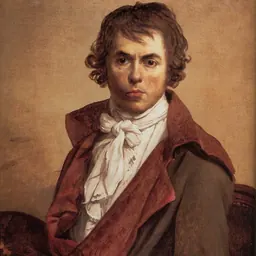

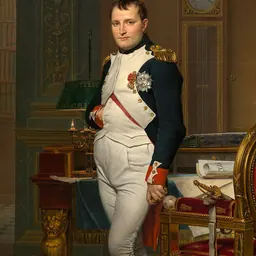

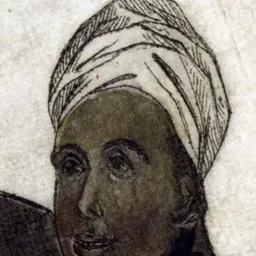
Related people
Same field, nearest in time




Contemporaries
People whose lives overlapped Maria Louisa Catherine Cecilia Cosway's





Frequently asked questions
Who was Maria Louisa Catherine Cecilia Cosway?
painter from Italy who lived and worked in Italy, England and France (1760-1838)
When was Maria Louisa Catherine Cecilia Cosway born?
Maria Louisa Catherine Cecilia Cosway was born on 11 June 1760 in Florence.
When did Maria Louisa Catherine Cecilia Cosway die?
Maria Louisa Catherine Cecilia Cosway died on 5 January 1838 in Lodi.
What was Maria Louisa Catherine Cecilia Cosway's occupation?
Maria Louisa Catherine Cecilia Cosway was a painter, musician, printmaker, illustrator and architectural drafter.
What nationality was Maria Louisa Catherine Cecilia Cosway?
Maria Louisa Catherine Cecilia Cosway was British.
Sources & further reading
· Wikipedia: Maria Louisa Catherine Cecilia Cosway
Cite this page
APA: Biography.guide. (2026). Maria Louisa Catherine Cecilia Cosway. https://biography.guide/maria-louisa-catherine-cecilia-cosway/
MLA: "Maria Louisa Catherine Cecilia Cosway." Biography.guide, https://biography.guide/maria-louisa-catherine-cecilia-cosway/.
Chicago: "Maria Louisa Catherine Cecilia Cosway." Biography.guide. https://biography.guide/maria-louisa-catherine-cecilia-cosway/.
Data last updated: 2026-09-20 · Spot an error? Report a correction.
Page generated 2026-09-27 05:17 UTC