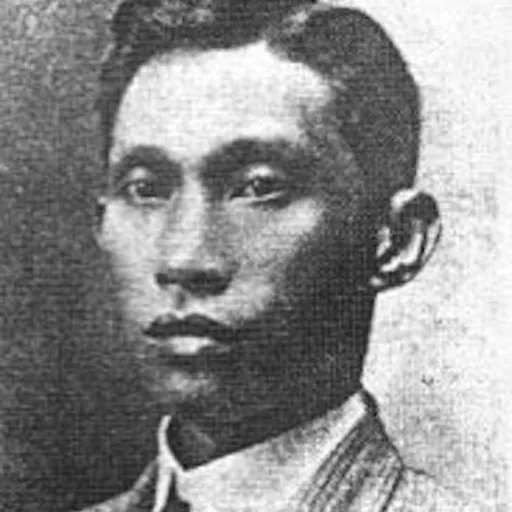
About Manuel Tinio
Lived 1877 – 1924 (aged 46). Manuel Tinio was a Filipino politician.
Manuel Tinio y Bundoc (June 17, 1877 – February 22, 1924) was the youngest General of the Philippine Revolutionary Army, and was elected Governor of the Province of Nueva Ecija, Republic of the Philippines in 1907. He is considered to be one of the three "Fathers of the Cry of Nueva Ecija", along with Pantaleon Valmonte and Mariano Llanera.
On March 29, 2015, Licab, Nueva Ecija, dedicated the very first monument of General Tinio during its 120th anniversary as a municipality.
Early life and family background
The Tinio family, according to contemporary sources, was the most prominent and wealthiest family in the province of Nueva Ecija. They were the largest landowner in Central Luzon prior to the declaration of Martial Law. the first ancestor on record had twin sons who were baptized in Gapan in 1750. In the baptismal record he is described as an indio natural, a native Filipino. From this it can be deduced that either his grandfather or an earlier ancestor was a pure-blooded Chinese. Juan Tinio became the first middleman of the Tobacco Monopoly when it was established in 1782 and held the position for two years.
Juan Tinio's great-grandson, Mariano Tinio Santiago, was the father of Manuel Tinio. Mariano and his siblings, originally named Santiago, changed their family name to Tinio, their mother's family name, in accordance with Gov.-Gen. Narciso Claveria's second decree of 1850 requiring all Indios and Chinese mestizos to change their family names if these were saints’ names. Although he was a native of San Isidro, Nueva Ecija, Mariano eventually settled in Licab, then a barrio of Aliaga beside Lake Canarem, and carved out rice fields from the heavily forested area. Having served as Cabeza de Barangay of the place, he came to be known as "Cabezang Marianong Pulang Buhok" (Cabezang Mariano the Red-Haired). Mariano was a man of strong principles, and even led a petition to the Governor-General denouncing the corruption and abuses of the Alcalde Mayor, the governor of Nueva Ecija, and asking for his recall. Mariano Tinio married several times. His fourth and last wife was Silveria Misadsad Bundoc of Entablado, Cabiao. He died on October 11, 1889, in Licab. Silveria lived on until the second decade of the 20th century.
Manuel Tinio was born to Silveria on June 17, 1877, in Licab, a barrio of Aliaga that became an independent municipality in 1890. He was the only son and had two sisters. The eldest, Maximiana, married Valentin de Castro of Licab and Catalina, the youngest, married Clemente Gatchalian Hernandez of Malolos, Bulacan. Manuel was his mother's favourite, his father having died when Manuel was twelve.
Early years The young Manuel Tinio learned his caton, the phonetic ABCs, under an unknown tutor in Licab. Later, he went to the provincial capital where he attended a school in Calaba, San Isidro headed by Don Rufino Villaruz. He continued his studies in Manila in the school run by Don V. Crisologo. In 1893 he entered San Juan de Letran, where he pursued his segunda ensenianza or high school studies until 1896.
1896 and the Philippine Revolution Manuel Tinio, then 18 years old, joined the Katipunan in April 1896. By August he had organized a company composed of friends, relatives and tenants. Personally leading his group of teenaged guerillas, he conducted raids and depredations against Spanish detachments and patrols in Nueva Ecija. Occasionally, he joined up with similar forces under other youthful leaders. thumb
On September 2, 1896, Manuel Tinio and his men joined the combined forces of Mariano Llanera and Pantaleon Belmonte, capitanes municipales or mayors of Cabiao and Gapan, respectively, in the attack on San Isidro. Of 3,000 who volunteered, 500 determined men were chosen for the attack. Led by a bamboo orchestra or musikong bumbong of Cabiao, the force came in two separate columns from Cabiao and Gapan and converged in Sitio Pulu, 5 km. from San Isidro. Despite having only 100 rifles, they fought the Spaniards holed up in the Casa Tribunal, the arsenal, other government buildings and in the houses of Spanish residents. Capt. Joaquin Machorro, commander of the Guardias Civiles, was killed on the first day of battle. According to Julio Tinio, Manuel's cousin and a participant in the battle, Manuel had a conference in the arsenal with Antonio Luna and Eduardo Llanera, the general's son, immediately after the battle.
The Spanish authorities hastily organized a company of 200 civilian Spaniards and mercenaries the following day and attacked the overconfident insurgents, driving the besiegers away from the government center. The next day more Spanish reinforcements arrived from Peñaranda, forcing the poorly armed rebels to retreat, leaving behind 60 dead. The Spaniards went in hot pursuit of the insurgents, forcing those from Cabiao to flee to Candaba, Pampanga, and those from Gapan to hide in San Miguel de Mayumo in Bulacan. The insurgents from San Isidro fled across the river to hide in Jaen. The relatives of those who were recognized were driven away from their homes by the colonial authorities. Manuel Tinio and his troop stayed to protect the mass of people from Calaba, San Isidro, who were all his kinfolk, hastening across the river to Jaen, Nueva Ecija.
The Spaniards' relentless pursuit of the rebels forced them to disband and go into hiding until January 1897. Tinio was a special target. At tall, he literally stood out among the attackers, whose average height was below . He fled to Licab. A platoon of cazadores (footsoldiers) was sent to arrest him, forcing Hilario Tinio Yango, his first cousin and the Capitan Municipal of the town, to lead them to him. Warned of the approaching soldiers, Manuel again escaped and fled on foot back to San Isidro, where, in the barrios of Calaba, Alua and Sto. Cristo, he hid with relatives in their various farms beside the Rio Gapan (now known as the Peñaranda River). Fear of arrest compelled him to be forever on the move. He never slept in the same place. Later on, he would attribute his ill health in his middle age to the privations he endured during those months of living exposed to the elements.
1897 The rebels reorganized their forces the moment Spanish pursuit died down. Tinio and his men marched with Gen. Llanera in his sorties against the Spaniards. Llanera eventually made Tinio a captain.
The aggressive exploits of the teenaged Manuel Tinio reached the ears of General Emilio Aguinaldo, whose forces were being driven out of Cavite and Laguna, Philippines. He evacuated to Mount Puray in Montalban, Rizal and called for an assembly of patriots in June 1897. In that assembly, Aguinaldo appointed Mamerto Natividad, Jr. as commanding general of the revolutionary army and Mariano Llanera as vice-commander with the rank of Lt.-General. Manuel Tinio was commissioned a Colonel and served under Gen. Natividad.
The constant pressure from the army of Governor General Fernando Primo de Rivera drove Aguinaldo to Central Luzon. In August, Gen. Aguinaldo decided to move his force of 500 men to the caves of Biac-na-Bato in San Miguel, Bulacan because the area was easier to defend. There, his forces joined up with those of Gen. Llanera. With the help of Pedro Paterno, a prominent Philippines lawyer, Aguinaldo began negotiating a truce with the Spanish government in exchange for reforms, an indemnity, and safe conduct.
On August 27, 1897, Gen. Mamerto Natividad and Col. Manuel Tinio conducted raids in Carmen, Zaragoza and Peñaranda, Nueva Ecija. Three days later, on the 30th, they stormed and captured Santor (now Bongabon) with the help of the townspeople. They stayed in that town till September 3.
On September 4, with the principal objective of acquiring provisions lacking in Biac-na-Bato, Gen. Natividad and Col. Manuel Tinio united their forces with those of Col. Casimiro Tinio, Gen. Pío del Pilar, Col. Jose Paua and Eduardo Llanera for a dawn attack on Aliaga. (Casimiro Tinio, popularly known as "Capitan Berong", was an elder brother of Manuel through his father's first marriage.)
Thus began the Battle of Aliaga, considered one of the most glorious battles of the rebellion. The rebel forces took the church and convent, the Casa Tribunal and other government buildings. The commander of the Spanish detachment died in the first moments of fighting, and those who survived were jailed. The rebels then proceeded to entrench themselves and fortify several houses. The following day, Sunday the 5th, the church and convent as well as a group of houses were put to the torch due to exigencies of defense.
Spanish Governor General Primo de Rivera fielded 8,000 Spanish troops under the commands of Gen. Ricardo Monet and Gen. Nuñez in an effort to recapture the town. A column of reinforcements under the latter's command arrived in the afternoon of September 6. They were met with such a tremendous hail of bullets that the general, two captains and many soldiers were wounded, forcing the Spaniards to retreat a kilometer away from the town to await the arrival of Gen. Monet and his men. Even with the reinforcements, the Spaniards were overly cautious in attacking the insurgents. When they did so the next day, they found the town already abandoned by the rebels who had gone back to Biac-na-Bato. Filipino casualties numbered 8 dead and 10 wounded.
Gen. Natividad and Col. Manuel Tinio shifted to guerrilla warfare. The following October with full force they attacked San Rafael, Bulacan to get much-needed provisions for Biac-na-Bato. The battle lasted several days and, after getting what they came for, they left a detachment in Bo. Kaingin to hold back the Spanish reinforcements from Baliwag, Bulacan. To divert Spanish forces from Nueva Ecija, Natividad and Tinio attacked Tayug, Pangasinan on Oct. 4, 1897, occupying the church in the heart of the poblacion.
Meanwhile, peace negotiations continued and in October Aguinaldo gathered together his generals to convene a constitutional assembly. On Nov. 1, 1897 the Constitution was unanimously approved and on that day the Biac-na-Bato Republic was established.
However, Gen. Natividad, who believed in the revolution, opposed the peace negotiations and continued to fight from Biac-na-Bato. On Nov. 9, while leading a force of 200 men with Gen. Pío del Pilar and Col. Ignacio Paua, Natividad was killed in action in Entablado, Cabiao. Col. Manuel Tinio brought the corpse back to the general's grieving wife in Biac-na-Bato. (Incidentally, Gen. Natividad's widow, Trinidad, was the daughter of Casimiro Tinio–"Capitan Berong".) With the death of the army's commanding general, Col. Manuel Tinio was commissioned Brigadier General and designated as commanding general of operations on Nov. 20, 1897. Gen. Tinio, all of 20 years, became the youngest general of the Philippine Revolutionary Army. (Gregorio del Pilar, already 22, was only a Lt. Colonel at that time.)
On Dec. 20, 1897, the Pact of the Biac-na-Bato was ratified by the Assembly of Representatives. In accordance with the terms of the peace pact, Aguinaldo went to Sual, Pangasinan, where he and 26 members of the revolutionary government boarded a steamer to go into voluntary exile in Hongkong. The Novo-Ecijanos in the group were Manuel Tinio, Mariano and Eduardo Llanera, Benito and Joaquin Natividad, all signatories of the Constitution.
In Hongkong, the exiles agreed among themselves to live as a community and spend only the interest of the initial P400,000 the Spanish Government had paid in accordance with the Pact of the Biac-na-Bato. The principal was to be used for the purchase of arms for the continuation of the revolution at a future time. The Artacho faction, however, wanted to divide the funds of the Revolution among themselves. The Novo-Ecijanos did not vote with the opportunist Artacho "faction", and, being relatively well off, thanks to a relative who provided them with funds (Trinidad Tinio vda. de Natividad), "they got a house where they lived like a republic", as they said.
1898 Would history have been different if the Spanish authorities had not reneged on the terms of the Pact and withheld the amount of P900,000 which was supposed to have been divided among non-combatants who had suffered in the fighting? Thus shortchanged, considering themselves no longer honor bound to lay down arms, the revolutionists rose again. Once again fighting broke out all over Luzon. In Nueva Ecija, the rebels captured the towns again one by one.
But American intervention was on the way. As early as February 1898 an American naval squadron had steamed into Manila Bay. On May 1, less than a week after the declaration of the Spanish–American War, the American naval squadron completely destroyed the Spanish fleet. Admiral George Dewey of the United States of America immediately dispatched the revenue cutter "McCulloch" to Hongkong to fetch Aguinaldo, who returned to the Philippines on May 19. On May 21 Aguinaldo issued a proclamation asking the nation to rally behind him in a second attempt to obtain independence. Revolutionary leaders promptly stepped up their raids and ambuscades on Spanish garrisons in Central Luzon, capturing more than 5,000 prisoners. By the end of May, the whole of central and southern Luzon, except Manila, was practically in Filipino hands. Aguinaldo promptly established a Dictatorial Government on May 24, with himself as Supremo (supreme commander) and proclaimed Philippine Independence on June 12, 1898. Apolinario Mabini, however, prevailed upon Aguinaldo to decree the establishment of a Revolutionary Government on June 23.
The siege of Ilocos Manuel Tinio and the rest of the revolutionists in Hong Kong sailed for Cavite on June 6 on board the 60-ton contraband boat "Kwan Hoi" to join their Filipino leader. Upon his arrival in Cavite, Tinio was instructed to organize an expeditionary force to wrest the Ilocano provinces from Spanish hands. Thus would start the thrust into the North and its conquest by Novo-Ecijano General Manuel Tinio. First, he retrieved from Hagonoy, Bulacan 300 Mauser and Remington rifles that had been captured from the Spaniards and stored in that town. He then took the steamer to San Isidro, Nueva Ecija. Upon his arrival on June 13 he immediately set up 3 companies of 108 men each under the commands of Captains Joaquin Alejandrino, Jose Tombo and 1st Lt. Joaquin Natividad who was given overall command. All the officers were Novo-Ecijanos, except for Celerino Mangahas who hailed from Paombong, Bulacan.
On July 7, 1898, Aguinaldo reorganized the provincial government of Nueva Ecija and appointed Felino Cajucom as governor. The province was divided into four military zones: Zone 1 under Gen. Mariano Llanera with Gen. Tinio as deputy covered the towns of San Isidro, San Antonio, Jaén, Gapan and Peñaranda; Zone 2 under Pablo Padilla and Angelo San Pedro covered the towns of Cabanatuan, San Leonardo, Sta. Rosa, Sto. Domingo and Talavera; Zone 3 under Delfin Esquivel and Ambrosio Esteban covered the towns of Aliaga, Licab, Zaragoza, San Jose, San Juan de Guimba and Cuyapo; Zone 4 under Manuel Natividad and Francisco Nuñez covered the towns of Rosales, Nampicuan, Umingan, Balungao and San Quintin.
On June 19, Gen. Tinio and his men proceeded to Pangasinan to assist Gen. Makabulos in the siege of Dagupan which was the most important of the three Spanish strongholds in the North at that time, the others being Tarlac, Tarlac and San Fernando, La Union. Dagupan was held by the Spaniards under the command of Col. Federico J. Ceballos. In Dagupan, Gen. Tinio met the force of Lt. Col. Casimiro Tinio, composed of Captains Feliciano Ramoso and Pascual Tinio, Lt. Severo Ortega, several other officers, and 300 Novo-Ecijano soldiers. Gen. Makabulos, who had taken over the Central Luzon Command the previous April, was optimistic that he had the situation well in hand and allowed Gen. Tinio and the combined Novo-Ecijano troops at Dagupan to proceed northward to liberate Ilocos from the Spaniards. This Ilocos Expeditionary Force would become the nucleus of the future Tinio Brigade.
The Novo-Ecijano troops, now over 600 strong, reached San Fernando, on July 22, the day that Dagupan surrendered to Gen. Makabulos. They found the capital of La Union already besieged by revolutionists under the command of Gen. Mauro Ortiz. The Spaniards, under the command of Col. Jose Garcia Herrero, were entrenched in the convent, the Casa Tribunal and the provincial jail and were waiting for succour. Gen. Tinio wanted a ceasefire and sent for Col. Ceballos in Dagupan to mediate a peaceful capitulation of the San Fernando garrison. But despite news that the Spaniards had already surrendered Central Luzon to the Revolutionists and the pleadings of Col. Ceballos, the besieged Spaniards refused to capitulate. On the morning of the eighth day, July 31, Gen. Tinio ordered the assault of the convent from the adjoining church. At a cost of 5 lives and 3 wounded, Capt. Alejandrino's company occupied the kitchen and cut the water supply in the aljibe or cistern under the azotea, the terrace beside the kitchen. At 4 p.m. a 4"-cannon taken from the gunboat "Callao" moored in the harbor was fired against the left side of the convent. The deafening blast frightened the Spaniards who immediately called for a ceasefire and flew the white flag. Alejandrino received the saber of Lt. Col. Herrero as a token of surrender. 400 men, 8 officers, 377 rifles, 3 cannons and P 12,000 in government silver were turned over. Upon seeing his captors, the Spanish commander wept in rage and humiliation, for many of the Filipino officers and men were but mere youths. Gen. Tinio himself had just turned 21 the previous month.
From San Fernando the Tinio Brigade and its prisoners marched on to Balaoan, where they met stubborn resistance from the enemy who were again entrenched in the convent. The siege lasted for five days, and, despite the support of the populace, resulted in the deaths of more than 70 Filipinos, mostly townspeople. Camilo Osías, a witness to the event, wrote in his memoirs that after the siege, the Balaoan katipuneros were inducted en masse into the ranks of the Tinio Brigade. Meanwhile, the company of Capt. Alejandrino, dispatched earlier by Gen. Tinio to reconnoiter and clear the neighboring commandancia or military district of Benguet, had met no opposition for the small force of cazadores in La Trinidad had fled to Bontoc upon learning of their approach. Alejandrino immediately turned back and rejoined Gen. Tinio.
From Balaoan, the rebels marched on to Bangar, the northernmost town of La Union, where they laid siege to the Spaniards holed up, again, in the convent. They won a victory on Aug. 7 after four days of fighting at a cost of 2 casualties. 87 Spaniards surrendered in Bangar.
The Tinio Brigade then crossed the mighty Amburayan River that divides the province of La Union from Ilocos Sur. The colonial force occupying the strategic heights on the opposite bank was the last obstacle to Tinio's advance to Vigan. Tinio stormed their positions, causing the enemy to withdraw to Tagudin, He found the capital already in rebel hands. Gov. Enrique Polo de Lara, newly appointed Spanish governor of both Ilocos Norte and Ilocos Sur, had fled to Laoag, the capital of Ilocos Norte, with all the resident Spaniards of Vigan. There he spent five days at the beach of Diriqui, loading the civilians and friars, including Bishop Campomanes, on boats which would hazard the rough weather for the journey to Aparri. He then ordered the troops under Col. Mariano Arques, district commander of the Civil Guards and Jefe de Linea in Ilocos, to take the coastal road to Aparri, Cagayan.
Upon his arrival in Vigan, Gen. Tinio had immediately launched a two-pronged movement to capture the Spaniards fleeing northward and those escaping into the interior. When the Americans landed the following day, led by Commander McCracken and Lt. Col. James Parker, there were no Filipino soldiers in Vigan.
In the early part of 1951, Nueva Ecija Masonic Lodge No. 73, founded in Quezon, Nueva Ecija in the 1921, moved and established itself in the heart of Guimba, Nueva Ecija, in the hope that it would thereby increase its membership and improve attendance in its meetings. Quezon is a very small town and Masonry there did not flourish and develop. Furthermore, it was only meeting in a residential home of a member. In Guimba, it was offered a more commodious home at the top floor of the Corregidor College by Bro. Eulogio R. Dizon, the founder and President of the college, and an active member of the lodge.
Foreseeing the eventual return of Nueva Ecija Lodge No. 73 back to Quezon, some fifty (50) of its members, along with some members of Cabanatuan Lodge No. 53 and Taga-Ilog Lodge No. 79, who were residents of Guimba, met on July 14, 1962 and decided to form a new lodge. A petition for them to organize General Manuel Tinio Lodge was drafted. In the same petition, Manuel's son, Mariano G. Tinio was recommended as its first Worshipful Master.
Nueva Ecija Lodge No. 73 requested the Grand Lodge to authorize it to return to Quezon on July 28, 1962 and favorably recommended the petition for the organization of Gen. Manuel Tinio Lodge.
On June 22, 1963 the new lodge was given its charter as General Manuel Tinio Lodge No. 167.
Businesses He was also a pioneering businessman aside from being an hacendero. Having first-hand knowledge of the severe labor shortage that came about due to the widespread conversion of jungles into vast rice farms from 1903 to 1920, he and his fellow hacenderos established the Samahang Magsasaka in 1910. The Samahan imported and operated the first rice thresher in the country. This was a gargantuan machine run by a wood-fired steam engine and was many times bigger than the huge trilladoras popular during the 50s and 60s. Eventually, the company went on to provide electricity to Cabanatuan, and continues to do so today.
He also founded in 1911, one of the first soft drink companies in the country. The Marilao Mineral Water Co. had a bottling plant located beside a spring in Marilao, Bulacan who later became Coca-Cola.
The widespread conversion of forests into ricelands during the first two decades of the 20th century produced abundant surpluses of grain. By the 2nd decade, Nueva Ecija had superseded Pangasinan as the rice granary of Luzon, and Cabanatuan was on its way to becoming the gathering and distribution center of rice for Central Luzon. Numerous rice mills mushroomed all over the capital. Manuel Tinio established one of the first and biggest ricemills in Cabanatuan. In those days, owning a ricemill was like owning a bank. The palay or unhusked rice deposited in the mill could be traded several times over until the owner finally retrieved his stock, the mill owner already having made a profit on every transaction.
Nueva Ecija was the main source of livestock and meat for Manila throughout the 19th century until WW II.
It came as no surprise, therefore, when Gen. Tinio established a cattle ranch in the foothills of Pantabangan.
When he died, he left over 2,200 heads of cattle to his children.
Death On December 28, 1923, Manuel Tinio was confined in a Manila hospital for cirrhosis of the liver. So greatly regarded was he by everyone that Manuel Quezon, upon hearing that Gen. Tinio was gravely ill, Pres. Emilio Aguinaldo immediately rushed to the hospital, clad only in his pajamas. He died at the age of 46 at 10:00 pm on February 22, 1924, at 214 Real St., Intramuros, Manila, leaving a widow and 12 children.
Due to his services to the nation, the insular government engaged a special train to carry his coffin to Cabanatuan. The funeral train stopped at every station along the way, so that the officials of each town could conduct necrological services for him. Gen. Manuel Tinio was finally buried in Cabanatuan on March 2, 1924. (General Tinio was originally scheduled to be buried on February 27, 1924 according to his death certificate.) The new name of the town was inaugurated days later, on August 19, 1957.
Don’t just read it —
keep it.
Full-length biographies made to live with: read them, listen on the way to work, watch them tonight.
- E-book
- Audio
- Video
Instant download · yours to keep · every purchase keeps this site free
Important facts
People in Manuel Tinio's life
Named in this biography and alive at the same time




Related people
Same field, nearest in time



Contemporaries
People whose lives overlapped Manuel Tinio's


Frequently asked questions
Who was Manuel Tinio?
Filipino revolutionary
When was Manuel Tinio born?
Manuel Tinio was born on 17 June 1877 in Aliaga.
When did Manuel Tinio die?
Manuel Tinio died on 22 February 1924 in Insular Government of the Philippine Islands, Intramuros, Manila.
What was Manuel Tinio's occupation?
Manuel Tinio was a politician.
What nationality was Manuel Tinio?
Manuel Tinio was Filipino.
Sources & further reading
Cite this page
APA: Biography.guide. (2026). Manuel Tinio. https://biography.guide/manuel-tinio/
MLA: "Manuel Tinio." Biography.guide, https://biography.guide/manuel-tinio/.
Chicago: "Manuel Tinio." Biography.guide. https://biography.guide/manuel-tinio/.
Data last updated: 2026-09-20 · Spot an error? Report a correction.
Portrait: Wikimedia Commons · author & licence
Page generated 2026-09-27 04:57 UTC