
Apolinario Mabini
Prime Minister of the Philippines in 1899
About Apolinario Mabini
Lived 1864 – 1903 (aged 38). Apolinario Mabini was a Filipino diplomat, autobiographer, judge, journalist and politician.
Philippine Revolution
Arrest When the plans of the Katipunan were discovered by Spanish authorities, and the first active phase of the 1896 Philippine Revolution began in earnest, Mabini, still ill, was arrested along with numerous other members of La Liga Filipina.
Thirteen patriots, later known as the "Thirteen Martyrs of Cavite", were arrested in Cavite, tried and eventually executed. José Rizal himself was accused of being party to the revolution, and would eventually be executed in December that year. When the Spanish authorities saw that Mabini was paralyzed, however, they decided to release him.
Adviser to the Revolutionary Government Sent to the hospital after his arrest, Mabini remained in ill health for a considerable time. He was seeking the curative properties of the hot springs in Los Baños, Laguna in 1898 when Emilio Aguinaldo sent for him, asking him to serve as advisor to the revolution.
During this convalescent period, Mabini wrote the pamphlets "El Verdadero Decálogo" and "Ordenanzas de la Revolución". Aguinaldo was impressed by these works and by Mabini's role as a leading figure in La Liga Filipina, and made arrangements for Mabini to be brought from Los Baños to Kawit, Cavite. It took hundreds of men taking turns carrying his hammock to portage Mabini to Kawit.
He continued to serve as the chief adviser for General Aguinaldo after the Philippine Declaration of Independence on June 12. He drafted decrees and edited the constitution for the First Philippine Republic, including the framework of the revolutionary government which was implemented in Malolos in 1899.
Prime Minister of the Philippines Shortly after Aguinaldo's return to the Philippines from exile in Hong Kong in May 1898, he tasked Mabini with helping him establish a government. Mabini authored the June 18, 1898, decree which established the Dictatorial Government of the Philippines. After the Malolos Constitution, the basic law of the First Philippine Republic, was promulgated on January 21, 1899, Mabini was appointed Prime Minister and also Foreign Minister. He then led the first cabinet of the republic.
Mabini often clashed with the Malolos Congress, as he believed the legislative body’s powers increasingly infringed upon those of the executive branch. A notable instance of his uncompromising character occurred when his nomination to the Supreme Court was challenged on the basis of his physical disability; when told he could not serve because he was lame, Mabini famously retorted, "Why? Does the job entail a lot of walking?". In a memorandum to President Emilio Aguinaldo in January 1899, Mabini formally warned against constitutional provisions that would require Congress to approve all cabinet appointments, fearing it would undermine executive authority.
Serving as both Prime Minister and the nation's first Secretary of Foreign Affairs, Mabini acted as a key adviser to Aguinaldo, often referred to as the government’s cámara negra (Black Cabinet). He is noted by historians for his personal integrity, having entered and departed from government service in poverty despite the significant influence he wielded.
Exile and return The Philippine–American War saw Mabini taken more seriously as a threat by the Americans than he was under the Spanish: Says National Artist for Literature F. Sionil Jose: The Spaniards underestimated Mabini primarily because he was a cripple. Had they known of his intellectual perspicacity, they would have killed him earlier. The Americans did not. They were aware of his superior intelligence, his tenacity when he faced them in negotiations for autonomy and ceasefire.right On December 10, 1899, he was captured by Americans at Cuyapo, Nueva Ecija. He was captured by troopers of the 4th Cavalry Regiment. He was imprisoned after his capture, though he was in bad health, and was exiled to the island of Guam for refusing to take the oath of allegiance to the United States along with other revolutionists Americans referred to as insurrectos (rebels) or Irreconcilables.
Mabini returned to the Philippines after agreeing to take the Oath of Allegiance to the United States on February 26, 1903, before the Collector of Customs. On the day he sailed, he issued this statement to the press:
Mabini resumed his work of agitating for independence for the Philippines soon after his return from exile.
Death
Not long after his return, Mabini died of cholera at his home at 21 Calle Nagtahan, Manila, on May 13, 1903, at the age of 38, after consuming an unpasteurized and contaminated carabao milk. His funeral at the Binondo Church was attended by around 8,000 people, mostly Filipinos, including the foremost members of the Iglesia Filipina Independiente who took over and occupied the Binondo Church at the time.
His remains were initially interred at the Manila Chinese Cemetery, marked by a triangular pyramid (symbolizing his Masonic beliefs) on a raised pedestal. Subsequently, they were transferred to the Mausoleo de los Veteranos de la Revolucion in the nearby Manila North Cemetery before finally being relocated to the newly-inaugurated Apolinario Mabini Shrine in Tanauan, Batangas, on his 92nd birth anniversary on July 23, 1956.
Controversy about Mabini's paralysis Even during his lifetime, there were controversial rumors regarding the cause of Mabini's paralysis. Infighting among members of the Malolos congress led to the spread of rumors that Mabini's paralysis had been caused by venereal disease - specifically, syphilis. This was finally debunked in 1980, when Mabini's bones were exhumed and the autopsy proved conclusively that the cause of his paralysis was polio.
Place names Four Philippine municipalities are named after Mabini: Mabini, Batangas, Mabini, Bohol, Mabini, Davao de Oro, and Mabini, Pangasinan The main campus of the Polytechnic University of the Philippines (PUP) in Santa Mesa, Manila was named after Apolinario Mabini by Dr. Nemesio Prudente, when he reorganized the university in 1988. Mabini Street in the Ermita and Malate districts of Manila. The Mabini Academy is a school in Lipa City, Batangas named after Mabini. The school logo carries Mabini's Image. Mabini Colleges, Inc is an academic institution in Daet, Camarines Norte, Philippines. Apolinario Mabini Superhighway, widely known as the Southern Tagalog Arterial Road or STAR Tollway, is an expressway that connect the province of Batangas to the South Luzon Expressway. Mabini Bridge, formerly known as Nagtahan Bridge in the city of Manila, was renamed in his honor. Mabini reef, also referred to as Johnson South Reef, is a reef claimed by the Philippines in the Spratly Islands in the South China Sea. It is currently controlled by China. In addition to the Philippines and China, its ownership is also disputed by Brunei, Malaysia, Taiwan, and Vietnam.
Naval Vessels The Philippine Navy's Jacinto class corvette, BRP Apolinario Mabini (PS-36), is also named after Mabini.
Philippine Peso Mabini's face adorns the Philippine ten peso coin, previously alongside Andrés Bonifacio. The newer series (New Generation Currency Series) only has Mabini. He was also featured on the ten peso bill that circulated or printed starting with the Pilipino Series in 1972 and continued until the Bangko Sentral ng Pilipinas stopped printing these notes (New Design series version) in 2001. From 1972 to 1997, he was the only one to portray on the front of the banknote until it added Andrés Bonifacio that were printed from 1997 to 2001. He was previously featured on the one peso bill from 1949-1961
Government Awards and Citations The Gawad Mabini is awarded to Filipinos for distinguished foreign service, or promoting the interests and prestige of the Philippines abroad. It was established on June 24, 1974, by President Ferdinand Marcos through Presidential Decree No. 490, s. 1974 in Mabini's honor since he was the first Secretary of Foreign Affairs of the First Philippine Republic. The Philippine government presents the annual Apolinario Mabini Awards to outstanding persons with disabilities.
Selected works The True Decalogue (El Verdadero Decalogo, June 24, 1898) Contestaciones y Consideraciones Al Pueblo y Congreso Norte-Americanos Ordenanzas de la Revolucion Programa Constitucional dela Republica Filipina (The Constitutional Program of the Philippine Republic)
On Emilio Aguinaldo and his cabinet members:
About Mabini By former Military Governor of the Philippines, Gen. Arthur MacArthur, describing Mabini before the US Senate's Lodge Committee of 1902: Mabini is a highly educated young man who, unfortunately, is paralyzed. He has a classical education, a very flexible, imaginative mind, and Mabini's views were more comprehensive than any of the Filipinos that I have met. His idea was a dream of a Malay confederacy. Not the Luzon or the Philippine Archipelago, but I mean of that blood. He is a dreamy man, but a very firm character and of very high accomplishments. As said, unfortunately, he is paralyzed. He is a young man, and would undoubtedly be of great use in the future of those islands if it were not for his affliction.
Don’t just read it —
keep it.
Full-length biographies made to live with: read them, listen on the way to work, watch them tonight.
- E-book
- Audio
- Video
Instant download · yours to keep · every purchase keeps this site free
Important facts
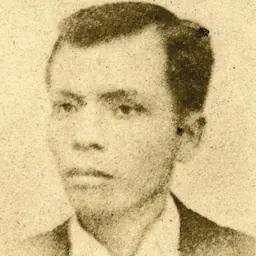
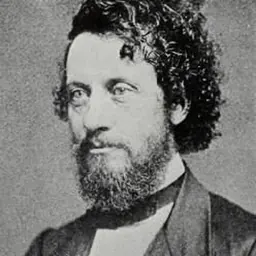
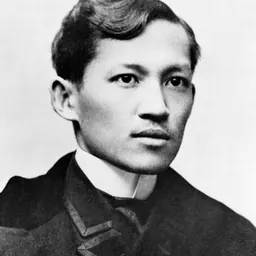
People in Apolinario Mabini's life
Named in this biography and alive at the same time

Related people
Same field, nearest in time

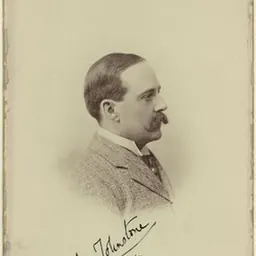
Contemporaries
People whose lives overlapped Apolinario Mabini's



Frequently asked questions
Who was Apolinario Mabini?
Prime Minister of the Philippines in 1899
When was Apolinario Mabini born?
Apolinario Mabini was born on 22 July 1864 in Tanauan.
When did Apolinario Mabini die?
Apolinario Mabini died on 13 May 1903 in Manila.
What was Apolinario Mabini's occupation?
Apolinario Mabini was a diplomat, autobiographer, judge, journalist and politician.
What nationality was Apolinario Mabini?
Apolinario Mabini was Filipino.
Sources & further reading
· Wikipedia: Apolinario Mabini
Cite this page
APA: Biography.guide. (2026). Apolinario Mabini. https://biography.guide/apolinario-mabini/
MLA: "Apolinario Mabini." Biography.guide, https://biography.guide/apolinario-mabini/.
Chicago: "Apolinario Mabini." Biography.guide. https://biography.guide/apolinario-mabini/.
Data last updated: 2026-09-26 · Spot an error? Report a correction.
Page generated 2026-09-27 05:16 UTC