
About Manuel d'Oliveira
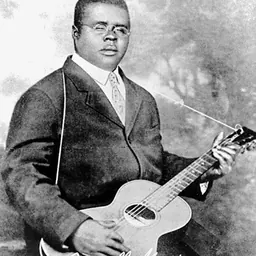
Lived 1915 – 1998 (aged 82–83). Manuel d'Oliveira was a guitarist.
Emmanuel Mayungu d'Oliveira (10 October 1915 – 12 January 1988), A seminal figure in Central African music, he is notably recognized for creating the "Polka Piké", a distinctive Bantu dance rhythm rooted in Kongo traditions. His musical career flourished in the 1950s, especially after signing with the Ngoma record label in 1948, under which he produced several notable hits—"Basi Banso Tapale", "Chérie Bondowe", "Elongi Ya Chérie", "Mwasi Kitoko Kulala Na Nkuala" and "Maria Tchebo".
Born in São Salvador (now M'banza-Kongo), Angola, d'Oliveira relocated to Matadi in the then-Belgian Congo at the age of six. Early on, he trained in carpentry and worked various jobs at the port of Matadi, but by the 1930s, he turned to music.
Life and career
1915–1930s: Early life and career beginnings M'banza-Kongo (São Salvador) in 1745, the birthplace of Manuel d'Oliveira, served as the capital of the Kingdom of Kongo. Emmanuel Mayungu d'Oliveira was born on 10 October 1915 in São Salvador (modern-day M'banza-Kongo) in northern Angola. He became a skilled guitarist and began writing his first songs in Kikongo, and by 1937, he was fraternizing with young Angolan musicians and appearing at public events, where he became popular and earned a strong name in Matadi and Boma.
Between 1948 and 1952, d'Oliveira recorded a series of popular hits with the Ngoma label. Some of his notable recordings from this period include "Muasi kitoko akolala na nkuala"/"Maria Tchebo", "Basi Banso Tapale"/"Mama Abuti Biso", "Na Angola Basi Bazali Mingi"/"Ticketébungi", "Meno Nluta Kwame"/"Avo Se Mokema Ya Ndumba", "Mbula Ya Sala Kwame"/"Umbanzanga", "Ozola Yela"/"Ndumba Yadisompa Kwame", "Omambu Yavangwa"/"Okuntadilanga Ne Kunzeyeko," "Elisa Muasi Kitoko Moyibi"/"Basi Na Kinshasa Botiaki Tembe", "Mbamba Solo Olingi Naboma"/"Elongi Ya Chérie Lokola Mwinda", and "Bana Boma"/"Kifunga Ntumbu Ya Mulenda". The project also featured other legends of Congolese rumba, including Antoine Wendo Kolosoy, Camille Feruzi, Léon Bukasa, Lucie Eyenga Moseka, and Adou Elenga. Following Angola's independence in 1975, d'Oliveira, driven by a sense of nostalgia, returned to his homeland in 1984 to spend his final years. In 1987, he was honored with the Angolan Medal of Merit for his longstanding contributions to the preservation and celebration of Kongo culture. His song "Ticket Ebunga" reflects his experience of prolonged exile.
Death Manuel d'Oliveira died on 12 January 1988 in Luanda, Angola, at the age of 72. It is rumored that he may have been poisoned, possibly due to resentment over his past achievements and the fact that he was unable to establish his career in his home country. He was reportedly insulted by the "Luandais", who referred to him as a "Zairian", a term used derogatorily to describe Angolans from the Democratic Republic of the Congo.
Discography After a career spanning close to 44 years, d'Oliveira's body of work included over a hundred songs, many of which became major hits. Below is a selection of 38 standout tracks from 1948 to 1952, recorded with Ngoma, through which he rose to legendary status and became a cornerstone of Congolese music.
110 – "Muasi Kitoko Akolala Na Nkuala"/"Maria Tchebo" 111 – "Basi Banso Tapale"/"Mama Abuti Biso" 112 – "Na Angola Basi Bazali Mingi"/"Ticketébungi" 113 – "Meno Nluta Kwame"/"Avo Se Mokema Ya Ndumba" 114 – "Mbula Ya Sala Kwame"/"Umbanzanga" 115 – "Ozola Yela"/"Ndumba Yadisompa Kwame" 116 – "Omambu Yavangwa"/"Okuntadilanga Ne Kunzeyeko" 117 – "Elisa Muasi Kitoko Moyibi"/"Basi Na Kinshasa Botiaki Tembe" 118 – "Mbamba Solo Olingi Naboma"/"Elongi Ya Chérie Lokola Mwinda" 119 – "Bana Boma"/"Kifunga Ntumbu Ya Mulenda" 131 – "Bino Banso Yoka Toyemba"/"Obango Filomèhe" 132 – "Edumbanga Yabondela"/"Mono Kwenda Kwame Nkwenda Kwame" 212 – "Yo Mobali Ya Tembe"/"Ata Nasali Yo Boni" 213 – "Otoko Mpene Eblondia"/"Omono I Djoko" 214 – "Nutul'Omwiwi"/"Mu Léo Kwenda" 241 – "Biguini, Biguini"/"Ayi Olele" 379 – "Djibola Ngoma"/"Gabi-Gabi Eyamba" 380 – "Djole Nwaba"/"Ngai Na Boyi" 1095 – "Tin Tin"/"Boni Boni Muana Oyo"
Don’t just read it —
keep it.
Full-length biographies made to live with: read them, listen on the way to work, watch them tonight.
- E-book
- Audio
- Video
Instant download · yours to keep · every purchase keeps this site free
Important facts
People in Manuel d'Oliveira's life
Named in this biography and alive at the same time





Related people
Same field, nearest in time

Contemporaries
People whose lives overlapped Manuel d'Oliveira's





Frequently asked questions
Who was Manuel d'Oliveira?
angolan-born Congolese musician (1915–1988)
When was Manuel d'Oliveira born?
Manuel d'Oliveira was born in 1915.
When did Manuel d'Oliveira die?
Manuel d'Oliveira died on 12 January 1998.
What was Manuel d'Oliveira's occupation?
Manuel d'Oliveira was a guitarist.
Sources & further reading
· Wikipedia: Manuel d'Oliveira
Cite this page
APA: Biography.guide. (2026). Manuel d'Oliveira. https://biography.guide/manuel-d-oliveira/
MLA: "Manuel d'Oliveira." Biography.guide, https://biography.guide/manuel-d-oliveira/.
Chicago: "Manuel d'Oliveira." Biography.guide. https://biography.guide/manuel-d-oliveira/.
Data last updated: 2026-09-20 · Spot an error? Report a correction.
Page generated 2026-09-27 05:19 UTC