
About Wendo Kolosoy
Lived 1925 – 2008 (aged 83). Wendo Kolosoy was a Congolese singer, singer-songwriter, guitarist, boxer and musician.
Antoine Wendo Kolosoy (25 April 1925 – 28 July 2008), better known as Papa Wendo, Wendo Sor, or mononymously Wendo, was a Congolese singer-songwriter, guitarist, and bandleader. Often called by some contemporaries as the "father of Congolese rumba", Wendo pioneered a musical idiom distinguished by his self-accompaniment on guitar, whether as a soloist or in the company of a small ensemble, before drawing in 1943 upon the pioneering example of his contemporary Paul Kamba. His stardom was so pervasive that the music of his era became known colloquially as Tango ya ba Wendo ("the time of Wendo"). He sang in Nkundo, Lingala, and Swahili,
Wendo began his career as a riverboat worker before devoting himself to music in the 1940s. He recorded with the Ngoma label in collaboration with Manuel d'Oliveira and Léon Bukasa, later joined by Zacharie Elenga and Paul Mwanga following the decline of the Opika label. His birthname was Antoine Kalosoyi (also spelled Nkalasoy or Nkolosoyi), which he eventually regularized to Kolosoy. Following her death when Wendo was nine years old, he was placed in an orphanage operated by the Society of the Missionaries of Africa, and remained there until he was 12 or 13, but was later expelled when the fathers disapproved of the lyrics of his songs. He was also employed by the Mbila Company and another enterprise referenced by Congolese music journalist Jeannot Ne Nzau Diop as "huilerie Heb", likely a misrendering of Huileries du Congo Belge. where he accompanied himself on guitar or performed with two or three musicians, using an arrangement comparable to that of the Cuban Trio Matamoros of the 1920s. The band recorded with Ngoma and other Congolese labels, performing a repertoire composed and arranged largely by Wendo himself. Their music incorporated formal elements of emerging modern styles while retaining the simplicity and elegance of Congolese rumba forms.
"Marie-Louise" His first international hit, in 1948, was "Marie-Louise", which was co-written with guitarist Henri Bowane. Issued as a 78 rpm disc, the record featured "Marie-Louise" on the A-side and "Botiaki Tembe" on the B-side. According to those close to Wendo, Marie-Louise was his beloved and also Bowane's sister. In the song, Wendo declares his determination to marry her despite fierce opposition from his would-be father-in-law, who disparaged and maligned him. The refrain states: "Solo mpenza ngai na kobala Louise. Bokilo aboya, ngai na yo se libala, ngai na yo tolingani", which translates as: "It is certain that I will marry you, Louise. Even if the father-in-law refuses, you and I will wed, for our love binds us". However, its success also stirred turmoil, as Catholic clergy denounced it as "satanic", with rumors circulating that it possessed occult powers and, if played at midnight, could summon the dead. The uproar eventually forced Wendo into exile from Kinshasa, landed him briefly in a Belgian colonial prison in Stanleyville, and even led to his excommunication from the Catholic Church. Nevertheless, "Marie-Louise" became the "first pan-African musical work" and established Wendo as a Congolese rumba national star. Greek and Lebanese merchants, a fixture in colonial Francophone Africa were amongst the first to bring recording and record pressing equipment to tropical Africa. Jéronimidis' Ngoma record label was one of the first and most successful, and Wendo was his star artist. Jéronimidis, Wendo, and other musicians, barnstormed around Belgian Congo in a brightly painted Ngoma van, performing and selling records. The music culture this created not only propelled Congolese rumba to fame, but began to develop a national culture for the first time.
1950s The "Trio Bow" recording of "Akeyi Na Zandu" (1956) on the Ngoma record label. Wendo, Léon Bukasa and Manuel d'Oliveira, stars individually, were combined into this supergroup in 1955 by Nicolas Jéronimidis. Due to a dispute over his rights, Wendo was dismissed from the Ngoma label in 1953. Although he never achieved comparable international success similar to that of Papa Wemba or Zaïko Langa Langa, he played throughout Africa, Europe and the US and is recognized as one of the fathers of modern African music and an elder statesman of Congolese rumba. In reviewing the recent film on Wendo, a writer in the Kinshasa daily Le Potentiel wrote that "One cannot speak of modern music without evoking the name of Wendo Kolosoy". Congolese rumba musicians who have come after him have referred to the 1940s and 1950s as "Tango ya ba Wendo" ("The Era of Wendo" in Lingala).
After a prolonged silence, Wendo's earlier recordings were revived in 1966 when Tabu Ley Rochereau reissued his hits on the Flash label. He subsequently joined Tabu Ley's band, Orchestre Afrisa International, with whom he toured Europe. Though his public appearances became infrequent thereafter, each appearance stood out for his striking white hair, distinctive voice, expressive dance movements, and retro style of dress. Original members of Victoria Bakolo Miziki who rejoined the band included Antoine Moundanda (thumb piano), Joseph Munange (saxophone), Mukubuele Nzoku (guitar), and Alphonse Biolo Batilangandi (trumpet). Wendo also returned to prominence through his participation in patriotic recordings such as "Tokufa po na Congo" ("We die for Congo") and "Franc Congolais" (1998).
His international re-emergence culminated with an invitation to perform at the fourth Marché des Arts du Spectacle Africain (MASA) in Abidjan in 1999, where he recorded new material in collaboration with producer Christian Mousset and the French label Label Bleu. That year he released the album Marie Louise, a ten-track collection rooted in Congolese rumba that reinterpreted several of his earlier compositions from the 1940s and 1950s. Reviews in Africultures described his voice as deeper and more textured, "hoarse yet smooth", punctuated by playful vocal mannerisms tinged with melancholy humor.
Later life and death In 2000, Wendo toured Europe and the United States, and in 2003, he appeared at Ronnie Scott's Jazz Club in London, accompanied by an eight-piece lineup of Victoria Bakolo Miziki composed of veteran and younger musicians. Also in 2007, Jacques Sarasin released the documentary On the Rumba River, chronicling Wendo's career, following earlier documentation in Tango Ya Ba Wendo (1992) by Roger Kwami Zinga and Mirko Popovitch.
Wendo's health deteriorated in 2005, forcing him to withdraw from public life. That year, he was hospitalized in Barumbu, Kinshasa, in an improvised medical facility following a health crisis attributed to overexertion. Lacking the resources for appropriate medical care, Wendo publicly expressed feelings of abandonment by state authorities and fellow musicians, appealing for solidarity and assistance. Ngoma: The Early Years, 1948-1960 Popular African Music (1996). Includes the original recording of "Marie-Louise", 1948 (Antoine Kolosoy "Wendo"/Henri Bowane) The Very Best of Congolese Rumba - The Kinshasa-Abjijan Sessions (2007, Marabi Productions) The Rough Guide to Congo Gold (2008, World Music Network 1200) Beginners Guide To Africa—Nascente BX13 (2006)
Don’t just read it —
keep it.
Full-length biographies made to live with: read them, listen on the way to work, watch them tonight.
- E-book
- Audio
- Video
Instant download · yours to keep · every purchase keeps this site free
Important facts
People in Wendo Kolosoy's life
Named in this biography and alive at the same time



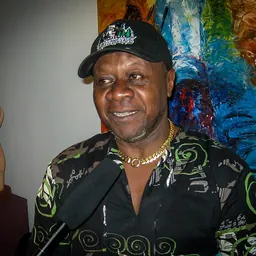


Related people
Same field, nearest in time
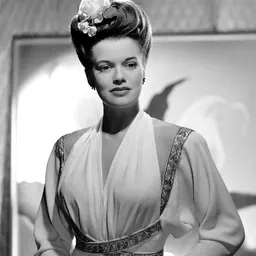


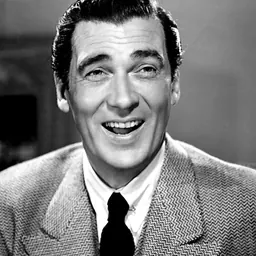
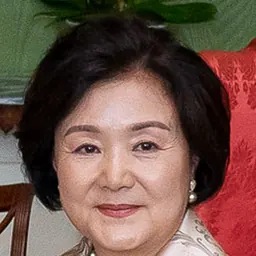
Contemporaries
People whose lives overlapped Wendo Kolosoy's


Frequently asked questions
Who was Wendo Kolosoy?
Congolese singer, musician and boxer (1925–2008)
When was Wendo Kolosoy born?
Wendo Kolosoy was born on 25 April 1925 in Mushie.
When did Wendo Kolosoy die?
Wendo Kolosoy died on 28 July 2008 in Kinshasa.
What was Wendo Kolosoy's occupation?
Wendo Kolosoy was a singer, singer-songwriter, guitarist, boxer and musician.
What nationality was Wendo Kolosoy?
Wendo Kolosoy was Congolese.
Sources & further reading
Cite this page
APA: Biography.guide. (2026). Wendo Kolosoy. https://biography.guide/wendo-kolosoy/
MLA: "Wendo Kolosoy." Biography.guide, https://biography.guide/wendo-kolosoy/.
Chicago: "Wendo Kolosoy." Biography.guide. https://biography.guide/wendo-kolosoy/.
Data last updated: 2026-09-20 · Spot an error? Report a correction.
Page generated 2026-09-27 05:22 UTC