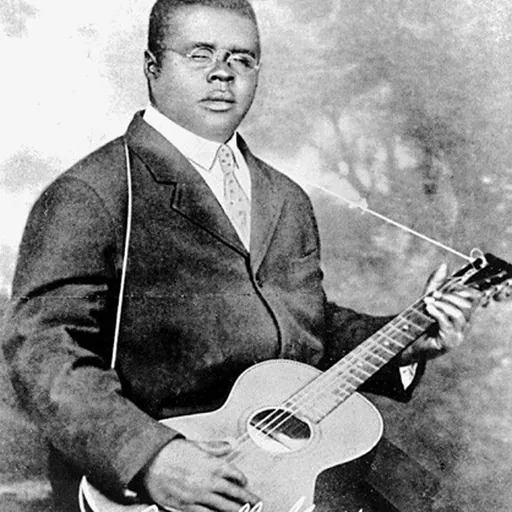
Blind Lemon Jefferson
American blues singer and guitarist
About Blind Lemon Jefferson
Lived 1893 – 1929 (aged 36). Blind Lemon Jefferson was an American guitarist, singer-songwriter, street artist, singer, recording artist and musician.
Lemon Henry "Blind Lemon" Jefferson (September 24, 1893 – December 19, 1929) was an American blues and gospel singer-songwriter and musician. He was one of the most popular and successful blues singers of the 1920s and has been called the "Father of the Texas blues".
Due mainly to his high-pitched voice and the originality of his guitar playing, Jefferson's performances were distinctive. Later blues and rock and roll musicians, however, did attempt to imitate both his songs and his musical style.
Biography Early life Jefferson was born blind, near Coutchman, Texas. He was the youngest of seven (or possibly eight) children born to Clarissa and Alex Jefferson, who were African-American sharecroppers. The 1910 census, taken in May, before his birthday, confirms his year of birth as 1893 and indicated that the family was farming northwest of Wortham, near his birthplace.
In his 1917 draft registration, Jefferson gave his birthday as October 26, 1894, stating that he lived in Dallas, Texas, and had been blind since birth. In the 1920 census, he is recorded as having returned to Freestone County and was living with his half-brother, Kit Banks, on a farm between Wortham and Streetman.
Jefferson began playing the guitar in his early teens and soon after he began performing at picnics and parties. He became a street musician, playing in East Texas towns in front of barbershops and on street corners.
In 1912, Jefferson began traveling frequently to Dallas, where he played with Lead Belly. By the early 1920s, Jefferson was earning enough money for his musical performances to support a speculated wife and possible child. The first self-accompanied solo performer of a self-composed blues song was Lee Morse, whose "Mail Man Blues" was recorded on October 7, 1924. Jefferson's music is uninhibited and represented the classic sounds of everyday life, from a honky-tonk to a country picnic, to street corner blues, to work in the burgeoning oil fields (a reflection of his interest in mechanical objects and processes).
Jefferson did what few had ever done before him – he became a successful solo guitarist and male vocalist in the commercial recording world. Unlike many artists who were "discovered" and recorded in their normal venues, Jefferson was taken to Chicago in December 1925 or January 1926 to record his first tracks. Uncharacteristically for him, the first two recordings on this session were gospel songs ("I Want to Be Like Jesus in My Heart" and "All I Want Is That Pure Religion"), and they were released under the name Deacon L. J. Bates. A second recording session was held in March 1926.
His first releases under his own name, "Booster Blues" and "Dry Southern Blues", were hits. Their popularity led to the release of the other two songs from that session, "Got the Blues" and "Long Lonesome Blues", which became a runaway success, with sales in six figures. He recorded about a hundred tracks between 1926 and 1929; 43 records were issued, all but one of them on Paramount Records. In May 1926, Paramount re-recorded Jefferson performing his hits "Got the Blues" and "Long Lonesome Blues" in the superior facilities at Marsh Laboratories, and their subsequent releases used these newer versions. Both the original and re-recorded versions appear on modern compilation albums.
Success with Paramount Records
Largely off the popularity of artists such as Jefferson and his contemporaries Blind Blake and Ma Rainey, Paramount became the leading recording company for the blues in the 1920s. Jefferson's earnings reputedly enabled him to buy a car and employ chauffeurs; he was given a Ford car "worth over $700" by Mayo Williams, Paramount's connection with the black community. This was a common compensation for recording rights in that market. Jefferson is known to have done an unusual amount of traveling for the time in the American South, which is reflected in the difficulty of placing his music in a single regional category.
Jefferson's "old-fashioned" sound and confident musicianship made it easy to market him. His skillful guitar playing and impressive vocal range opened the door for a new generation of male solo blues performers, such as Furry Lewis, Charlie Patton, and Barbecue Bob.
In 1927, when Williams moved to Okeh Records, he took Jefferson with him, as Jefferson was reputedly unhappy with his royalties. Okeh Records quickly recorded and released Jefferson's "Matchbox Blues", backed with "Black Snake Moan".
Death and grave
Jefferson died in Chicago at 10 a.m. on December 19, 1929, of what his death certificate said was "probably acute myocarditis". For many years, rumors circulated that a jealous lover had poisoned his coffee, but a more likely explanation is that he died of a heart attack after becoming disoriented during a snowstorm. Another rumor stated that Jefferson died of a heart attack after being attacked by a dog in the middle of the night. In his 1983 book Tolbert's Texas, Frank X. Tolbert claims that he was killed while being robbed of a large royalty payment by a guide escorting him to Chicago Union Station to catch a train home to Texas. Paramount Records paid for the return of his body to Texas by train, accompanied by the pianist William Ezell.
Jefferson was buried at Wortham Negro Cemetery (later Wortham Black Cemetery) in Wortham, Freestone County, Texas. His grave was unmarked until 1967, when a Texas historical marker was erected in the general area of his plot; however, the precise location of the grave is still unknown.
By 1996, the cemetery and marker were in poor condition, and a new granite headstone was erected in 1997. The inscription reads: "Lord, it's one kind favor I'll ask of you, see that my grave is kept clean." In 2007, the cemetery's name was changed to Blind Lemon Memorial Cemetery, and his gravesite is kept clean by a cemetery committee in Wortham.
Discography and awards 1925-29 – Complete Recorded Works In Chronological Order, vols. 1-4 (Document Records 5020-5023, 1991) 1925-29 – The Complete 94 Classic Sides: Remastered, 4-CD boxset (JSP Records JSP7706, 2003) 1925-29 – Too Late, Too Late Blues, vol. 1. (Document Records DOCD-5150?) it contains only two alternate takes under Jefferson's name
The Rock and Roll Hall of Fame selected Jefferson's 1927 recording of "Matchbox Blues" as one of the 500 songs that shaped rock and roll. Jefferson was among the inaugural class of blues musicians inducted into the Blues Hall of Fame in 1980.
Cover versions 1968 – Canned Heat, "One Kind Favor," on "Living the Blues", released in 1968, (credited: "Arr. & Adpt. by L.T.Tatman III") 1963 – Bukka White, "Jack o' Diamonds", on 1963 Isn't 1962, released in the 1990s 1962 – Bob Dylan, "See That My Grave Is Kept Clean", on Bob Dylan 1966 - Grateful Dead, "One Kind Favor" (a version of "See That My Grave Is Kept Clean"), on Birth of the Dead Merl Saunders, Jerry Garcia, John Kahn, Bil Vitt, "One Kind Favor", on Keystone Encores Volume I 1983 – John Hammond, "One Kind Favor", on John Hammond Live B.B. King, "See That My Grave Is Kept Clean", on One Kind Favor 1964 – Peter, Paul & Mary, "One Kind Favor", on In Concert 1997 – Kelly Joe Phelps, "See That My Grave Is Kept Clean", on Roll Away the Stone The Dream Syndicate, "See That My Grave Is Kept Clean", on Ghost Stories Counting Crows, "Mean Jumper Blues". Counting Crows lead singer Adam Duritz accidentally claimed credit for "Mean Jumper Blues" in the liner notes of the deluxe edition reissue of the album August and Everything After. The cover was featured as part of a selection of early demo tracks. Immediately after the error was brought to his attention, Duritz apologized in his personal blog. 2014 – Laibach, "See That My Grave Is Kept Clean", on SPECTRE 1997 – Corey Harris, "Jack o' Diamonds", on Fish Ain't Bitin''', released in 1997 Diamanda Galás, "See That My Grave Is Kept Clean", on The Singer Phish, "See That My Grave Is Kept Clean", live at Madison Square Garden, New York, August 4, 2017 Scott H. Biram, "Jack of Diamonds" on Nothin' But Blood released in 2014 Keiji Haino, "See That My Grave Is Kept Clean", on "Black Blues (Soft Version)" and "Black Blues (Violent Version)" Steve Suffet, "See That My Grave Is Kept Clean" on Now the Wheel Has Turned, released in 2005
In popular culture In 2009, the Grammy-nominated R&B act Yarbrough and Peoples were featured in the off-Broadway play Blind Lemon Blues. A tribute song, "My Buddy Blind Papa Lemon", was recorded for Paramount Records in 1932 by King Solomon Hill. The record was long considered lost, but a copy was located by John Tefteller in 2002. Geoff Muldaur refers to Jefferson in the song "Got to Find Blind Lemon" on the album The Secret Handshake. Art Evans portrayed Jefferson in the 1976 film Leadbelly, directed by Gordon Parks. Nick Cave and the Bad Seeds recorded the song "Blind Lemon Jefferson" on the album The Firstborn Is Dead. The 2010 video game Fallout: New Vegas, in one of its downloadable add-ons Old World Blues, features an artificial intelligence jukebox named Blind Diode Jefferson. The AI claims to have been a blues musician before his music hard drives were stripped from him. The voicing of the AI can be characterized as a Southern drawl in homage to Jefferson. In the 2003 movie Masked and Anonymous, Bobby Cupid (Luke Wilson) gives his friend Jack Fate (Bob Dylan) Jefferson's guitar, which he claims was used in recording "Matchbox Blues". Cheech & Chong parodied Jefferson as "Blind Melon Chitlin'" on their self-titled 1971 album Cheech and Chong, on their 1985 album Get Out of My Room, and in a stage routine that can be seen in their 1983 film Still Smokin'. Chet Atkins called Jefferson "one of my first finger-picking influences" in the song "Nine Pound Hammer", on the album The Atkins–Travis Traveling Show. A practical joke played on Down Beat magazine editor Gene Lees in the late 1950s took on a life of its own and became a long-running hoax when one of his correspondents included a reference to the blues legend "Blind Orange Adams" in an article published in the magazine, an obvious parody of Jefferson's name. References to the nonexistent Adams appeared in subsequent articles in Down Beat over the next few years. The American dramatic film Black Snake Moan was named after one of the only songs Jefferson recorded for Okeh Records. Arthur "Big Boy" Crudup took the title of his classic song "That's All Right" (which launched the career of Elvis Presley) from a lyric in Jefferson's "Black Snake Moan". According to some sources, the "Jefferson" in the name of the rock group Jefferson Airplane came from "Blind Lemon Jefferson Airplane", a friend's nickname for founding member and blues guitarist Jorma Kaukonen. However, other sources give other origins for the name, that involve Blind Lemon Jefferson either less directly or not at all. In June 2021, Jefferson's "See That My Grave Is Kept Clean" plays in the Season 6 finale of Fear the Walking Dead while survivalist character Victor Strand discovers an apartment containing artwork and historical artifacts as he awaits his fate.
Don’t just read it —
keep it.
Full-length biographies made to live with: read them, listen on the way to work, watch them tonight.
- E-book
- Audio
- Video
Instant download · yours to keep · every purchase keeps this site free
Important facts
People in Blind Lemon Jefferson's life
Named in this biography and alive at the same time


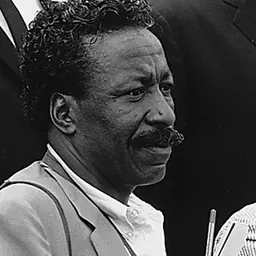
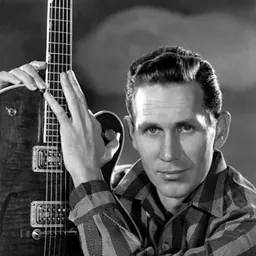
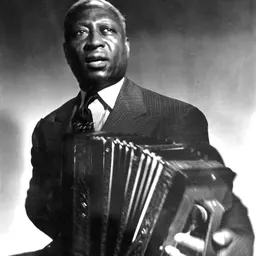



Related people
Same field, nearest in time

Contemporaries
People whose lives overlapped Blind Lemon Jefferson's


Frequently asked questions
Who was Blind Lemon Jefferson?
American blues singer and guitarist (1893–1929)
When was Blind Lemon Jefferson born?
Blind Lemon Jefferson was born on 24 September 1893 in Coutchman, Wortham.
When did Blind Lemon Jefferson die?
Blind Lemon Jefferson died on 19 December 1929 in Chicago.
What was Blind Lemon Jefferson's occupation?
Blind Lemon Jefferson was a guitarist, singer-songwriter, street artist, singer, recording artist and musician.
What nationality was Blind Lemon Jefferson?
Blind Lemon Jefferson was American.
Sources & further reading
· Wikipedia: Blind Lemon Jefferson
· DBpedia: Blind Lemon Jefferson
Cite this page
APA: Biography.guide. (2026). Blind Lemon Jefferson. https://biography.guide/blind-lemon-jefferson/
MLA: "Blind Lemon Jefferson." Biography.guide, https://biography.guide/blind-lemon-jefferson/.
Chicago: "Blind Lemon Jefferson." Biography.guide. https://biography.guide/blind-lemon-jefferson/.
Data last updated: 2026-09-20 · Spot an error? Report a correction.
Portrait: Wikimedia Commons · author & licence
Page generated 2026-09-27 05:15 UTC