
About Malcolm Lyall Darling
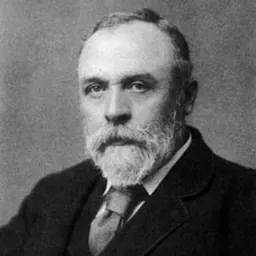
Lived 1880 – 1969 (aged 88–89). Malcolm Lyall Darling was an Indian writer.
Sir Malcolm Lyall Darling (10 December 1880 – 1 January 1969) was a member of the Indian Civil Service (ICS) who was appointed Assistant Commissioner of the Punjab, British India, in 1904. Having held numerous other posts, he became Financial Commissioner of the same province in 1936 and retired from the ICS in 1940. Thereafter, he was engaged in various roles, including as chairman of the Horace Plunkett Foundation, and was for some time head of the BBC India Section.
Recognised as something of a maverick in comparison to most of his colleagues in India, Darling sought to improve the life of rural villagers and was an expert on the subject of peasant agriculture. He wrote several books, including some that are considered to be classic studies and which have been republished with introductions from academic writers in the 21st century.
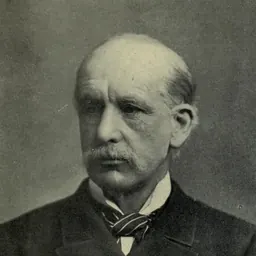
Early life Malcolm Lyall Darling was born on 10 December 1880 Alfred Comyn Lyall, who was an administrator in India and literary figure, was his uncle, guardian and a significant influence on his humanist education. He was educated at Eton College and King's College, Cambridge, prior to joining the ICS in 1904
Career summary Appointed as an Assistant Commissioner, Darling was initially posted to the Punjab. He was a subdivisional officer in Rajanpur in 1906 and then from 1907 was tutor and guardian to the Raja of Dewas State (Senior), Darling later wrote about these early years in his book Apprentice to Power, in which it is apparent that his appointment as tutor and guardian to the 19-year old was a stroke of luck that significantly affected his future activities in the country. He learned as much, if not more, from the raja than he taught. It was while acting as tutor that he invited E. M. Forster to India, with whom he had been friends at college in Cambridge. While in Dewas, Forster wrote The Hill of Devi, which he dedicated to Darling,
Somewhat in contradiction to this, Lynn Zastougil sees Darling as preferring Indian society to that of the "conservative, racist opinions" that prevailed in the ICS precisely because of his humanist upbringing, and says that he subsequently became disenchanted with the behaviour of his royal charge.
In 1930, Darling was appointed to chair a commission of inquiry — the Punjab Banking Inquiry Committee — following a series of banking failures in the province. He became a commissioner in Rawalpindi in 1931 and in 1935 was put on special duties with the Government of India to report on the co-operative movement. He was Finance Commissioner of the Punjab between 1936 and 1939, and acted as chairman of the Punjab Land Revenue Board in 1938. He was twice appointed vice-chancellor of the University of the Punjab, in 1931 and 1937,
Upon his retirement from the ICS in 1940, between 1940 and 1944, In 1947 he became chairman of the Horace Plunkett Foundation, which was involved with agricultural co-operation, and between 1951 and 1960 he was involved with missions to Egypt, Greece, India, Pakistan and Yugoslavia. was not typical of the ICS administrators in Punjab during his time. A variety of changes, such as understaffing by financial pressures after the World War and an increasing preference by talented people to seek opportunities in Britain rather than abroad, together with political changes in Delhi and London, meant that, according to historian Christopher Harding, "most civil servants in Punjab [were] striving simply to hold the provincial administration together and [were] generally cynical of any grand plans that harked back to the "good old days" of the early Punjab administrators". That was not the case with Darling. Tensions were high because the British authorities were desperately trying to stem the tide of nationalism with piecemeal reforms, and communal disputes between Hindus, Muslims and Sikhs were increasing. In the toxic environment, where the authorities were almost entirely concerned with maintaining law and order, Darling and a colleague, Frank Lugard Brayne, stood out as mavericks for their attempts to improve the conditions in rural villages.
In Darling's case, he was affected by the knowledge of the debt burden that was carried by many peasant farmers, some of whom owed more than 20 times their annual incomes. The more prosperous the peasant was, the more credit-worthy they were and so the more debt they accrued. He estimated that the number of moneylenders and dependants in Punjab had quadrupled between 1868 and 1911, and the decline in prices for agricultural produce that followed the end of World War I made the repayment of debt even more difficult. He noted that the moneylenders were generally Hindus and the peasants were mostly Muslim, a situation that prevailed despite the intent of the Punjab Land Alienation Act, 1901. His attitude to the moneylenders was not, however, entirely negative: he recognised the significance of their accessibility and the historic good that they had brought to regional development. At the same time, he was criticising their usurious nature, which, he thought, was being implicitly accepted by the unwillingness of the Raj authorities to intervene. His 1925 book, The Punjab Peasant in Prosperity and Debt, is a classic work of research, analysis and prescription, which demonstrated, according to D. N. Dhanagare, that he was "far ahead of his time".
It was while working with the Punjab Banking Inquiry Committee that Darling was able to persuade the introduction of co-operative credit in every village of the province.
While the decline in agricultural prices following World War I was a factor in the debt problems that Darling saw and tried to alleviate, he noted later that it was the rise in those prices during World War II that finally put an end to the necessity of debt among the Punjabi peasantry.
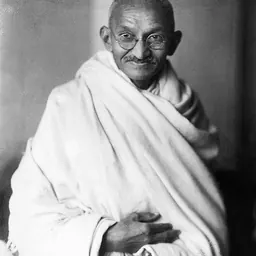
Darling tried always to befriend and understand the native population of India and spoke several of their languages. To that end, he made several long-distance tours of the country on horseback. where he visited his friend Mahatma Gandhi. Believing in fair play, he found himself at odds with other British people in India when he denounced Dyer's massacre of civilians at Amritsar in 1919.
Recognition Lyall was appointed as a Companion of the Order of the Indian Empire in 1934 and as a Knight Commander of the same order in 1939. Having held an Exhibition while a student at King's College, he was elected as an Honorary Fellow of the college in 1957. Darling died on 1 January 1969, aged 88.
In addition, Darling wrote several books among them some "classic works on the Punjab peasantry", in the opinion of Indivar Kamtekar. Some of these have been republished by Oxford University Press in the 21st century with introductions by academic writers. Among his published books are: Darling's wife, Jessica, wrote Love In A Mist, published in 1921.
Don’t just read it —
keep it.
Full-length biographies made to live with: read them, listen on the way to work, watch them tonight.
- E-book
- Audio
- Video
Instant download · yours to keep · every purchase keeps this site free
Important facts
People in Malcolm Lyall Darling's life
Named in this biography and alive at the same time


Related people
Same field, nearest in time


Contemporaries
People whose lives overlapped Malcolm Lyall Darling's



Frequently asked questions
Who was Malcolm Lyall Darling?
member of the Indian Civil Service (1880-1969)
When was Malcolm Lyall Darling born?
Malcolm Lyall Darling was born in 1880.
When did Malcolm Lyall Darling die?
Malcolm Lyall Darling died in 1969.
What was Malcolm Lyall Darling's occupation?
Malcolm Lyall Darling was a writer.
What nationality was Malcolm Lyall Darling?
Malcolm Lyall Darling was Indian.
Sources & further reading
· Wikipedia: Malcolm Lyall Darling
· DBpedia: Malcolm Lyall Darling
Cite this page
APA: Biography.guide. (2026). Malcolm Lyall Darling. https://biography.guide/malcolm-lyall-darling/
MLA: "Malcolm Lyall Darling." Biography.guide, https://biography.guide/malcolm-lyall-darling/.
Chicago: "Malcolm Lyall Darling." Biography.guide. https://biography.guide/malcolm-lyall-darling/.
Data last updated: 2026-09-20 · Spot an error? Report a correction.
Page generated 2026-09-27 05:30 UTC