
About Frank Lugard Brayne
Lived 1882 – 1952 (aged 70). Frank Lugard Brayne was a writer.
Frank Lugard Brayne (6 January 1882 – 3 April 1952) was an administrator in the Indian Civil Service (ICS) during the British Raj era. A nephew of Lord Lugard, who was zealous in his attempts to improve what he considered to be a "backward" Africa (to fight against slavery and human sacrifice), Brayne had a similar evangelical outlook and was considered to be a maverick in the ICS. He attracted the opprobrium of both his colleagues and Indian people themselves in his attempts to improve the life of villagers in the Punjab Province of India.
Life Frank Lugard Brayne was born on 6 January 1882. A son of the Reverend R. T. W. Brayne, he attended Monkton Combe School before being admitted to Pembroke College, Cambridge, where he held a scholarship and Emma Charlotte Lugard, daughter of Frederick Grueber Lugard and sister of Frederick Lugard, 1st Baron Lugard.
Brayne passed the competitive examination for appointment to the Indian Civil Service (ICS) in 1905. He was sent to the Punjab, where he worked for some time as secretary to Delhi Municipality during the period when the planning of New Delhi was underway.
During World War I, he served with the 18th Lancers of the British Indian Army, being mostly based in the Middle East. and the Kingdom of Serbia awarded him the Order of St. Sava, fifth class, in 1917.
He was awarded the Military Cross in 1919 while serving as a temporary lieutenant in Egypt. The citation for that award was:
After the war, Brayne returned to the Punjab and in 1920 he married Iris Goodeve, a daughter of Edgar Goble. He became district officer of Gurgaon, some from Delhi, at a time when the area, comprising a population of around 700,000, was suffering greatly from a recent influenza epidemic, a failed monsoon and the return of soldiers from the war. To counter the deprivation, Brayne initiated what became known as the Gurgaon Scheme, in which he hoped to alleviate the plight of peasants in all its aspects by encouraging and facilitating the idea of self-help. He wrote several books about this, including Village Uplift in India, Socrates in an Indian Village, Socrates Persists in India, and Socrates at School, as well as one comparing rural life in India with that of England. The scheme was not a success. More recently, Atiyab Sultan said that Brayne's interventionism had a "missionary zeal" and that his methods were "more prescriptive" than those of Malcolm Lyall Darling, who was another somewhat maverick British administrator in Punjab.
One of Brayne's sons, Thomas Lugard Brayne, became embroiled in a controversy in The Times Literary Supplement and the Telegraph following the publication of Dewey's book in 1993. He believed that Dewey had seriously misrepresented his father, unreasonably portrayed the character of the ICS itself, and misled the Brayne family, whose collection of private papers he used. In his rejoinders, Dewey pointed out that when he asked for permission to use Brayne's papers, he believed that Brayne's Gurgaon Experiment had been a success, because he only had Brayne's vainglorious accounts of his own achievements to go on; and he only lost confidence in Brayne's form of "rural reconstruction" after the overwhelming mass of evidence showed how dismally it had failed. It was impossible, he maintained, to take Brayne at his own valuation. Brayne boasted that he could 'do anything with propaganda' – and propaganda is what his work remained. At best, it raised the official awareness of the problems of the peasantry, without providing effective solutions.
By 1937, Brayne was Commissioner for Rural Reconstruction in the Punjab having retired from the ICS to become welfare officer and then Commissioner for Resettlement of Soldiers in Punjab. He was survived by his wife, four sons and two daughters. having been made a Companion of the Order of the Star of India in 1937. He also held the Volunteer Decoration. His wife, Iris Goodeve Brayne, had been awarded the Kaiser-i-Hind Medal in 1928.
Don’t just read it —
keep it.
Full-length biographies made to live with: read them, listen on the way to work, watch them tonight.
- E-book
- Audio
- Video
Instant download · yours to keep · every purchase keeps this site free
Important facts
People in Frank Lugard Brayne's life
Named in this biography and alive at the same time

Related people
Same field, nearest in time




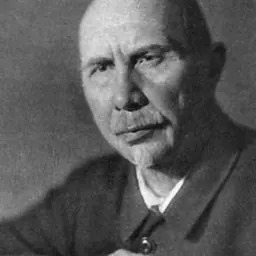

Contemporaries
People whose lives overlapped Frank Lugard Brayne's
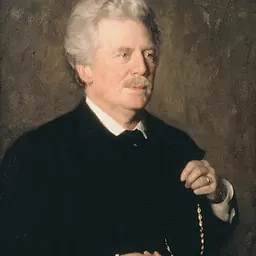
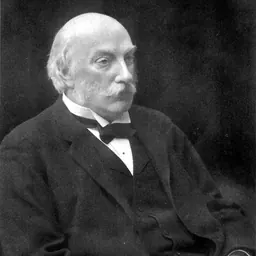

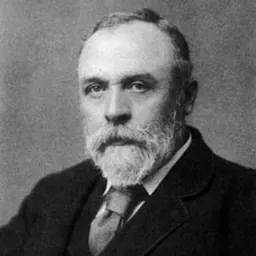


Frequently asked questions
Who was Frank Lugard Brayne?
Indian Civil Service administrator
When was Frank Lugard Brayne born?
Frank Lugard Brayne was born on 6 January 1882.
When did Frank Lugard Brayne die?
Frank Lugard Brayne died on 3 April 1952.
What was Frank Lugard Brayne's occupation?
Frank Lugard Brayne was a writer.
Sources & further reading
· Wikipedia: Frank Lugard Brayne
· DBpedia: Frank Lugard Brayne
Cite this page
APA: Biography.guide. (2026). Frank Lugard Brayne. https://biography.guide/frank-lugard-brayne/
MLA: "Frank Lugard Brayne." Biography.guide, https://biography.guide/frank-lugard-brayne/.
Chicago: "Frank Lugard Brayne." Biography.guide. https://biography.guide/frank-lugard-brayne/.
Data last updated: 2026-09-20 · Spot an error? Report a correction.
Page generated 2026-09-27 05:07 UTC